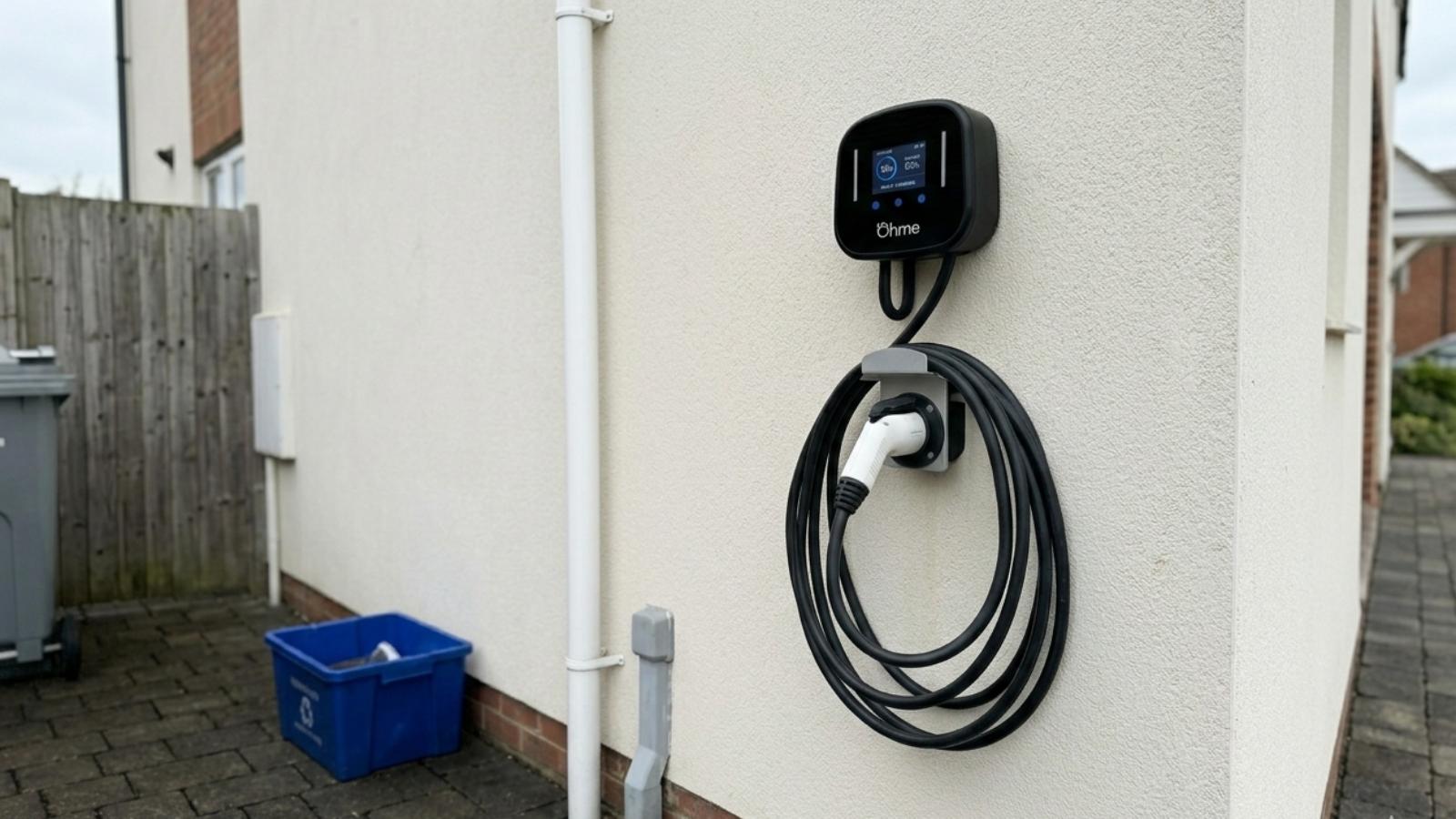
 FIG. 01 / HERO My Ohme Home Pro, six months on the wall
 The verdict
I bought an Ohme Home Pro in November 2025 for £975 inc. VAT and installation, fitted in about two hours by two engineers. Six months in, it’s needed one reset. That is the only intervention.
If you’re on Octopus, or you’re considering Intelligent Octopus Go, this is the charger to buy. The smart scheduling is the reason: you tell the app the charge you need and the time you need it by, the Ohme negotiates the cheap-slot timing itself, and you notice the efficiency on your bill. It’s compact on the wall, the build quality is solid, and after six months of daily use I trust it to do what I asked it to do.
If you’re not on Octopus, the answer is more nuanced. The Home Pro has no WiFi or Ethernet: it connects via a built-in 4G SIM, which is a deliberate choice with one real consequence, in that you need usable mobile signal where it’s mounted. It is also not the best-looking charger on the market. A neighbour has an Andersen A3 and it looks fantastic; I am a bit envious every time I walk past it. Both of those are honest trade-offs rather than disqualifying flaws, and neither has affected how the unit works for me.
I rate the Home Pro 4.5 out of 5. The detail below covers specs, six months of daily use, the Octopus case in full, the honest cons, the price you should expect to pay, and the rivals worth considering before you commit.
Specs at a glance
The Home Pro is a 7.4kW (32A) single-phase home EV charger with a tethered Type 2 cable in either a 5-metre or 8-metre length. I have the 5m version. It has an interactive LCD on the front of the unit for charge data and basic control, an IP55 weather rating for outdoor mounting, a built-in PEN fault detection device (so no separate earth rod), and connects to Ohme’s cloud over a 4G multinet SIM card rather than your home network. Over-the-air firmware updates land via the same cellular link. Solar integration is supported via an external CT clamp, which is sold separately if you want it. Warranty is three years, which is the industry standard.
Mechanically and electrically, the spec sheet looks like every other mainstream UK home charger. 7.4kW is the single-phase ceiling for any unit on UK domestic supply; Type 2 tethered is the dominant home configuration; PEN protection is now a regulatory expectation; IP55 covers the British weather. If you put the Home Pro alongside the Zappi, Pod Point Solo 3, Hypervolt Home 3 Pro, or Andersen A3 on a row of spec rows, the differences in the numbers are small enough that the table will not pick a winner for you.
What separates the Home Pro is the software, and software does not appear on the spec sheet. The tariff integration, the smart-dispatch scheduling that lets Octopus’s platform handle the timing decisions, the built-in price cap per kWh, and the Green Score CO2 tracking are where the unit earns its place. If you read only the specs, you will miss the actual product. That is true of most modern smart chargers, but particularly true here.
For the difference between tethered and untethered, and between basic and smart chargers, our charger types guide walks through the trade-offs.
- Power output
- 7.4kW (32A) single-phase
- Connector
- Type 2 tethered
- Cable length options
- 5m or 8m
- Display
- Interactive LCD on unit
- Connectivity
- 4G multinet SIM (no WiFi/Ethernet)
- Earth protection
- Built-in PEN fault detection
- Weather rating
- IP55 (outdoor mounting)
- Solar integration
- Via external CT clamp (sold separately)
- Firmware updates
- Over-the-air via cellular
- Warranty
- 3 years (industry standard)
- OZEV-approved
- Yes
Living with it
Six months in is enough time to know whether a piece of kit is reliable. The Home Pro has been. One reset across the whole period, prompted by a brief connectivity hiccup; the unit came back up immediately and has not needed anything since. No firmware-update problems, no scheduling failures, no app outages I noticed, no calls to Ohme. It just does the job.
The Ohme app is the front end and it is well done. You set a default ready-by time and a target state of charge once, and from then on you plug the car in and the system handles everything. If you need an override for an off-schedule session, the app does that too; if you want to see exactly when your last 20 charging sessions happened, what they cost and what the CO2 was, that is all there as well. I am a daily tech user and the integration came easily to me, but my wife, who is not, would manage it fine. The interface does not punish you for not being a power user.
Six months in, it has needed one reset. That is the only intervention. The rest of the time, I plug the car in, walk away, and the next morning it is ready.
On the wall, the unit is nice and compact. The footprint matters more than you might expect if it sits next to a door or in a porch. The Home Pro is one of the smaller chargers in the mainstream market and that suited my install. Build quality is solid: when the engineers fitted it I asked them what they thought of the chassis and the connectors versus the other brands they install regularly, and the answer was that the Home Pro is well-engineered for the money. Six months on, I have no reason to disagree with that read.
The LCD on the front is brighter than I expected and easier to use than I expected. You can see the live charge rate and the session info at a glance without opening the app. The app is the primary surface, but the screen earns its place when you want a quick check without finding your phone.
The cable is tethered, which I prefer for the convenience-versus-aesthetic trade. You lose the option to swap connector types (Type 1 cars no longer exist in any meaningful UK volume, so this is largely moot for most buyers), but you gain a charging cable that is always there when you need it.
The Octopus case
The reason I keep recommending the Home Pro to anyone on Octopus is the same reason it ranks at the top of the best EV tariffs comparison: the Ohme talks directly to Octopus’s Kraken platform, and Kraken makes the scheduling decisions for you.
Here is how that plays out in practice. You set a ready-by time in the Octopus app, say 06:30, and the target state of charge, say 80%. From that point on, you do not need to think about the off-peak window, the boost mode, the tariff rate, or the timer. The Ohme and Kraken negotiate the cheap slots between them, fitting the work into the 23:30-05:30 window where possible, and occasionally adding bonus slots outside it when the grid has surplus renewable supply and Octopus drops the rate further. You plug the car in. The next morning it is at 80%. The charging cost dropped onto the bill at 8p per kWh.
There is no manual scheduling, no app-tapping, no checking the window time, no remembering to override at weekends. The “set it and forget it” promise that lots of smart chargers make is real on the Home Pro with Intelligent Octopus Go in a way it is not on most rivals. You notice the efficiency on the bill rather than in the app. I have not run a controlled before-and-after comparison with hard numbers, so I am not going to claim a specific saving figure, but the qualitative outcome is clear: the charger and the tariff together do better than I would do if I was timing the work myself.
Where the integration matters most is when life gets in the way. If you arrive home later than expected with a flatter battery than expected, the Ohme adjusts the schedule to fit the bigger charge into the available window, or extends into bonus slots if Kraken offers them. If you need the car earlier than usual one morning, you change the ready-by time and the schedule reflows. This is the bit that competitor chargers, with their fixed-timer setups, do not get right. You either remember to change the timer or you pay the day rate.
The same is true on standard Octopus Go, not just the Intelligent variant. The Home Pro works with both, and works with E.ON Next Drive Smart and EDF GoElectric as well, with any tariff that exposes a smart-charging API or accepts a simple timer schedule. The deepest integration is with Octopus, which is why the verdict is shaped the way it is.
The honest cons
Three flaws are worth knowing about before you commit, in descending order of significance.
No WiFi or Ethernet. The Home Pro connects to Ohme’s servers over a built-in 4G cellular SIM and that is the only path. There is no home-network fallback. For most installations this is fine, as mobile signal at a domestic charger location is usually adequate, but if your charger sits in a basement, a thick-walled garage, an annexe, or anywhere mobile coverage is weak, this is a real risk. Check signal at the planned mounting position before you order. I have had minor connectivity hiccups in six months but nothing that disrupted a charging session, and the one reset I needed was prompted by exactly this kind of brief drop. Other smart chargers (Zappi, Hypervolt, Pod Point) use WiFi or Ethernet, which gives you a fallback. The Ohme design choice is deliberate (a SIM is more reliable for most users than a home WiFi network that might be down or weak), but if your specific install is mobile-signal-marginal, this is the wrong charger.
The looks. I keep saying it because it is true: the Home Pro is not the most attractive unit on the market. My neighbour has the Andersen A3 and it genuinely looks like a piece of designed kit on a wall. The Home Pro is functional and compact, not beautiful. If the charger is in a porch or by your front door and you care about the visual, that matters. If it is round the back next to the bins, it does not.
OVO Charge Anytime compatibility was revoked on 15 July 2025. This is not my experience, as I am on Octopus, not OVO, but it is the kind of thing buyers should know about. Until July 2025, OVO Charge Anytime customers could connect their Ohme charger directly to the tariff and pick up the cheap rates that way. OVO updated the technology behind Charge Anytime, Ohme did not integrate with the new version, and from 15 July 2025 Ohme chargers no longer connect to Charge Anytime directly. If you have a Charge Anytime-compatible EV (OVO estimates around 75% of its Charge Anytime customers do), you can still benefit by connecting via the vehicle instead. If neither your car nor your charger is on OVO’s compatibility list, Charge Anytime is no longer usable with an Ohme. This is a tariff-side issue rather than a charger fault, but it is a real material consideration if OVO Charge Anytime is the tariff you want. Our best EV tariffs guide covers OVO’s current structure in full.
In the interests of being honest about what this review covers, here is what I have not personally tested: I have not run the solar CT-clamp integration (I do not have a solar array), and I have not used the Home Pro on any tariff other than Intelligent Octopus Go. Ohme documents both, owners report both work as advertised, but neither is in my own data.
Price and where to buy
I paid £975 inc. VAT and installation in November 2025. Ohme’s own list price on the manufacturer site is from £999 including standard installation, so my number is essentially at the manufacturer’s price. Two fitters, about two hours on site, no complications.
The unit-only price varies by retailer, typically falling in the £550 to £700 band for the 5m tethered version and modestly more for the 8m. Installation is usually £200 to £400 on top of that, depending on cable run, mounting position, and whether the installer needs to add a dedicated breaker or upgrade the consumer unit. A clean install with no electrical complications should land in the £900 to £1,000 all-in band; complicated installs (long cable runs, mid-house mounting, fuse-board upgrades) can push to £1,200 or so. If a quote is materially outside that band in either direction, ask what is driving it.
The OZEV chargepoint grant is worth £500 per socket for renters, flat owners, landlords, and households with on-street parking who install a cross-pavement solution. The Ohme Home Pro is on the OZEV-approved product list, so the grant is available against it where the buyer qualifies. Owner-occupiers in a house with a driveway have not been eligible since April 2022, which catches most readers, but if any of the eligible categories applies the EV charger grants guide walks through the application process.
Where to buy: check the current Ohme Home Pro price .
Alternatives worth considering
If the Home Pro is not the right fit, four chargers cover the most common alternative needs. Our best home EV chargers guide covers six picks in full; the short version follows.
myenergi Zappi is the right answer if you have solar. The Zappi has the most mature solar integration on the market, with eco-modes that prioritise charging from your array over grid supply automatically. If you do not have solar, the Zappi is competent but not differentiated, as the Home Pro does smart tariff integration better. With solar, the Zappi wins. Our Zappi charger review covers who it is, and is not, for.
Pod Point Solo 3 is the most familiar UK brand and, now EDF-owned, ties your home charger into its own public charging network through a single account, which is useful if you split your charging between home and public networks. The app is functional but feels a generation behind Ohme’s, and the smart-tariff integration is shallower. If brand familiarity and that home-and-public ecosystem matter to you, this is the pick; our Pod Point Solo 3S review covers whether the default is still the best buy.
Andersen A3 is the prettiest charger on the market and it is not close. If the unit is going somewhere visible and you care about that, the Andersen is the answer. You pay materially more for it (a full Andersen install typically lands £1,500 to £2,000) and the underlying smart features are not better than the Home Pro’s; you are paying for the design. Honest trade.
Hypervolt Home 3 Pro is the right pick if you need a longer cable than the Ohme’s 8-metre maximum, or if you want the cable to retract into the unit when not in use. The Hypervolt has 7.5m or 10m options and a cable-management system. Smart features are competitive with Ohme.
| Charger | Best for | What stands out | Installed |
|---|---|---|---|
| Reviewed here Ohme Home Pro 7.4kW · Type 2 tethered | Octopus customers, smart scheduling | Deep Octopus integration; no WiFi/Ethernet | ~£975 |
| myenergi Zappi (GLO) | Households with solar | Best-in-class solar integration via eco-modes | ~£1,000–£1,200 |
| Pod Point Solo 3 | Familiar brand, own public network | EDF-owned; ties into its own public charging network | ~£999–£1,049 |
| Andersen A3 | Aesthetic-first installs | Designed unit, materially better-looking, premium price | ~£1,500–£2,000 |
| Hypervolt Home 3 Pro | Long or retractable cable | 7.5m/10m options, cable management, competitive smart features | ~£1,000–£1,200 |
Installed price bands are directional and vary by retailer, install complexity, and OZEV-grant eligibility.
Who it’s for, and who it isn’t
Best for: Octopus customers and anyone considering Intelligent Octopus Go, who want a smart charger that handles scheduling itself, in a compact unit on a tight install. Strong reliability across six months of daily use; solid build; clean app; tethered cable; OZEV grant-eligible where the buyer qualifies; manufacturer pricing around £975 to £999 inc. install.
Not for: anyone with weak mobile signal at the charger location (no WiFi or Ethernet fallback); anyone for whom the charger’s looks are the primary criterion (Andersen A3 wins on that axis); OVO Charge Anytime customers without a Charge Anytime-compatible EV (compatibility revoked 15 July 2025); buyers prioritising solar (Zappi handles solar better).
The Home Pro is not the prettiest, the cheapest, or the most universally compatible charger on the market. It is the most consistent in the configuration most UK EV buyers actually want: a tethered 7.4kW unit, on a normal home install, talking to a smart tariff (especially Octopus). For that buyer it is the right answer, and the six months on my wall have done nothing to change that view.
Rating: 4.5 out of 5.
Methodology and independence
This review is based on my hands-on experience with an Ohme Home Pro I bought myself in November 2025 and have run at home since then, with approximately six months of daily use at the time of writing. The product details and specifications draw on the manufacturer’s primary documentation at ohme-ev.com; the OVO Charge Anytime compatibility note draws on OVO’s official forum statement of 15 July 2025; corroborating owner reports informed the broader market context.
I am not a comped reviewer. I paid the full purchase and installation price (£975 inc. VAT and installation) at the manufacturer’s list, and no part of this review is contingent on any commercial relationship with Ohme.
This page carries an affiliate link to Ohme. The merchant is registered but the affiliate programme is not currently active, so /go/ohme-home-pro/ routes through to ohme-ev.com without earning any commission at this time. If an affiliate relationship is established in future, this disclosure will be updated to reflect that, and the rating and recommendation will not change as a consequence.
Pros and cons.
Pros
- ✓Best smart-tariff integration on the market for Octopus customers: set a ready-by time and target charge once, and the platform handles every charging decision after that.
- ✓Reliable across six months of daily use: one reset, no firmware-update problems, no scheduling failures.
- ✓Compact footprint and solid build quality; fits cleanly where larger units would not.
- ✓Clean app plus a genuinely useful on-unit LCD; the day-to-day interface does not punish non-technical users.
- ✓OZEV grant eligible (£500) for renters, flat owners, landlords, and on-street installs that qualify.
- ✓Works with all major smart EV tariffs; deepest integration with Octopus and Intelligent Octopus Go.
Cons
- ✗No WiFi or Ethernet: connects only via a built-in 4G SIM, so weak mobile signal at the mounting position is a real risk. Check signal before ordering.
- ✗OVO Charge Anytime compatibility was revoked on 15 July 2025; usable only via a compatible vehicle, not the charger directly.
- ✗Not the best-looking unit on the wall; the Andersen A3 is materially more attractive for a visible install.
- ✗No native solar without a separate CT clamp (sold separately); the Zappi integrates solar more deeply out of the box.
Frequently asked.
Is the Ohme Home Pro worth it?
For Octopus customers, yes. The smart-scheduling integration with Octopus's Kraken platform handles the charging decisions for you, the unit has been reliable across six months of daily use, and the price (around £975 inc. installation) is in line with the manufacturer's list. If you are not on Octopus, the case is more nuanced: a tariff like EDF GoElectric works with any charger via a simple timer, in which case the Ohme's deeper integration matters less.
Ohme Home Pro vs Zappi: which should I buy?
If you have solar, Zappi. The myenergi Zappi has the most mature solar integration on the UK market, with eco-modes that prioritise charging from your array automatically. If you do not have solar, the Home Pro wins on smart-tariff integration, particularly with Octopus. Both are tethered 7.4kW units with solid build quality and broadly similar pricing.
Does the Ohme Home Pro work with Octopus and Intelligent Octopus Go?
Yes, with the deepest integration of any home charger. You set a ready-by time and target state of charge in the Octopus app; the Ohme and Octopus's platform negotiate the cheap-slot timing between them. You do not need to set timers or watch the off-peak window. Intelligent Octopus Go runs at 8p/kWh in the 23:30-05:30 window, with the possibility of bonus slots outside it when grid renewable supply is high.
Why does the Ohme Home Pro not have WiFi?
Ohme's design choice. The unit connects via a built-in 4G cellular SIM and there is no home-network fallback. The reasoning is that a SIM is more reliable for most installs than a home WiFi network that may be intermittent or slow. The trade-off is that locations with weak mobile signal (basements, thick-walled garages, annexes) are a risk; you need usable mobile coverage at the mounting position for the unit to stay connected.
How much does the Ohme Home Pro cost?
Around £975 inc. VAT and installation at the manufacturer's price; Ohme's own list is from £999. Unit-only typically retails in the £550 to £700 band; installation is usually £200 to £400 on top, depending on cable run, mounting position, and any electrical works needed. A clean install lands £900 to £1,000 all-in; complex installs can push higher. The OZEV £500 grant is available for renters, flat owners, landlords, and on-street-parking households with a cross-pavement solution; homeowners with a driveway have not been eligible since April 2022.
What length is the Ohme Home Pro cable?
There are two tethered cable length options: 5 metres or 8 metres. Pick based on the distance between your mounting position and the car's charge port when parked in its usual spot. The 8m version is sensible for most installs because you can park either way round; the 5m is fine where the mounting is close to a fixed parking position.
Does the Ohme Home Pro work with solar panels?
Yes, with a separate CT clamp (sold separately, not part of the standard package). The clamp lets the unit monitor your home's grid export and prioritise solar surplus for charging. The Zappi integrates solar more deeply out of the box without needing additional hardware; if solar is the primary reason you are buying a smart charger, the Zappi is the cleaner pick.
How long is the Ohme Home Pro warranty?
Three years, which is the industry standard for UK home EV chargers. Hypervolt, Andersen, and Zappi all offer the same three-year period; some extended-warranty options are available at additional cost on certain retailers.
Is the Ohme Home Pro compatible with OVO Charge Anytime?
Not directly, since 15 July 2025. OVO updated the technology behind Charge Anytime, Ohme did not integrate with the new version, and direct connection between Ohme chargers and Charge Anytime was discontinued on that date. If your EV is on OVO's Charge Anytime compatibility list (OVO estimates around 75% of its customers' cars are), you can still benefit by connecting via the vehicle instead. If neither your car nor charger qualifies, Charge Anytime is not usable on an Ohme.
Sources
- Ohme: Home Pro product page — accessed 28 May 2026
- OVO Energy forum: Charge Anytime and Ohme integration update — accessed 28 May 2026
- gov.uk: Electric vehicle chargepoint grants guidance hub — accessed 28 May 2026
- Octopus Energy: Intelligent Octopus Go tariff page — accessed 28 May 2026
Sources: Hands-on use plus the manufacturer’s documentation and corroborating owner reports.
Corrections: if we got something wrong, tell us and we'll fix it in public, dated and signed. Last updated 29 May 2026.