What an electric car really costs to own.
We don't do 0–60 times. We do pence per mile, depreciation, road tax and the salary-sacrifice maths, because that's what decides whether an EV is worth it.
What will yours cost to run?
Charging, road tax and the company-car maths on your car and your mileage. The honest number, before you fall for the spec sheet.
The EVs we've actually assessed.
Reviewed on ownership cost, not lap times. Plus the running-costs maths and a brand hub.
What an EV costs to run
The calculator that turns your car and mileage into pence per mile against petrol.
Salary sacrifice & BIK
Whether leasing through work stacks up, at a 4% benefit-in-kind rate rising to 9% by 2030.
Road tax after April 2026
EVs pay VED now. The year-by-year schedule, including the Expensive Car Supplement.
BYD: the UK brand hub
The fastest-growing newcomer on UK driveways. Range, ownership and whether the price holds up.
Before the test drive, the spreadsheet.
The two numbers that actually decide it: what it costs to charge, and what it costs through work.
Three EVs, scored on ownership.
Researched to the spec sheet and the owner reports. Rated on what it costs to live with, not how it feels for ten minutes.
Tesla Model Y
Still the default family EV. Cheapest to run of anything on this page.
Renault 5 E-Tech
The one that makes a small EV feel special. Character the rivals lack.
BYD Dolphin
A lot of car for the money. The software is where it shows its price.
Owning an EV in 2026, the real costs.
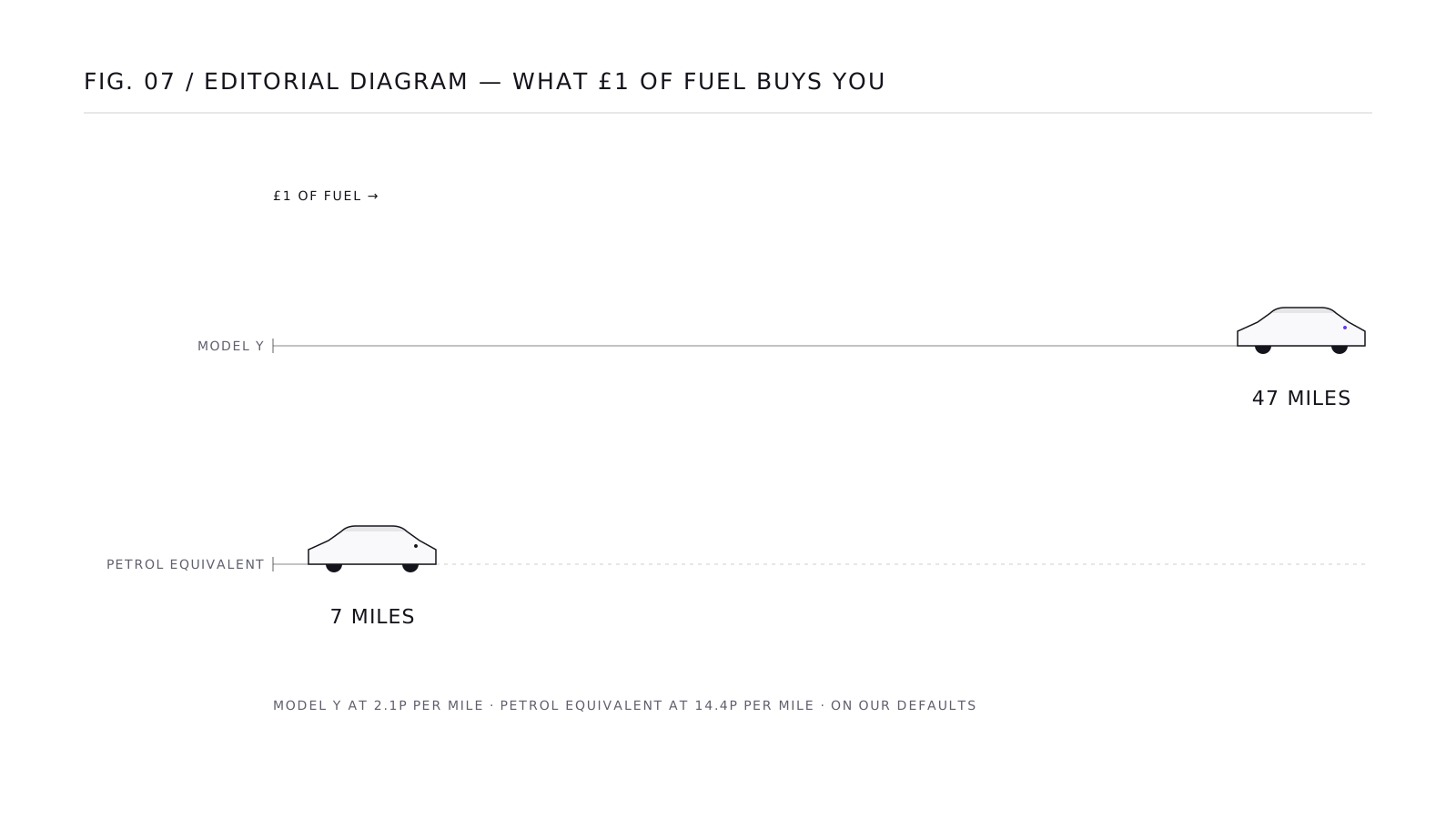
The case for an electric car has quietly shifted from the showroom to the spreadsheet. The fun-to-drive argument was settled years ago; the question now is what it costs to keep one on the drive, and on that the picture is mixed but mostly good. Charge at home on a smart tariff and the running cost is a fraction of petrol, around £164 a year against £970 for the Model Y on our defaults.
Two things changed in 2026. EVs now pay road tax after the April VED change, including the Expensive Car Supplement on pricier models, so the 'free to tax' era is over. And the salary-sacrifice route is still the cheapest way into a new EV for anyone with the option, even as the benefit-in-kind rate climbs from 4% toward 9% by 2030.
Depreciation is the wildcard. It's improving as the used market matures, but it's still where most of the money goes, and it's the number the brochures never show you.
The case for an EV has moved from the showroom to the spreadsheet.
Independent, affiliate-funded, and honest about both.
We don't sell what we review.
No chargers, no schemes, no installs. Our only job is to be right.
Affiliate links are disclosed, never decisive.
Some links earn us a commission. They never change a verdict or a ranking. How that works →
Every number shows its working.
Rates, tariffs and assumptions are cited and dated. If we can't source it, we don't say it.