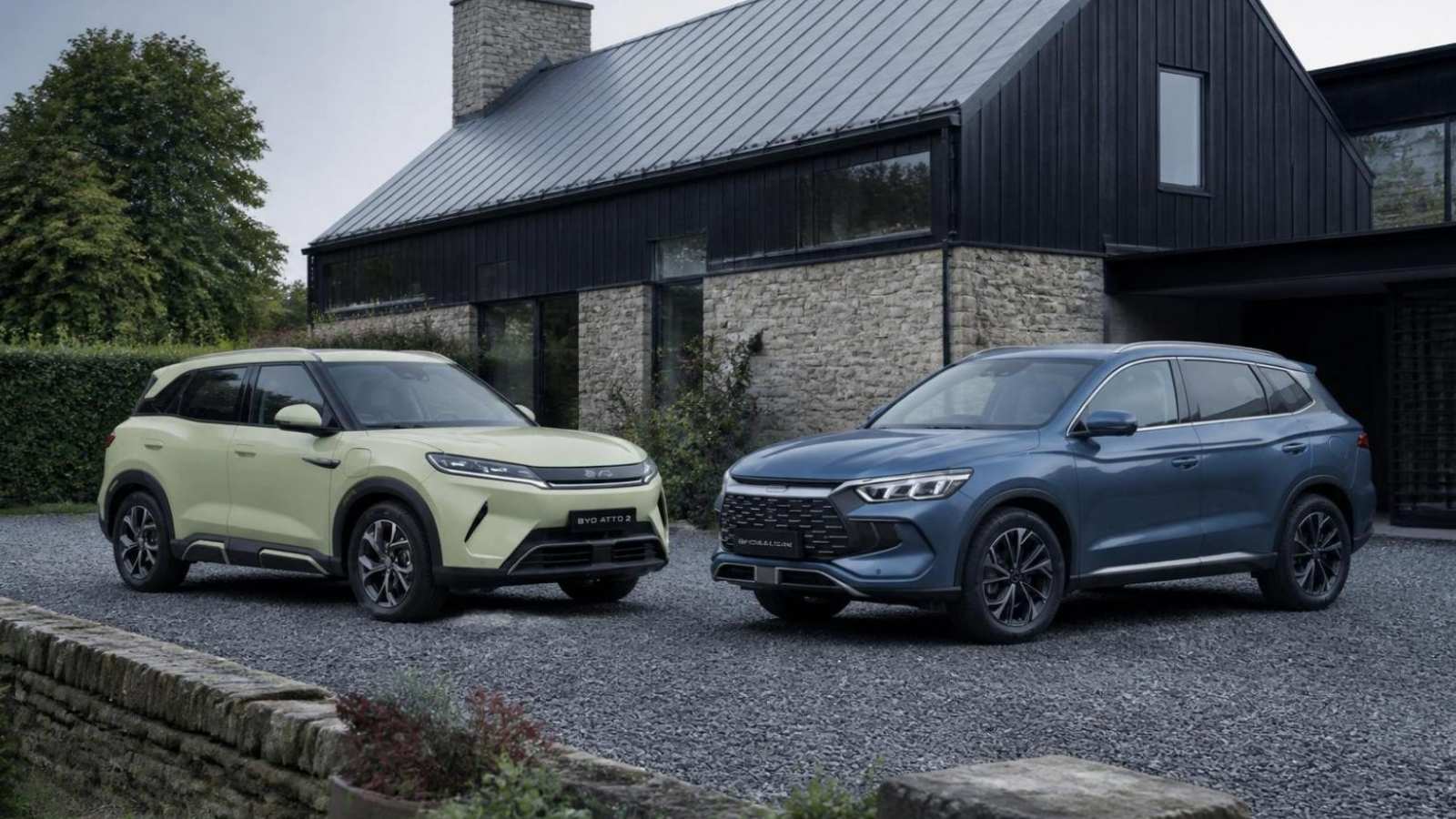
 FIG. 01 / HERO TWO OF BYD'S CURRENT UK SUVs — FROM UNKNOWN TO THE UK'S BEST-SELLING EV BRAND IN THREE YEARS
 BYD, explained for UK buyers
A few years ago, almost nobody in Britain had heard of BYD. In 2026 it is the country’s best-selling electric-car brand, having overtaken Tesla, Kia, BMW and Volkswagen on EV sales in the year to April. That is a remarkable rise for a company that only arrived here in 2023, and it is the reason this page exists: BYD is now too big to ignore, but it is still unfamiliar enough that plenty of sensible buyers are not sure what to make of it.
So here is the orientation. BYD (the name stands for “Build Your Dreams”) is a Chinese manufacturer that started life making batteries and grew into the world’s largest maker of electric and plug-in hybrid vehicles, overtaking Tesla on pure-electric sales in 2025. It still makes its own batteries, chips, motors and software in-house, which is the root of its pitch: a lot of technology for the money. In the UK it sells a fast-expanding range spanning everything from a sub-£19,000 city car to premium SUVs and saloons over £45,000.
This page does three things. It walks through the current UK range so you can see what fits where. It gives honest capsule assessments of the models most people are cross-shopping, the Atto 3 Evo, the Seal, the Dolphin and the Sealion 7. And it tackles head-on the question that hangs over every Chinese brand: is BYD any good, and can you trust it? We are independent, we earn affiliate commission on some links, and we will be as candid about where BYD is beaten as about where it impresses.
The current UK range
BYD’s UK line-up has grown well beyond the two cars it launched with. The pure-electric range now runs from the tiny Dolphin Surf city car, through the Dolphin hatchback and the compact Atto 2 SUV, up to the family Atto 3 Evo SUV, the premium Seal saloon and the large Sealion 7 SUV. Alongside those sits a growing range of DM-i plug-in hybrids (the Seal U, Sealion 5, Seal 6 and Seal 6 Touring), with more electric and hybrid models arriving through 2026. For this guide we focus on the pure-electric cars, since that is where most UK interest sits.
The table below is the map of the electric range. Prices are recommended on-the-road figures, current at the time of writing and worth confirming with BYD before ordering, since the line-up and pricing are moving quickly.
| Model | Body / segment | Battery & range | Price (OTR, approx) | Who it's for |
|---|---|---|---|---|
| Dolphin Surf | City car (A-segment) | ~30kWh class; entry city range | From ~£18,650 | The cheapest way into a new BYD; urban and second-car buyers |
| Atto 2 | Compact SUV (B-segment) | Small-battery compact SUV | From ~£26,000 | Buyers wanting a small, affordable electric SUV |
| Dolphin | Hatchback (C-segment) | 60.4kWh, up to ~265 mi | From ~£30,230 | MG4 / Renault 5 cross-shoppers wanting space and kit (full review separate) |
| Atto 3 Evo | Family SUV | 78.4kWh, up to ~316 mi (Design) | £38,990 – £42,730 | Family-SUV buyers wanting fast charging and full kit, chosen on merit not price |
| Seal | Premium saloon (D-segment) | 82.5kWh, up to ~354 mi (RWD) | ~£45,730 – ~£48,000 | Tesla Model 3 / BMW i4 / Ioniq 6 / ID.7 cross-shoppers wanting a premium EV saloon |
| Sealion 7 | Large premium SUV | 82.5 / 91.3kWh, up to ~312 mi | ~£44,990 – ~£58,990 | Model Y / EV6 / e-3008 buyers; top trims exceed £50k (VED supplement) |
Pure-electric range, prices current at draft and worth confirming with BYD; the line-up moves fast. BYD also sells a growing range of DM-i plug-in hybrids (Seal U, Sealion 5, Seal 6, Seal 6 Touring). No Electric Car Grant applies to BYD, so the on-the-road price is the real price.
One point that shapes every price on that table, and that we come back to in the trust section: BYD cars are not eligible for the UK’s Electric Car Grant, because the grant’s sustainability scoring counts against cars built on China’s coal-heavy electricity grid. So unlike some rivals, a BYD’s on-the-road price is its real price, with no government discount knocked off. BYD has applied to join the scheme and, in the meantime, has leaned on its own finance offers instead. We will come back to what that means for value.
Atto 3 Evo: the volume SUV
The Atto 3 was BYD’s first UK car, and it has just been comprehensively replaced by the Atto 3 Evo, on sale to order from April 2026 (the original is now a used-only proposition). This is not a light facelift. BYD has reworked the powertrain, the battery, the charging and the kit, and the result is a genuinely better car than the one it replaces.
- Battery
- 78.4kWh Blade (LFP)
- WLTP range
- Up to ~316 mi (Design RWD); ~292 mi (Excellence AWD)
- Power
- 309bhp (Design, RWD); 449bhp (Excellence, AWD)
- 0–62mph
- Excellence AWD ~3.9s
- Rapid charging
- 220kW DC peak; 10–80% in ~25 min
- Price (OTR)
- £38,990 (Design) – £42,730 (Excellence)
- Warranty
- 6yr / 93,750 mi vehicle; 8yr battery
- Notable kit
- 15.6in rotating touchscreen, Google built-in, heat pump, heated seats, V2L
- On sale
- Orders from April 2026 (replaces the discontinued original Atto 3)
The Evo uses a 78.4kWh Blade battery and claims up to 316 miles of WLTP range in entry Design trim, which is rear-wheel drive with 309bhp. Charging is the headline upgrade: a 220kW DC peak means a 10 to 80% top-up in around 25 minutes, roughly double the old car’s pace. The top Excellence trim adds all-wheel drive and 449bhp for a 3.9-second 0-62mph time, though its range drops to around 292 miles. Standard kit is generous across both trims, with a 15.6-inch rotating touchscreen, built-in Google services, a heat pump, heated seats and vehicle-to-load. Prices run from £38,990 for the Design to £42,730 for the Excellence.
The honest framing is about value, not quality. When the original Atto 3 launched it undercut the established players; the Evo, at £38,990, does not. Reviewers are clear that it now sits in a much tougher part of the market, up against the Skoda Elroq, Kia EV3 and Hyundai Ioniq 5, and Carwow’s view is that it is no longer the obvious value champion it once was. It is a well-equipped, well-built family EV with strong charging and a long warranty, but you are now choosing it on its merits rather than on price alone, and several rivals are genuinely good. Who it suits: a family wanting a comprehensively-equipped electric SUV with fast charging and BYD’s battery and warranty package, who has driven the alternatives and prefers it rather than assuming it is the cheap option.
Seal: the premium saloon
The Seal is BYD’s move upmarket, and the car that signals it is not content to be a budget brand. It is an electric saloon aimed squarely at the Tesla Model 3, the BMW i4, the Hyundai Ioniq 6 and the VW ID.7, and reviewers broadly agree it is a credible rival rather than a cut-price imitation.
- Battery
- 82.5kWh Blade (LFP), Cell-to-Body construction
- WLTP range
- Up to ~354 mi (Design RWD); ~323 mi (Excellence AWD)
- Power
- 308bhp (Design RWD); 523bhp (Excellence AWD)
- 0–62mph
- 5.9s (RWD); 3.8s (AWD)
- Price (OTR)
- From ~£45,730 (Design RWD) to ~£48,000 (Excellence AWD)
- Warranty
- 6yr / 93,750 mi vehicle; 8yr battery
- Cross-shop
- Tesla Model 3, BMW i4, Hyundai Ioniq 6, VW ID.7
Two pieces of engineering define it. The first is the 82.5kWh Blade battery, BYD’s cobalt-free lithium-iron-phosphate pack, which trades a little energy density for a much lower fire risk and strong longevity. The second is Cell-to-Body construction, where the battery is built into the car’s structure rather than bolted underneath it, which BYD says improves rigidity and lets it lower the cabin floor. The rear-drive Design manages up to 354 miles WLTP and 0-62mph in 5.9 seconds; the dual-motor Excellence AWD drops to around 323 miles but cuts the sprint to 3.8 seconds. UK prices start at around £45,730 and rise to roughly £48,000 for the Excellence.
On the drive, reviewers describe a handsome, comfortable, quick saloon that feels genuinely premium inside and undercuts an equivalent Model 3 Long Range AWD on price, with the rear-drive car widely picked as the sweet spot for performance and range. The marks against are the familiar Chinese-brand ones rather than anything fundamental: the infotainment and driver-assistance software divide opinion, and residual values are less certain than an established badge. As a statement that BYD can build a desirable premium car, though, the Seal lands. Who it suits: a Model 3 or Ioniq 6 cross-shopper who wants space, range and a plush cabin, and is comfortable with a newer brand in exchange for the price and the equipment.
Dolphin: the hatchback (short version)
The Dolphin is BYD’s family hatchback, sitting above the smaller Dolphin Surf city car, and it is the most direct rival to the MG4 and the Renault 5. We are keeping this capsule brief on purpose, because the Dolphin gets its own full JustWatt review, which goes into the depth this overview does not.
- Battery
- 60.4kWh
- WLTP range
- Up to ~265 mi (60.4kWh)
- Power
- 204bhp (Comfort / Design)
- Price (OTR)
- From ~£30,230
- Warranty
- 6yr / 93,750 mi vehicle; 8yr battery
- Cross-shop
- MG4, Renault 5 (full JustWatt review separate)
In short: the current Dolphin starts at around £30,230, with the volume versions using a 60.4kWh battery, a 204bhp motor and up to 265 miles of WLTP range. Reviewers rate it as a practical, well-equipped, distinctively-styled hatch that makes sense on price and equipment, while noting it is not the sharpest small car to drive and that some have flagged quirks like overnight battery drain. It is a sensible, comfortable choice rather than a class-leader, and a strong value play given the kit you get. For the full verdict, specs and running-cost detail, see our dedicated BYD Dolphin review.
Sealion 7: the large premium SUV
The Sealion 7 is BYD’s biggest mainstream seller in the UK and, in effect, a taller, roomier take on the Seal saloon: same Ocean Series styling, same Blade battery, wrapped in a family-SUV body aimed at the Tesla Model Y, the Kia EV6 and the Peugeot e-3008.
- Battery
- 82.5kWh (Comfort / Design); 91.3kWh (Excellence)
- WLTP range
- Up to ~312 mi (varies by trim; ~283–312 mi)
- Power
- 313bhp RWD (Comfort / Design); 530bhp AWD (Excellence)
- 0–62mph
- Excellence AWD ~4.5s
- Rapid charging
- 150kW (10–80% ~32 min); 230kW on Excellence (10–80% ~24 min); 11kW AC
- Price (OTR)
- From ~£44,990 to ~£58,990 (Excellence)
- Warranty
- 6yr / 93,750 mi vehicle; 8yr battery
- Cross-shop
- Tesla Model Y, Kia EV6, Peugeot e-3008, Ford Capri
- VED note
- Only the entry trim is under £50k; pricier trims pay the Expensive Car Supplement
It is a big, well-equipped car. Comfort and Design trims use an 82.5kWh battery with 313bhp and rear-wheel drive, charging at up to 150kW for a 10 to 80% top-up in around 32 minutes; the range-topping Excellence steps up to a 91.3kWh battery, 530bhp and all-wheel drive, charges faster at 230kW (10 to 80% in about 24 minutes) and cracks 0-62mph in 4.5 seconds. WLTP range runs to around 312 miles depending on trim. Standard equipment is generous, the interior is more conventional and arguably more user-friendly than a Model Y’s screen-only approach, and prices start from around £44,990, rising to roughly £58,990 for the Excellence.
The honest verdict is that the Sealion 7 wins on space, equipment and straight-line pace rather than driving polish. Reviewers are consistent on this: RAC and Carwow rate the cabin, the kit and the performance, but find the ride unsettled over poor surfaces and fidgety on the motorway, the handling soft with noticeable body lean, the steering light and remote, and the safety systems over-eager, concluding there is more driving fun in rivals like the EV6, the Ford Capri or even the Model Y. It is a lot of car for the money with a strong battery and warranty behind it, let down by chassis tuning that trails the class best. One running-cost catch: only the entry car ducks under the £50,000 threshold, so the pricier trims pick up the Expensive Car Supplement on top of standard road tax. Who it suits: a family wanting a spacious, heavily-equipped, quick electric SUV and willing to trade the last word in ride and handling for the space and the price.
The technology behind the value
It is worth understanding why BYD can put this much equipment and battery into cars at these prices, because it is not a temporary loss-leader trick, it is structural, and it is the single biggest reason the brand is worth taking seriously.
BYD started as a battery company, and it still makes almost everything itself: the batteries, the chips, the motors and much of the software. Most carmakers buy these from suppliers; BYD’s vertical integration means it captures the margin at each step and can move fast on cost and design. That is the root of the tech-per-pound that runs through the range.
The centrepiece is the Blade battery. Rather than the nickel-manganese-cobalt chemistry most EVs use, BYD uses lithium-iron-phosphate (LFP), arranged in long, thin “blade” cells. LFP trades a little energy density (you need a slightly bigger, heavier pack for the same range) for three real advantages: a much lower risk of thermal runaway if the battery is damaged, strong longevity with a projected life well beyond the warranty, and tolerance of being charged to 100% routinely without the degradation penalty that worries owners of other chemistries. For a mainstream buyer those are exactly the right trade-offs, and they are a large part of why BYD’s cars feel reassuring despite the unfamiliar badge.
On the Seal, BYD goes a step further with Cell-to-Body construction, building the battery pack into the car’s structure rather than bolting it underneath. BYD says this adds rigidity, saves a little weight and lets it lower the cabin floor for more interior space. Combined with its e-Platform 3.0 underpinnings and the new 220kW-plus charging on the Atto 3 Evo, it is a genuine engineering story rather than a marketing one, and it explains why reviewers keep describing BYDs as more substantial than the price suggests.
Is BYD any good, and can you trust it?
This is the question that actually decides a BYD purchase, so it deserves a straight answer rather than either boosterism or suspicion. The short version: BYD is a credible, well-funded, fast-improving manufacturer, and the real marks against it are about value-versus-rivals and the usual new-brand uncertainties, not about legitimacy. Here is the honest balance.
The hesitations are reasonable. It is a Chinese brand most British buyers had not heard of three years ago, and unfamiliarity is a fair reason for caution. Connected cars from any maker collect data, and Chinese-built connected cars raise a question some buyers care about; BYD publishes a UK privacy and data policy, the question is industry-wide rather than unique to BYD, and there is no public evidence of misuse, but we are not going to pretend the concern is settled, because for some people it is a genuine factor and the honest position is that you should read the policy and decide for yourself. Residual values are less predictable than for an established badge, partly because the brand is new and partly because it is expanding and cutting prices fast, which can push used values down. And there is a practical wrinkle worth knowing: a Carwow survey found UK insurers are currently more hesitant to cover EVs from Chinese brands than from established makers, so it is worth getting an insurance quote before you commit.
The counterweights are substantial. Start with price, because the geopolitics are widely misunderstood: the UK has chosen to keep its market open and has not imposed any tariff on Chinese-built EVs, unlike the United States (which applies a 100% tariff on Chinese-made electric cars) and the EU (which added duties, around 17% in BYD’s case, later softened toward a minimum-price arrangement). So a UK BYD buyer pays no tariff premium, which is a real and durable advantage. On safety, BYD’s Blade battery uses lithium-iron-phosphate chemistry with a much lower risk of thermal runaway than the usual nickel-based packs, and its cars carry five-star Euro NCAP ratings. The warranty is strong: six years or 93,750 miles on the vehicle and eight years on the battery. The commercial momentum is hard to argue with, BYD is the UK’s best-selling EV brand in 2026 and grew its share from around 1% to over 7% in roughly a year, and it is investing in permanence with a new European factory in Hungary (building cars including the Dolphin Surf and Atto 2 for the region) and a premium Denza sub-brand arriving in 2026. Underpinning all of it is the vertical integration: making its own batteries, chips and motors is what lets BYD put this much technology into cars at these prices.
The honest verdict. None of the legitimate concerns is about whether BYD is a real, serious carmaker, because it plainly is, on the evidence of its scale, its engineering and its sales. The concerns that should actually weigh on your decision are narrower: whether a given BYD is better value than a specific rival (sometimes yes, increasingly not automatically, as the Atto 3 Evo shows), how its residuals will settle over your ownership period, whether you can insure it affordably, and whether you are comfortable with the data question on any connected car. Those are real questions, and they are worth doing the homework on. What they are not is a reason to dismiss the brand. BYD has earned its place on the shortlist; whether it wins your money is a car-by-car, quote-by-quote decision.
Running costs and leasing
Like any EV, a BYD is cheap to run if you can charge at home, and the running-cost maths is the same as for any electric car, so we point you to the tools rather than repeat them. For what a given model costs to charge on your mileage and tariff, use our EV charging cost calculator. For road tax, every BYD pays the standard EV rate of £10 in the first year and £200 a year after that, with the over-£50,000 cars (the top Sealion 7 trims, for instance) also picking up the Expensive Car Supplement; our EV road tax guide explains how the threshold works and which trims it catches.
For company-car and salary-sacrifice drivers, BYD is worth a look for the same reason any EV is: the low Benefit-in-Kind rate, currently 4% for the 2026/27 tax year and rising only gradually, makes an electric car strikingly cheap through a scheme. Because BYD is not Electric Car Grant-eligible, the leasing comparison is the place this matters most, since a scheme can offset some of the price disadvantage versus a grant-eligible rival. Use our company-car BIK calculator for your own figure, and our best salary-sacrifice providers comparison to see where BYD models can be leased and on what terms. If you are cross-shopping against the EVs we have reviewed in depth, our Tesla Model Y and Renault 5 reviews are the natural comparisons for the Sealion 7 and the Dolphin respectively.
The bottom line
BYD has gone from unknown to the UK’s best-selling EV brand in three years, and the cars explain why: a lot of technology, a strong battery and a long warranty, at prices that, even without a government grant, undercut plenty of rivals. The brand is legitimate, well-funded and improving fast. The honest caveats are not about whether you can trust it as a carmaker, but about the things any new badge brings: residual-value uncertainty, insurance that is worth checking, the connected-car data question that applies industry-wide, and the fact that on outright value BYD is no longer automatically the cheapest, as good as it often is. Put a BYD on your shortlist, drive it against its rivals, get an insurance quote, and decide on the car in front of you. That is the right way to judge any of these models, and it is the way this brand deserves to be judged too.
How we put this together
We have not driven these cars. This is a research synthesis: we mapped BYD’s current UK range and assessed the key models from professional UK road tests, owner reports and manufacturer and independent specification data, all verified against current sources at the time of writing. Spec-level facts such as battery size, WLTP range, price, charging speed, warranty and tax treatment are stated directly from those sources. Subjective qualities such as ride, handling, refinement and cabin quality are attributed to the reviewers who reported them, never presented as our own driving impressions.
BYD is moving fast: prices, the line-up, sales figures and grant status all change, so confirm current detail with BYD before ordering. Sales and market-share figures are from SMMT data for the year to April 2026. On the connected-car data question we have stated what is publicly known and have deliberately not resolved it with false certainty. Running-cost and salary-sacrifice figures are routed to our calculators rather than quoted as guaranteed savings.
Frequently asked.
Is BYD reliable?
BYD is the world's largest maker of electric and plug-in hybrid cars and has built EVs and batteries for over two decades, so it is a serious, well-resourced manufacturer rather than a newcomer to the technology. Its UK reliability record is still young because the brand only arrived in 2023, but its cars carry a strong six-year vehicle and eight-year battery warranty, and its Blade battery is rated for long life. The honest position is that the engineering is credible and the warranty is reassuring, while a long UK reliability record is still being built.
Is my data safe in a Chinese connected car?
Any connected car from any manufacturer collects data, and Chinese-built connected cars raise a question some buyers care about. BYD publishes a UK privacy and data policy, the concern is industry-wide rather than unique to BYD, and there is no public evidence of misuse. We are not going to resolve it with false certainty: if it matters to you, read BYD's data policy and decide for yourself, as you reasonably would for any connected car.
Does BYD qualify for the UK Electric Car Grant?
No. BYD cars are not currently eligible, because the grant's sustainability scoring counts against vehicles built on China's coal-heavy electricity grid. BYD has formally applied to join the scheme and, in the meantime, has offered its own finance deals instead. In practice it means a BYD's on-the-road price is its real price, with no grant discount, so compare it against rivals on the actual prices, not the headline grant.
What is BYD's warranty?
Six years or 93,750 miles on the vehicle, and eight years on the battery. That is competitive with or better than most mainstream rivals, and the long battery cover in particular is a meaningful reassurance on the most expensive component in an EV.
Is BYD actually cheaper than the established rivals?
Sometimes, but no longer automatically. When BYD launched it clearly undercut the established players, and the cheaper models like the Dolphin Surf and Dolphin still offer a lot of kit for the money. But pricier models like the Atto 3 Evo now sit in a tough part of the market against strong rivals like the Skoda Elroq, Kia EV3 and Hyundai Ioniq 5, and reviewers no longer call it the outright value champion. Compare model by model rather than assuming BYD is the cheap option.
Will a BYD hold its value?
Residual values are less predictable than for an established badge, because the brand is new to the UK and is expanding and adjusting prices quickly, which can push used values down. That is a genuine consideration for cash buyers, and one reason salary sacrifice or leasing (where the residual risk sits with the provider) can make particular sense for a BYD. There is not yet enough UK history to call it firmly either way.
Do UK buyers pay a tariff on BYD cars?
No. The UK has chosen to keep its market open and has not imposed a tariff on Chinese-built EVs, unlike the United States (a 100% tariff on Chinese-made electric cars) and the EU (which added duties, around 17% for BYD, later softened toward a minimum-price arrangement). UK BYD prices carry no tariff premium.
Sources
- BYD UK: official range, configurator and pricing — accessed 3 Jun 2026
- BYD UK media: Sealion 7 UK pricing and specifications — accessed 3 Jun 2026
- RAC Drive: BYD Atto 3 Evo, Dolphin and Sealion 7 reviews (specs, pricing, driving) — accessed 3 Jun 2026
- Carwow: BYD Sealion 7 review (specs, charging, driving impressions) — accessed 3 Jun 2026
- Autocar: BYD Seal road test (Blade battery, e-Platform 3.0, driving verdict) — accessed 3 Jun 2026
- The EV Report: BYD becomes UK's best-selling EV brand, Jan–Apr 2026 (SMMT data) — accessed 3 Jun 2026
- The Electric Car Scheme: Chinese EVs, UK tariff position, Euro NCAP, Blade battery — accessed 3 Jun 2026
- Autocar: BYD Hungary factory and Denza / DM-i UK expansion — accessed 3 Jun 2026
Sources: Editorial methodology documented at /methodology/.
Corrections: if we got something wrong, tell us and we'll fix it in public, dated and signed. Last updated 3 June 2026.