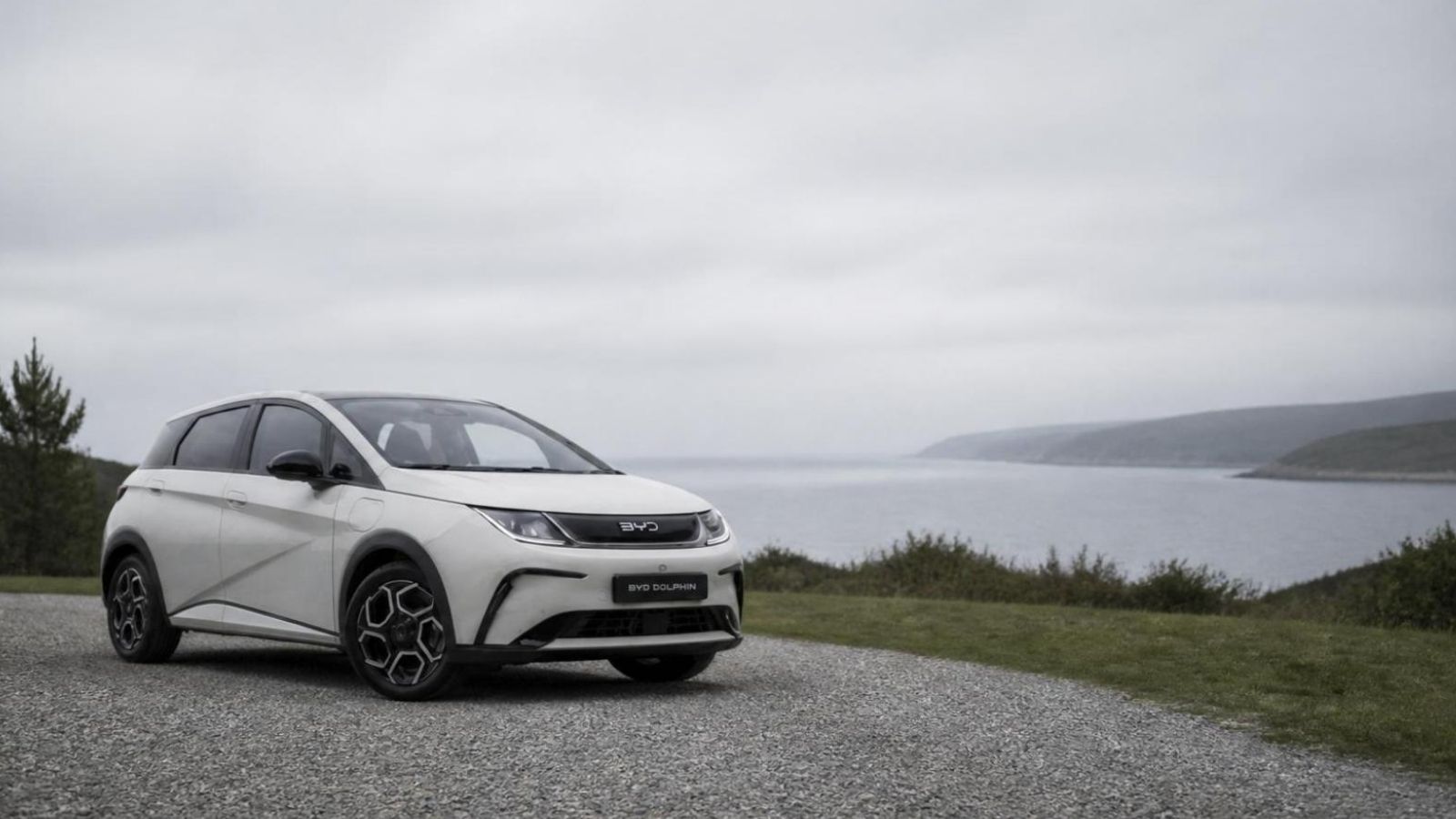
 FIG. 01 / HERO The BYD Dolphin, now a 60kWh-only, two-trim car
 The verdict: a near-miss four
The BYD Dolphin is a good electric hatchback that has quietly lost the one thing that made it special. We rate it 3.5 out of 5, and we want to be honest that it was a close call, because on most of what matters this is knocking on a four.
Consider what it gets right. There is plenty of space for the class, generous standard equipment whichever trim you pick, and build quality that reviewers and owners agree is a clear step up on the launch cars, which felt loosely screwed together. The 60kWh battery returns a competitive 265 miles of official range. And the ownership package is genuinely strong: a six-year vehicle warranty, eight years on the battery, now with five years of free servicing on top, and a five-star safety rating. Taken on its own, that is a four-star car.
What costs it the half-point is that the Dolphin’s original pitch, a lot of car for not much money, is now half gone. BYD has axed the affordable Active and Boost trims, so the range no longer starts in the mid-£20,000s; the cheapest Dolphin is now the £30,195 Comfort. And because it is built in China, it is not eligible for the UK’s Electric Car Grant, while two of its key rivals undercut it: a grant-eligible Renault 5 starts thousands of pounds lower, and the MG4, the class benchmark, undercuts the Dolphin while going farther and charging much faster. Add charging that is slow by 2026 standards and driving manners reviewers call competent rather than engaging, and the Dolphin slips from value champion to a car that is good but clearly bettered. Hence the 3.5: we nearly gave it a four, and the erosion of its value case is what stopped us.
It is the right car for a buyer who values space, kit and a long warranty over the last word in price, charging speed or driving fun, and who has driven the alternatives and simply prefers it. Look elsewhere if outright value is the priority (the Renault 5 and MG4 both make a stronger case there), if you rapid-charge often on long trips (the charging speed will frustrate you), or if you want a hatch that is fun to drive.
To be clear about the working, because a half-point is a fine margin: hold the price where it used to be, or make this car eligible for the grant its rivals enjoy, and the Dolphin is a four, because the fundamentals (space, equipment, build, range, aftercare) are there. Equally, give it the MG4’s charging speed and a sharper chassis and it would be a four on ability alone. It misses on two fronts at once, value and dynamism, and each on its own would have been survivable; together they are what hold it at 3.5.
This is not a weak car, it is a good one that the market has caught up with and, in places, overtaken.
This is a research synthesis: we have not driven the car. How we assessed it, and how we separate a spec from a driving impression, is set out in full at the foot of this review. Not to be confused with the smaller, cheaper Dolphin Surf, which is a different and separate model.
What changed: the trim ladder, and why it matters
If you have read other Dolphin reviews you will have seen a cheaper car than the one on sale now, so it is worth being clear about what BYD has changed, because it is the heart of this review.
The Dolphin originally spanned four trims, opening with a sub-£27,000 Active on a small 44.9kWh battery. Those affordable trims, Active and Boost, have been discontinued. The Dolphin is now a 60kWh-only car in two trims: the Comfort at £30,195, which is the base model and the one most buyers will choose, and the Design at £31,695, which adds two-tone paint, a panoramic glass roof, privacy glass and wireless phone charging. Both use the same 60.4kWh battery and 204PS motor, so the choice between them is about equipment, not performance or range. Confirm the current prices with BYD before ordering, since the line-up has moved more than once.
That change matters because it resets where the Dolphin competes. As a £26,000 car it was a bargain that lit a fire under established rivals. As a £30,000 car it is in a tougher fight, and the timing is awkward: the UK’s Electric Car Grant knocks money off many rivals’ prices, but not the Dolphin’s, because the grant’s sustainability rules exclude China-built cars. So the Dolphin’s on-the-road price is its real price, with no discount to come, at exactly the moment its rivals got cheaper. That is not a footnote, it is the single biggest reason the value case has weakened.
Put concretely: the Renault 5, which qualifies for the grant, starts thousands of pounds below the Dolphin once the discount is applied, and the MG4, the class benchmark, undercuts the Dolphin’s £30,195 entry while offering more range and far faster charging. The Dolphin used to answer that kind of competition by simply being cheaper; it no longer can. What it offers instead is space, equipment and the ownership package, which are real strengths, but they are a different and less immediately compelling pitch than the old one. A buyer cross-shopping purely on monthly cost will find the Dolphin near the back of the pack rather than at the front, which is a reversal of how it earned its early reputation, and the reason this review lands where it does.
Specs at a glance
The current Dolphin is a straightforward proposition on paper. Spec figures here are stated directly from manufacturer and independent data.
- Battery
- 60.4kWh
- WLTP range
- Up to 265 mi (real-world lower; 200+ mi mild, less in cold, per reviewers)
- Power
- 204PS (Comfort and Design), front-wheel drive
- Rapid charging
- 88kW DC peak; BYD claims 30–80% in 29 min; ~40 min real-world 10–80% (slow for the class)
- Home charging
- ~10 hours on a 7kW wallbox; 11kW AC; heat pump standard
- Boot
- 345 litres
- Price (OTR)
- Comfort £30,195; Design £31,695 (current 60kWh-only ladder)
- Warranty
- 6yr / 93,750 mi vehicle; 8yr battery; plus 5yr free servicing
- Safety
- 5-star Euro NCAP
- Electric Car Grant
- Not eligible (China-built; BYD has applied)
The 60.4kWh battery and 204PS front-mounted motor give up to 265 miles of WLTP range, with a 345-litre boot and room that reviewers rate as good for the class, particularly rear legroom. The headline weakness, which we come back to below, is charging: the Dolphin peaks at 88kW on DC rapid charging, which is slow by current standards. Everything else is competitive on paper; the car’s strengths and weaknesses are about how those numbers translate, and about price, rather than the spec sheet itself.
What it’s like to live with
We have not driven the Dolphin, so everything in this section is attributed to professional road testers and verified owners rather than presented as our own impression.
The most encouraging theme in recent reviews is build quality. Testers who drove the launch cars found them loosely assembled, but the 2025 and 2026 cars are widely reported as much better put together, with a cabin that feels solid and materials that punch above the price. The interior design leans into a nautical theme, with wave-like detailing across the dashboard, door pulls shaped like a dolphin’s fin and, depending on trim, lashings of sea-blue trim, which reviewers find either charming or overstyled depending on taste, but few call it cheap. The vegan-leather seats draw consistent praise for comfort and support, and the overall impression is of a small car that has been given more visual character than most rivals bother with.
The technology is a mixed story. The rotating central touchscreen is a talking point and works well enough, flipping between portrait and landscape at the touch of a button, and standard kit is generous: a heat pump, vehicle-to-load, a 360-degree camera that reviewers single out as excellent, and a full suite of safety systems across both trims. The catch, and it is one reviewers raise consistently, is that the driver-assistance and warning systems are intrusive, with frequent bongs and chimes, and some settings buried in menus, so you find yourself turning things off at the start of each drive. It is a common complaint across recent Chinese EVs and the Dolphin is not the worst offender, but it is there, and it is the sort of thing that grates more the longer you live with the car.
On the road, the consensus is comfortable rather than entertaining. Reviewers describe light, uncommunicative steering and a car that is relaxed and easy around town, which is where it is designed to live, but that feels out of its depth when pushed on a faster road, with body movement and a lack of the composure that the class best manage. Ride comfort comes in for more praise than handling: testers find it absorbs urban bumps and broken surfaces well at low speed, which matters far more for the car’s intended use than cornering ability does. The trade-off is that it can feel a little unsettled at higher speeds, and there is some tyre roar at speed, with visibility at junctions drawing the odd complaint about the thick pillars. The brakes and the regen are reported as smooth and predictable rather than grabby, which suits the relaxed character. None of this makes it unpleasant; it makes it a sensible urban-and-suburban hatch rather than a driver’s car, which is exactly what it is meant to be. If driving enjoyment is high on your list, reviewers are clear the MG4 and the Renault 5 are the more rewarding choices.
Practicality is a genuine strength. The 345-litre boot is competitive, the rear seats are roomy for the segment, and the high-set, comfortable driving position suits the car’s town-focused brief. For a small family or a couple wanting an easy second car, the Dolphin is well sized and well equipped for daily life. The vehicle-to-load function, standard across the range, is a useful extra that lets the car power external devices, handy for camping or running tools from the battery, and it is the sort of feature that still costs extra or is absent on some pricier rivals.
The part that does not show up on a test drive but matters over years of ownership is BYD’s aftercare, and it is where the Dolphin quietly scores. The warranty is six years or 93,750 miles on the car and eight years on the battery, and BYD now bundles five years of free servicing on top, introduced partly to counter rivals’ grant discounts. For a buyer worried about taking on a newer brand, that combination of long cover and no servicing bills for half a decade is a real reassurance, and a meaningful part of the ownership case even though it never appears in a road test.
Range and charging
Range is fine; charging is the problem. The 60kWh Dolphin claims up to 265 miles WLTP, and as with any EV the real-world figure is lower, with reviewers reporting comfortably over 200 miles in mild conditions and the usual drop in cold weather, helped by the standard heat pump. Broadly, expect the official figure to hold up reasonably well in town and on gentler runs, and to fall further on a cold motorway journey, the pattern for every EV. For an urban-focused hatch that you charge at home, that is plenty, and the smaller-battery cars that managed less are no longer part of the range, so the version you can buy today is the longer-legged one.
The weak point is rapid charging. The Dolphin peaks at just 88kW on DC, and while BYD quotes a 30 to 80% top-up in 29 minutes, a real-world 10 to 80% charge takes around 40 minutes, which reviewers consistently flag as behind the class. The contrast with the benchmark is stark: the MG4 in long-range form charges at up to 142kW and can do a 10 to 80% fill in roughly 24 minutes, and the Peugeot e-208 and Vauxhall Corsa Electric manage 100kW for sub-30-minute stops. In practice, on a long trip that means the difference between a quick coffee stop and a noticeably longer wait every time you charge, and it compounds over a journey with more than one stop. If you mostly charge at home overnight, where a 7kW wallbox refills the Dolphin in under ten hours, this barely matters and you may never notice it. If you regularly do longer trips that depend on rapid charging, it is a real and recurring frustration, and a fair reason to look at a faster-charging rival.
Running costs
Charged at home on an off-peak tariff, the Dolphin is cheap to run like any efficient EV, and rather than quote a single figure that may not match your driving, put your mileage and tariff into our EV charging cost calculator.
On tax, the Dolphin pays the standard EV road tax of £10 in the first year and then £200 a year, and because it sits well under the £50,000 threshold it avoids the Expensive Car Supplement; our EV road tax guide explains how that works. For company-car and salary-sacrifice drivers, the low Benefit-in-Kind rate, currently 4% for the 2026/27 tax year, makes it cheap through a scheme, and our company-car BIK calculator gives your own figure. Salary sacrifice is worth a particular look here precisely because the Dolphin gets no Electric Car Grant: leasing through a scheme can offset some of the price disadvantage against a grant-eligible rival.
One honest running-cost note: axing the cheap trims also nudged insurance up, with the current Dolphin sitting around group 30 of 50, broadly in line with the MG4 but higher than the Renault 5, which is more forgiving on premiums. Worth a quote before you commit.
The alternatives
The Dolphin sits in the most competitive corner of the EV market, and it is beaten in it more often than not. Their reviews are not all on the site yet, so we name them here, except the Renault 5, which is live and linked.
| Rival | What it does better than the Dolphin | Where it trails the Dolphin |
|---|---|---|
| MG4 | Cheaper, slightly longer range, much faster charging (142kW); 'not as complete as the MG4 across all trims' per Autocar | Marginally less rear space; cabin plainer in places |
| Volkswagen ID.3 | More grown-up, better-resolved, feels a class above in places | Costs more; less standard kit for the money |
| Renault 5 | More desirable, better to drive, grant-eligible so meaningfully cheaper | Smaller, tighter rear space, less practical |
| Vauxhall Corsa Electric | Faster charging (100kW), conventional, often discounted | Less rear space and a less generous kit list |
The MG4 is the benchmark and the one to beat, and the Dolphin does not quite manage it. The cheapest MG4 undercuts the Dolphin, goes slightly farther on a charge, and charges far faster, and Autocar’s blunt summary is that the Dolphin is not as complete as the MG4 across all trims. If outright value and rounded ability are your priorities, the MG4 is the obvious first stop. The Volkswagen ID.3 is the other natural rival, a more grown-up, better-resolved hatch that costs more but feels a class above in places. The Renault 5 is a smaller, cheaper and, crucially, grant-eligible cross-shop: it is not as roomy as the Dolphin, but it is more desirable, better to drive and meaningfully cheaper once the grant is applied, which is why we rate it more highly. The Vauxhall Corsa Electric is the other size-adjacent option, conventional and often discounted, and it charges faster than the Dolphin too.
The pattern is consistent. The Dolphin matches or beats these cars on space and standard kit, but it trails the best of them on price, charging speed and driving polish, and the loss of its cheap trims has removed the trump card that used to win the argument. It is a good car in a class full of good cars, and no longer the standout.
Which trim, and who should buy one
With the line-up down to two, the choice is simpler than it was, and it comes down to equipment rather than range or performance, since both the Comfort and the Design share the same 60.4kWh battery and 204PS motor. The £30,195 Comfort is the value pick and the one most buyers will take: it already includes the heat pump, the 360-degree camera, heated front seats, adaptive cruise and the full safety suite, so you are not short-changed by going for the base car. Reviewers are split on whether to climb to the £31,695 Design: Autocar’s view is that the extra kit is modest enough to stick with the cheaper car, while Auto Express reckons the small premium is worth it for the panoramic glass roof, wireless phone charging and privacy glass. Our read is that the Comfort is the sensible buy and the Design a nice-to-have rather than a need-to-have.
As for who should buy a Dolphin at all: it makes most sense for a town-and-suburb driver, a couple or a small family, who charges at home, values space and a long, worry-free ownership package, and is buying with their eyes open about the price having climbed. If you are coming to it expecting the bargain the Dolphin used to be, you will be disappointed, not by the car, but by the maths, and a Renault 5 or MG4 will serve that brief better. If you have driven those and prefer the Dolphin’s roominess and kit, it rewards the choice.
Is BYD a brand you can trust?
That is a fair question for any newer Chinese brand, and it deserves a proper answer, but it is a brand-level question rather than a Dolphin one, so we have given it a dedicated treatment. For the full picture, the no-tariff position on UK prices, the Blade battery safety case, the warranty and the residual-value and data questions, see our BYD brand guide. In short: BYD is a credible, well-funded, fast-improving manufacturer, and the marks against the Dolphin are about value and ability versus its rivals, not about whether the brand behind it is legitimate.
The bottom line
The BYD Dolphin is a spacious, well-equipped, well-built electric hatch with a strong warranty and now five years of free servicing, and three years ago it would have been an easy four-star recommendation on price alone. In 2026 it is a 3.5: still good, but no longer the bargain that defined it, undercut by a grant-eligible Renault 5 and out-pointed by the MG4 on value, charging and driving. If you have driven those two and still prefer the Dolphin for its space and kit, buy it with confidence, it is a likeable car. But it has to be chosen on its merits now, not on its price, and that is the half-point that separates it from the cars at the top of the class.
How we reviewed the BYD Dolphin
We have not driven the BYD Dolphin. This review is a research synthesis: we aggregated professional UK road tests, consistent reports from verified owners, and manufacturer and independent specification data, all checked at the time of writing. Spec-level facts such as battery size, WLTP range, price, charging speed, warranty and tax treatment are stated directly from those sources. Subjective qualities such as ride, handling, steering feel, refinement, cabin quality and the behaviour of the assistance systems are attributed to the reviewers and owners who reported them, never presented as our own driving impressions.
Pricing and the trim line-up have changed more than once and may move again, so confirm the current ladder with BYD before ordering; the figures here reflect the current two-trim 60kWh range. Running-cost and salary-sacrifice figures are routed to our calculators for your own numbers; we do not quote guaranteed savings. The Electric Car Grant position is current as of June 2026.
Pros and cons.
Pros
- ✓Spacious and practical for the class, with a 345-litre boot and roomy rear seats (per reviewers)
- ✓Generous standard equipment on both trims, including a heat pump, V2L and an excellent 360-degree camera
- ✓Much-improved build quality on the 2025–26 cars versus the launch units (per reviewers)
- ✓Competitive 265-mile WLTP range from the 60kWh battery
- ✓Strong ownership package: 6yr vehicle / 8yr battery warranty, 5yr free servicing, 5-star safety
Cons
- ✗No longer cheap: the affordable Active/Boost trims are axed, so it starts at £30,195
- ✗Not eligible for the UK Electric Car Grant, while key rivals are
- ✗Slow rapid charging: 88kW peak, behind the MG4 (142kW) and 100kW rivals
- ✗Competent but unengaging to drive; light, uncommunicative steering (per reviewers)
- ✗Intrusive driver-assistance bongs and menu-buried settings (per reviewers)
Frequently asked.
Is the BYD Dolphin still good value now the cheap trims are gone?
Less so than it was. With the affordable Active and Boost trims axed, the Dolphin now starts at £30,195, and because it isn't eligible for the UK Electric Car Grant, it doesn't get the discount that lowers many rivals' prices. It's still well-equipped and spacious for the money, but a grant-eligible Renault 5 starts thousands lower and the MG4 undercuts it, so it's no longer the outright value pick it once was.
How far does the BYD Dolphin really go?
The 60kWh Dolphin claims up to 265 miles WLTP. In the real world expect comfortably over 200 miles in mild conditions, with the usual drop in cold weather, helped by the standard heat pump. For an urban-focused hatch you charge at home, that's plenty; the shorter-range small-battery versions are no longer sold.
Why is the BYD Dolphin's charging so slow?
It peaks at just 88kW on DC rapid charging, where rivals do more: the MG4 manages up to 142kW and the Peugeot e-208 and Vauxhall Corsa Electric 100kW. BYD quotes 30–80% in 29 minutes, but a real-world 10–80% top-up takes around 40 minutes. If you mostly charge at home overnight it barely matters; if you rely on rapid charging for long trips, it's a genuine drawback.
BYD Dolphin vs Dolphin Surf, which is which?
They're different cars. This review covers the Dolphin, BYD's larger family hatchback (MG4 and VW ID.3 sized). The Dolphin Surf is a separate, smaller and cheaper city car. If you're shopping the small-city-car end, the Surf is the one to look at; this page is about the bigger Dolphin hatch.
BYD Dolphin vs MG4, which is better?
The MG4 is the class benchmark and, on balance, the more complete car: it's cheaper, goes slightly farther, and charges much faster (142kW versus the Dolphin's 88kW). Autocar judges the Dolphin not as complete as the MG4 across all trims. The Dolphin counters with space, kit and its warranty-and-servicing package, but if outright value and rounded ability matter most, the MG4 leads.
Does the BYD Dolphin qualify for the Electric Car Grant?
No. As a China-built car it isn't eligible, because the grant's sustainability criteria exclude vehicles built on China's coal-heavy electricity grid. BYD has applied to join the scheme, but for now the Dolphin's on-the-road price is its real price, with no grant discount, unlike several of its rivals.
Sources
- BYD UK: Dolphin configurator, trims and pricing — accessed 3 Jun 2026
- Autocar: BYD Dolphin road test (trim ladder, MG4 comparison, charging) — accessed 3 Jun 2026
- RAC Drive: BYD Dolphin review (specs, charging speeds, practicality) — accessed 3 Jun 2026
- Auto Express: BYD Dolphin review (Active/Boost cull, charging vs MG4, insurance groups) — accessed 3 Jun 2026
- heycar: BYD Dolphin review (cabin, equipment, verdict) — accessed 3 Jun 2026
- Parkers: BYD Dolphin (current pricing and specifications) — accessed 3 Jun 2026
Sources: Manufacturer documentation, verified owner reports, and industry sources. Not hands-on tested.
Corrections: if we got something wrong, tell us and we'll fix it in public, dated and signed. Last updated 3 June 2026.