What it really costs to run an electric car.
Charging, road tax, the lot, computed on your numbers rather than a marketing average. This is the pillar where you actually do the maths.
What an EV costs to charge at home
Pick your car, your mileage and your tariff. We turn it into a yearly cost and hold it up against petrol at 45 mpg. No average, your number.
Charging and tax, sorted.
A thin pillar on purpose: the two numbers that move your yearly bill, each with its own tool.
Cost to charge at home
Your car, mileage and tariff into a yearly energy cost, against petrol. The headline running-cost number.
Road tax (VED) after 2026
EVs are taxed now. The year-by-year schedule with the Expensive Car Supplement, calculated for your car.
This pillar is the tools.
Four numeric calculators, each built on published rates and each showing its working. Free, no email gate.
The 2026 running-cost landscape.
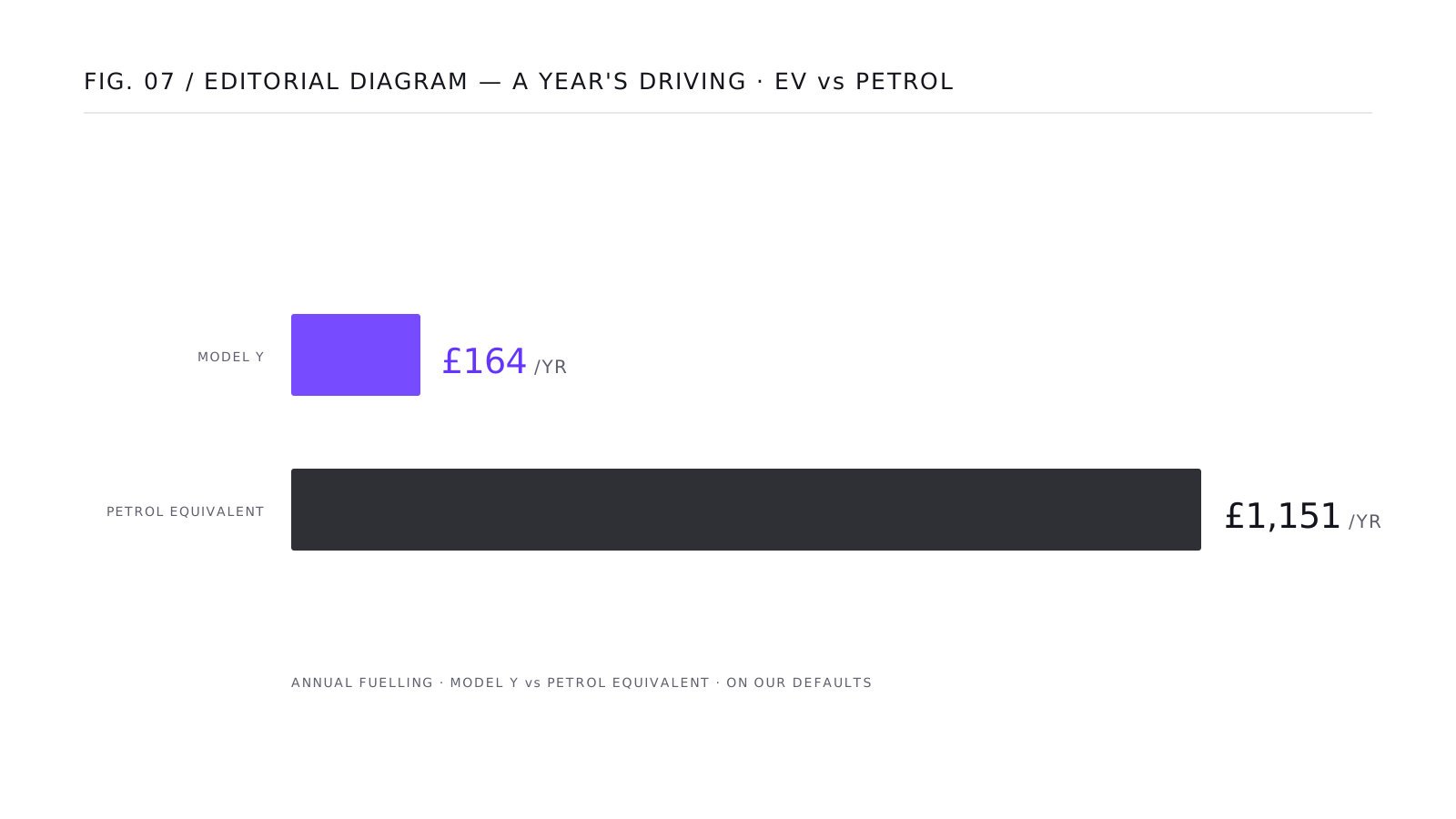
Running an EV is still much cheaper than running a petrol car, but 2026 is the year the gap stopped widening and the rules got more complicated. Charge at home on a smart tariff and you're paying around 8p per kWh off-peak, which works out near £164 a year for a typical Model Y against roughly £970 in petrol. That part hasn't changed.
What changed is tax. After the April 2026 VED change, EVs pay road tax like everything else, and pricier models get caught by the Expensive Car Supplement on top. It's not a large number against the fuel saving, but it's no longer zero, and the brochures haven't all caught up.
The honest caveat: these are off-peak figures. Charge during the day at 26p, or factor the standing charge on a low-mileage household, and the maths tightens. That's exactly why we built the calculators instead of quoting an average.
We built the calculators instead of quoting an average. Your bill isn't average.
Independent, affiliate-funded, and honest about both.
We don't sell what we review.
No chargers, no schemes, no installs. Our only job is to be right.
Affiliate links are disclosed, never decisive.
Some links earn us a commission. They never change a verdict or a ranking. How that works →
Every number shows its working.
Rates, tariffs and assumptions are cited and dated. If we can't source it, we don't say it.