Home charging comes down to a handful of decisions: tethered or untethered, how fast, smart or basic, and whether you want it to work with solar panels. None of them are complicated once you see them laid out. Here’s a quick tool that turns your situation into a recommendation, then the detail behind each decision if you want to understand the reasoning.
The default for most UK homes. Untethered keeps you flexible if you change cars.
Based on our home charger guide.
Tethered or untethered?
This is the first real decision, and it’s about convenience versus flexibility.
A tethered charger has the cable permanently attached, like a fuel pump. You pull up, grab the cable, plug in. No fishing a cable out of the boot, no bending down to a socket. The downside: the cable length is fixed at install (usually 5m or 7.5m), the connector type is fixed to whatever your current car uses, and if the cable is damaged the whole unit needs attention.
An untethered charger is just a wall socket. You bring your own cable, plug one end into the charger and the other into the car. More faff each time, but the cable can be any length you like, you can upgrade to a longer one later, and if you change to a car with a different connector you simply swap the cable rather than the charger. Untethered units are also slightly tidier on the wall when not in use.
For most people parking in the same spot every day, tethered wins on day-to-day convenience. If you might move house, change cars often, or want to keep options open, untethered is the safer long-term choice. Neither is meaningfully more reliable than the other, and the price difference is small. The cable on a tethered unit will reach the car’s charge port wherever it sits, so think about which side your car’s port is on and where the charger will mount.
| Feature | Tethered | Untethered |
|---|---|---|
| Cable | Permanently attached (5m or 7.5m typical) | Bring your own, any length |
| Day-to-day convenience | Higher (grab and plug) | Lower (fetch and connect cable each time) |
| Flexibility if you change car | Lower (connector fixed to current car) | Higher (swap cable, keep charger) |
| Cable length changes later | Not possible without new unit | Buy a longer cable any time |
| Tidiness on the wall | Cable always present | Cleaner when not charging |
| If cable is damaged | Whole unit affected | Replace the cable only |
| Best for | Same parking spot daily, settled setup | Changing cars, future-proofing, flexibility |
7kW or 22kW, and the single-phase reality
Almost every UK home has a single-phase electricity supply, and a single-phase supply tops out at 7.4kW for car charging. That’s the number that matters: a 7.4kW charger adds roughly 25 to 30 miles of range per hour, which fully charges most EVs overnight several times over. The average UK driver covers 20 to 30 miles a day. A 7kW charger replaces that in about an hour.
22kW charging exists, but it needs a three-phase supply, which roughly 95% of UK homes don’t have. Upgrading to three-phase is possible but expensive, typically £2,000 to £5,000 depending on how far your property is from the network connection, and it almost never pays for itself for home charging alone.
There’s a second catch that makes 22kW mostly irrelevant at home even if you have three-phase: most electric cars can’t accept it. The car’s onboard AC charger sets the ceiling, and the majority of EVs cap AC charging at 7.4kW or 11kW. Only a handful of models (some Renaults, a few others) accept 22kW AC. So even with the supply and the charger, the car would throttle the rate down to what it can take.
The practical conclusion: if an installer quotes you a 22kW home charger on a standard single-phase supply, they’ve misunderstood your supply or they’re misselling. Ask which phase your supply is and what your car’s maximum AC charge rate is before you spend anything. For nearly everyone, 7.4kW is the right answer and the only answer the supply allows.
| Feature | 7.4kW (single-phase) | 22kW (three-phase) |
|---|---|---|
| Supply required | Standard single-phase (almost all UK homes) | Three-phase (around 5% of UK homes) |
| Miles added per hour | 25–30 | 70–80 (if the car accepts it) |
| Supply upgrade cost if needed | None | £2,000–£5,000 to install three-phase |
| Car compatibility | All EVs | Only EVs with 22kW onboard AC charger (few) |
| Overnight charge | Full charge for any EV | Faster, but rarely needed at home |
| Verdict | Right for essentially every UK home | Rarely justified for home charging |
Smart or basic?
A smart charger connects to the internet (Wi-Fi, sometimes mobile signal) and can be scheduled, monitored, and controlled from an app. A basic or “dumb” charger just delivers power when the car is plugged in.
The reason smart matters isn’t the gadgetry, it’s the money. Cheap-rate overnight EV tariffs charge around 7p per kWh during a set window, against roughly 25p on a standard tariff. To capture that saving you need the charger (or the car) to start and stop charging inside the cheap window automatically. A smart charger handles this without you thinking about it; the best ones integrate directly with specific tariffs so they follow the cheapest half-hourly slots. A basic charger means either charging manually in the window or paying the standard rate.
There’s also a regulatory point. Since 2022, new home chargers sold in Great Britain have had to meet smart functionality requirements under the Electric Vehicles (Smart Charge Points) Regulations. In practice, almost every charger you can buy new is already smart. The decision is less “smart or not” and more “how good is the smart side”, which comes down to app quality and whether it integrates with the tariff you’re on.
If you’re on, or planning to move to, a cheap overnight EV tariff, smart scheduling pays for itself many times over the life of the charger. Our best EV tariffs guide compares the smart tariffs worth switching to, with a calculator for your own mileage; for now, the rule is simple: buy a smart charger with good tariff integration, because the tariff saves far more than the charger costs.
Solar compatibility
If you have solar panels, or plan to, one feature is worth looking for: a solar diverter, sometimes called eco mode or solar matching.
A solar-compatible charger watches how much surplus electricity your panels are sending to the grid and diverts it into the car instead. On a sunny afternoon with the house using little power, that surplus charges the car for free rather than being exported for a few pence per kWh. Some chargers let you blend, topping up with a set amount of grid power so the car still charges at a usable rate when the sun isn’t doing all the work.
This only matters if you have solar. For a typical UK household with a 4kW array, a solar diverter saves a meaningful but not enormous amount, more in summer, less in winter, and most if you’re home during the day to soak up the generation. If you don’t have panels and aren’t planning them, a solar diverter is a feature you’ll pay for and never use. If you do have panels, it’s close to essential, and it’s the single clearest reason to choose one charger over another.
Connector types: the context
You’ll see four connector names when reading about EV charging. Only one of them is a decision you make for home charging; the rest are context.
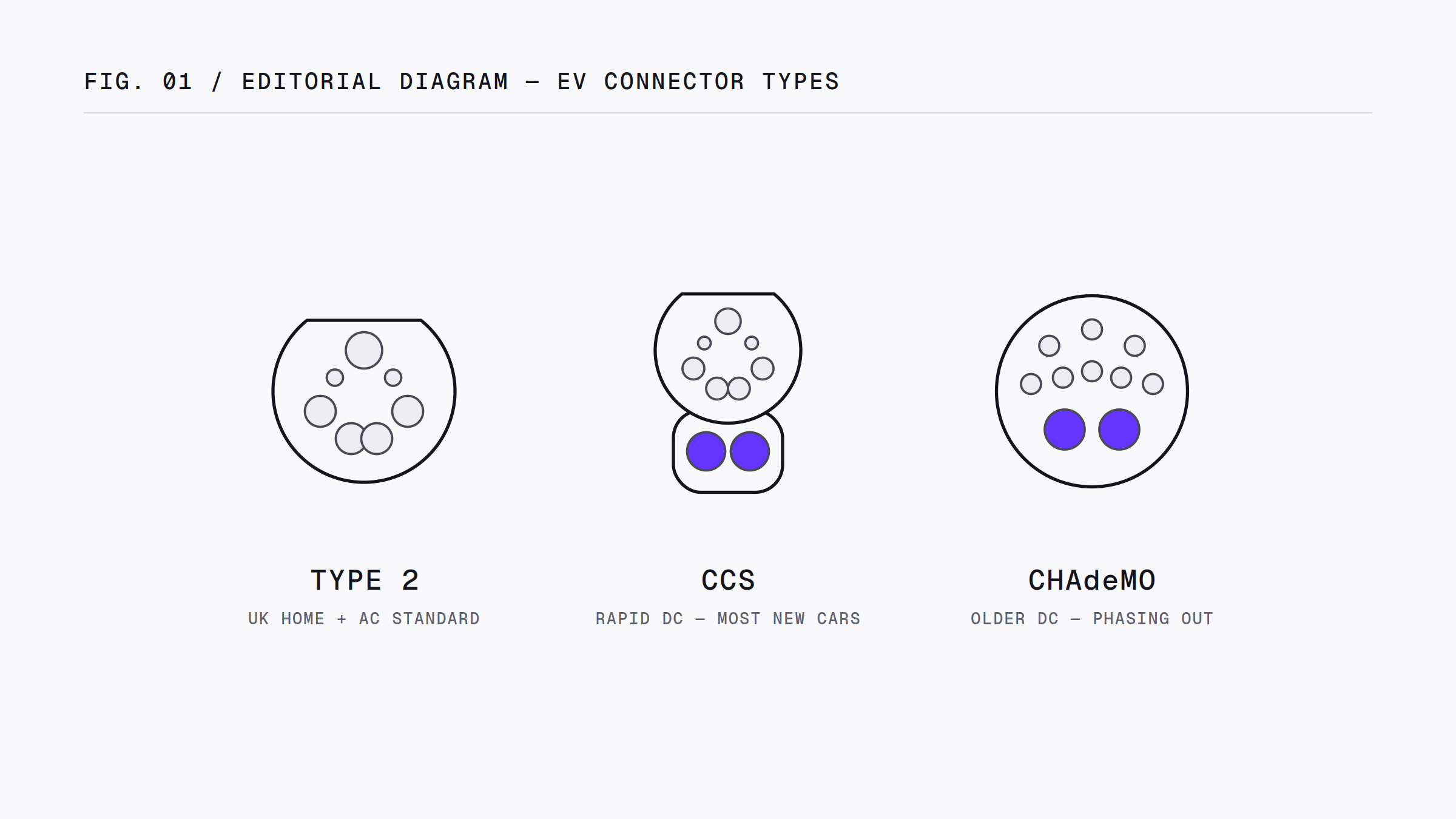 FIG. 01 / CONNECTORS DIAGRAM — UK EV CONNECTOR TYPES
 Type 2 is the connector that matters at home. It’s the seven-pin standard for AC charging across the UK and Europe, and effectively every EV sold in the UK since 2018 uses it for AC charging. Your home charger will be Type 2, your home charging cable will be Type 2, and that’s the whole story for domestic charging.
Type 1 is the older five-pin AC connector, single-phase only, found on early EVs like the first Nissan Leaf and older plug-in hybrids. It’s been superseded by Type 2 and you won’t find it on a new car. The only reason to care is if you’re buying a used EV old enough to have it, in which case you’ll need a Type 2-to-Type 1 cable to use most public AC chargers.
CCS (Combined Charging System) is the rapid DC standard for the vast majority of new UK cars. It adds two large DC pins below the Type 2 shape, so a single port on the car handles both home AC charging and public rapid charging. You don’t buy a CCS cable; rapid chargers have their own attached. CCS is what you’ll use at motorway services.
CHAdeMO is the older rapid DC standard, a separate round connector found mainly on the early Nissan Leaf. It’s being phased out across Europe, no major manufacturer is launching new CHAdeMO cars in the UK, and the public network for it is shrinking. Relevant only if you’re considering a used EV that relies on it.
For buying a home charger, the only connector decision is already made for you: Type 2, matched to your car with the right cable. The rest is useful to recognise, not to act on.
| Connector | Current / charging type | Used for | Status in 2026 |
|---|---|---|---|
| Type 2 | AC (single and three-phase) | Home charging and public AC | UK and European standard |
| Type 1 | AC (single-phase only) | Older EVs' home/AC charging | Legacy, superseded by Type 2 |
| CCS | DC rapid | Public rapid charging, most new cars | Dominant DC standard |
| CHAdeMO | DC rapid | Public rapid for older EVs (early Leaf) | Legacy, being phased out |
Charging speeds in real terms
Charger power is measured in kilowatts, but what you actually care about is miles of range added per hour. The rough conversions for 2026:
A 3-pin “granny” cable delivers about 2.3kW, or 8 to 10 miles of range per hour. That’s an emergency option, not a daily method; a full charge can take well over a day and standard sockets aren’t designed to run at full load for that long.
A 7.4kW home charger, the single-phase standard, adds 25 to 30 miles per hour. Plug in overnight for eight hours and you’ve added 200-plus miles, far more than almost anyone drives in a day.
An 11kW charger (three-phase) adds around 45 miles per hour, and a 22kW charger (three-phase) around 70 to 80, but both are limited by what the car’s onboard AC charger accepts, and most cars cap below 22kW.
Public rapid charging is a different category because it bypasses the car’s AC charger and feeds DC straight to the battery. A 50kW rapid charger adds roughly 100 miles in 30 to 40 minutes; a 150kW-plus ultra-rapid can do the same in 15 to 20 minutes. These are for topping up on long journeys, not daily charging.
The honest takeaway for home charging: 7.4kW is enough for essentially everyone. The maths isn’t close. A 50-mile daily commute uses under two hours of a 7kW charger’s overnight window, leaving hours of headroom. Faster home charging solves a problem most drivers don’t have, at a cost most don’t need to pay.
| Charger | Power | Miles added per hour | Where you'll find it |
|---|---|---|---|
| 3-pin "granny" cable | 2.3kW | 8–10 | Emergency backup only |
| Home wallbox (single-phase) | 7.4kW | 25–30 | Home, workplace, destination |
| Fast AC (three-phase) | 11kW | ~45 | Some workplace and public AC |
| Fast AC (three-phase) | 22kW | 70–80 (if car accepts) | Public AC, some destinations |
| Rapid DC | 50kW | ~100 miles in 30–40 min | Motorway services, forecourts |
| Ultra-rapid DC | 150kW+ | ~100 miles in 15–20 min | Motorway hubs, rapid sites |
Choosing your charger
Once the decisions above are made, the choice of a specific unit is straightforward. For most homes that means a 7.4kW smart charger, tethered or untethered to taste, with a solar diverter if you have panels. We’ve picked the units worth buying in our home EV charger guide, matched to specific situations. If you want to understand what the installation itself involves and what it should cost, our EV charger installation guide covers the process, the regulations, and what’s a legitimate extra versus an upsell.
Frequently asked.
Is a 7kW charger enough?
For almost everyone, yes. A 7.4kW charger adds 25 to 30 miles of range per hour, so an overnight charge adds 200-plus miles. The average UK driver covers 20 to 30 miles a day, which a 7kW charger replaces in about an hour. Faster home charging solves a problem most drivers don't have.
Tethered or untethered, which should I choose?
Tethered has the cable permanently attached and is more convenient day to day. Untethered is a socket you bring your own cable to, which is more flexible if you change cars or want a different cable length later. For most people parking in the same spot daily, tethered is the easier choice; if you want to keep options open, go untethered.
Can I get a 22kW charger at home?
Almost certainly not usefully. 22kW charging needs a three-phase electricity supply, which around 95% of UK homes don't have, and upgrading costs £2,000 to £5,000. Even with three-phase, most EVs cap AC charging at 7.4kW or 11kW, so the car couldn't use the full 22kW anyway. For nearly all homes, 7.4kW is both the practical and the only available answer.
What is a Type 2 connector?
Type 2 is the seven-pin connector that's the standard for AC charging across the UK and Europe. Effectively every EV sold in the UK since 2018 uses it, and every home charger uses it. For home charging, your charger and cable will be Type 2 matched to your car.
Do I need a smart charger?
In practice you'll get one regardless, because new home chargers sold in Great Britain have had to meet smart requirements since 2022. What matters is how good the smart features are. If you're on a cheap overnight EV tariff, smart scheduling lets the charger run automatically in the cheap window (around 7p per kWh versus roughly 25p standard), which saves far more than the charger costs.
What charging speed do I actually need?
At home, 7.4kW. It adds 25 to 30 miles per hour and fully charges any EV overnight. Higher home speeds need three-phase power that most homes lack and most cars can't use. Rapid public charging (50kW and up) is for long-journey top-ups, not daily charging.
What's the difference between Type 2 and CCS?
Type 2 is for AC charging, including all home charging. CCS (Combined Charging System) adds two DC pins below the Type 2 shape and handles rapid DC charging on the public network. Most new UK EVs have a single port that takes Type 2 for home AC and CCS for public rapid. You use Type 2 at home and CCS at motorway services.
Does charging speed depend on my car?
Yes, for AC charging. The car's onboard AC charger sets the maximum rate it can accept, regardless of how powerful the charger is. Most EVs accept up to 7.4kW or 11kW AC, a few accept 22kW. For DC rapid charging, the car's battery and charging curve set the limit instead. This is why a faster home charger doesn't always mean faster charging.
Is a granny cable a real charging option?
Only as a backup. A 3-pin granny cable delivers about 2.3kW, or 8 to 10 miles of range per hour, so a full charge can take well over a day. Standard sockets aren't designed to run at full load for the many hours EV charging needs, so it's an emergency option rather than a daily method. A dedicated 7kW wallbox is the right home solution.
Sources
- IEC 62196 / Type 2 connector standard (Mennekes) — accessed 28 May 2026
- Electric Vehicles (Smart Charge Points) Regulations 2021 (legislation.gov.uk) — accessed 28 May 2026
- Energy Saving Trust: EV charging at home guidance — accessed 28 May 2026
- gov.uk: Electric vehicle smart charging — accessed 28 May 2026
Sources: Editorial methodology documented at /methodology/.
No money changed hands. No brand reviewed paid us or saw this article before publication. Full methodology.
Corrections: if we got something wrong, tell us and we'll fix it in public, dated and signed. Last updated 28 May 2026.