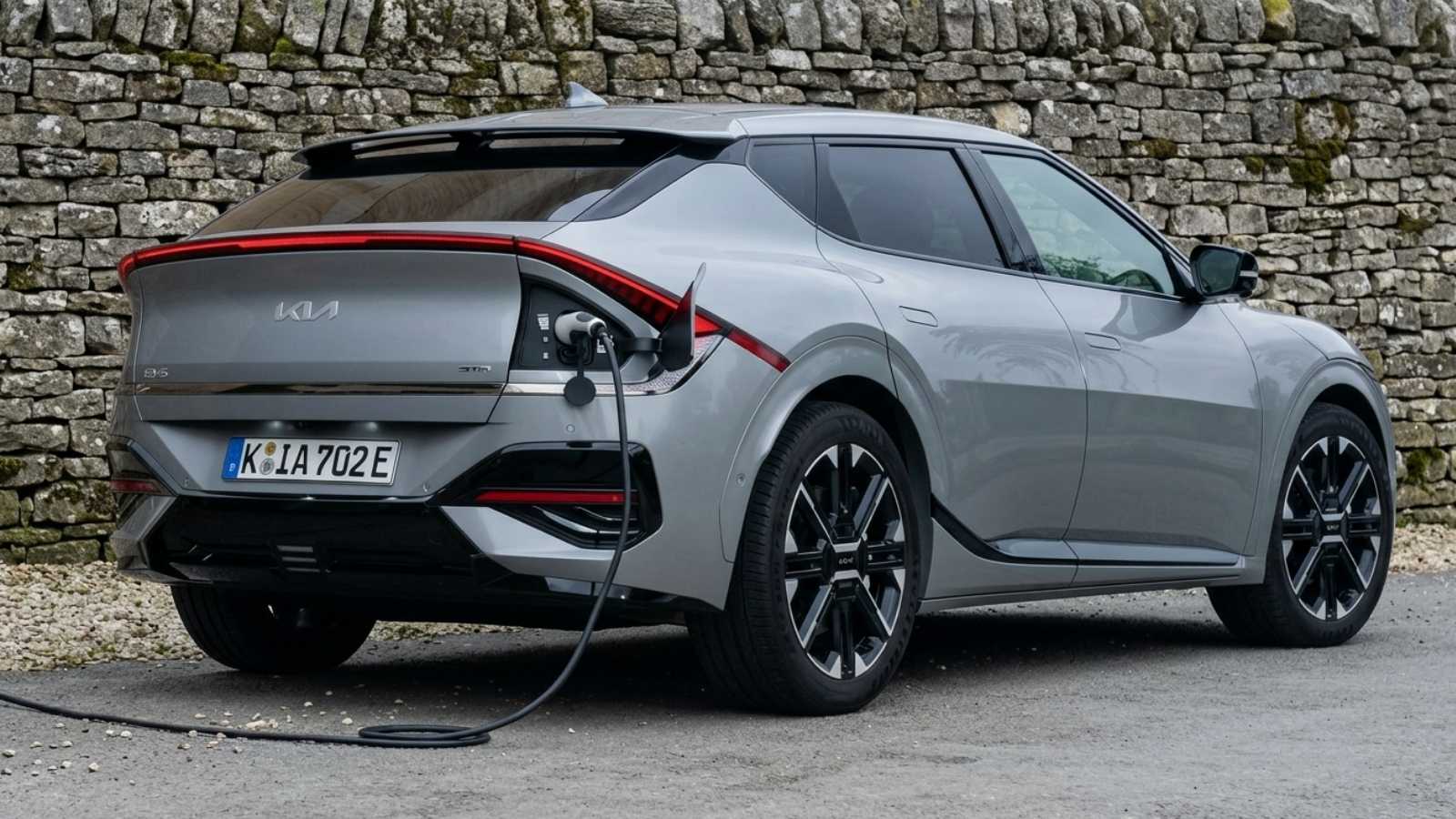
 FIG. 01 / HERO The Kia EV6: the best-driving, best-warrantied car in the mainstream electric crossover class
 The verdict
The Kia EV6 is the sporty one of its family. Where the Hyundai Ioniq 5 is the techy, loungey crossover and the Genesis GV60 the plush one, the EV6 is the striking, low-slung, genuinely good-to-drive sibling, and it is wrapped in the best ownership package in this entire cluster: Kia’s seven-year, 100,000-mile warranty, which no rival here comes close to matching. It is fast-charging on paper, handsome in a Blade Runner sort of way, and one of the better cars of its kind to actually drive.
Through JustWatt’s ownership lens it lands at a considered four, and this was the closest rating call of the cluster, because the EV6 is a mechanical twin of the four-and-a-half-star Ioniq 5 and beats it on warranty and on driver appeal. The half-point gap has to be earned rather than assumed, so here is the honest working. Its signature party trick, ultra-fast charging, does not fully materialise in independent testing, where the measured rate came in at less than half the headline figure. Its practicality is more compromised than the raw numbers suggest, thanks to a high cabin floor that leaves taller passengers sitting knees-up. The heat pump that ought to be standard is a cost option on the top trim only. And the price has crept up to around £45,500 for the long-range car, at which point a Skoda Enyaq beats it on space and value, as it did in one twin test. Set against the Ioniq 5’s more rounded usability, those marks keep the EV6 a half-step behind its own sibling, while the warranty and the drive stop it falling any further. Honest framing: desirable, lovely to drive, brilliantly warrantied, just pipped by its twin on usability and out-packaged by the sensible Skoda on space.
- Lineup
- 63kWh Air (RWD) · 84kWh Air/GT-Line/GT-Line S (RWD or AWD) · GT (AWD); E-GMP 800V
- Battery (usable)
- Standard range ~63kWh · Long range 84kWh (4th-gen NMC, 8% denser, ~1kg lighter)
- Power
- RWD 225bhp · AWD 321bhp · GT ~601bhp combined (up to ~641–650bhp on overboost)
- 0–62mph
- 63kWh/84kWh RWD ~7.3s (What Car? 7.1s to 60mph) · AWD 5.3s · GT ~3.5s
- Range (WLTP)
- 63kWh Air 265 mi · 84kWh RWD up to 361 mi · AWD 339 mi (324 mi GT-Line S on 20in) · GT 279 mi
- Real-world efficiency
- ~3.3–3.4 mi/kWh (cool-weather AWD testing; RWD a little better)
- Max DC charge
- Claimed peak 258kW (10–80% ~18 min, 350kW charger). MEASURED ~125kW weighted average (Autocar, across three 250kW+ chargers)
- V2L
- Standard (vehicle-to-load)
- Heat pump
- £950 cost option, GT-Line S only
- Boot
- ~480–490L (high floor); 20L frunk; low-set, sporty seating position
- Warranty
- 7yr/100,000 mi, battery included, best in the cluster
- Euro NCAP
- 5 stars
- Trims
- Air · GT-Line · GT-Line S · GT
- Price
- from ~£39,235 (63kWh Air) to ~£59,970 (GT), ex-promo list
Charging: what Kia claims, and what testers actually measured
We are leading with this because it is the most important thing an honest review of this car can tell you, and the part the marketing will not. Kia claims the facelifted EV6’s new 84kWh battery peaks at 258kW on a rapid charger, an eight per cent improvement, and quotes a headline 10 to 80 per cent top-up in around 18 minutes on a 350kW unit. That is the number on the brochure.
Now the measured reality. Autocar tested the facelifted car across three separate charging attempts, all at installations offering 250kW or more, and the car never reproduced the claim. Its best result was a weighted-average rate of 125kW, less than half the headline peak. The honest reading is twofold. First, 125kW is still a respectable real-world rate, and Autocar notes it is faster than several key rivals managed in the same testing, including the Polestar 2 Long Range Single Motor, the Tesla Model 3 and the Skoda Enyaq 85, so the EV6 is not slow to charge. Second, you should not buy this car expecting the 258kW headline to be your lived experience, because the independent evidence says it will not be, and in any case you rarely meet a 350kW charger in the wild, so the theoretical peak is academic for most journeys. The 800-volt E-GMP architecture underneath is genuinely capable, but treat the brochure peak as a best-case laboratory figure and the mid-120s as what to plan your trips around.
Range and which EV6 to buy
There are effectively two batteries and three trims, plus the GT flagship. The range opens with a 63kWh standard-range Air, added in 2025 as the affordable entry: it covers an official 265 miles and starts at around £39,235, which neatly sidesteps the Expensive Car Supplement on road tax. Above it, the volume cars all use the larger 84kWh battery introduced in the 2024 facelift, in Air, GT-Line and GT-Line S trims. The longest-range version is the rear-wheel-drive 84kWh car in Air or GT-Line form, good for up to 361 miles officially. Adding the second motor for all-wheel drive drops that to 339 miles, or 324 on the GT-Line S with its larger 20-inch wheels.
For most buyers the 84kWh rear-wheel-drive car is the one to have: it has the longest range, the 225bhp single motor is brisk enough, and it stays on the right side of the £50,000 tax threshold in Air and GT-Line trim. The 63kWh Air is a genuine money-saver if your mileage is modest and you mostly charge at home, but its 265-mile figure makes it a commuter rather than a long-distance car. The all-wheel-drive versions add pace and traction at a cost in range and money. As a real-world reference, independent cool-weather testing of the dual-motor car returned around 3.3 to 3.4 miles per kWh, which is competitive rather than class-leading; the rear-drive car will do a little better.
How it drives
We have not driven the EV6, so this draws on named road tests, and the consensus is clear: this is the driver’s pick of the E-GMP family. Kia has, in What Car?’s words, intentionally sacrificed some cushioning over bumps to create a car that is more agile and fun to drive than the softer Ioniq 5, and the result is an electric crossover that is genuinely entertaining down a back road while staying comfortable on the motorway. Carwow rates the suspension tuning as particularly well judged for lumpy British tarmac, calling it a very accomplished all-rounder, good fun to fling about, comfy at a cruise and easy around town. The single-motor rear-drive car manages an official 0 to 62mph of about 7.3 seconds, with What Car? recording 7.1 seconds to 60mph in its own test, while the dual-motor car cuts that to 5.3 seconds.
The one caveat is wheel size. What Car? and Autocar agree that the 20-inch wheels fitted to the GT-Line S generate noticeable road noise and a firmer, occasionally thumpy ride, whereas the 19-inch wheels on the Air and GT-Line are quieter than most rivals, including the Tesla Model Y. The brake-pedal feel, where regenerative and friction braking blend, is rated among the best in the class for its smooth, linear response. If you want the EV6 at its most comfortable and refined, stick to the smaller wheels; the agility is there on either.
Practicality, honestly: the high-floor compromise
This is where the EV6’s numbers flatter it, and where an honest review has to add the caveat. On paper the rear legroom is limousine-grade, and Autocar confirms it: there is generous room in both rows. But because the battery sits in the floor and the floor is high, taller adult passengers sit with their knees in mid-air and their thighs unsupported, which Autocar notes can be tiring over long distances, and there is little room to slide your feet under the front seats. The upshot is that the space is not quite as comfortable or usable as the raw measurements suggest. The low, sleek roofline, among the lowest of any electric SUV, also pinches headroom for the tallest occupants, and the GT-Line S sunroof makes that worse, so very tall drivers should avoid it.
The boot tells a similar story. At around 480 to 490 litres it is a usable size, more than a Ford Mustang Mach-E offers, but it is smaller than a Skoda Enyaq’s 585 litres and dwarfed by a Tesla Model Y, and the floor sits high because of the battery, so outright loading volume is more restricted than the footprint implies. There is a small 20-litre front boot for cables. None of this makes the EV6 impractical, but it is the clearest reason it trails its more space-efficient sibling and loses ground to the boxier, more sensible Skoda. Buy it for how it looks and drives, and check the rear seat fits your family before you sign.
Inside: screens, real buttons and a sense of occasion
The cabin is a strong showing and one of the EV6’s draws. Twin 12.3-inch curved screens span the dash, the facelift brought a neater three-spoke steering wheel in place of the old bulky two-spoke item, and there is a genuine sense of occasion to the space-age floating console and driver-angled controls. Crucially, Kia kept physical switchgear: a clever touch panel beneath the central screen toggles between climate and shortcut controls, and there are real rotary dials, which makes the EV6 far less distracting to use on the move than an Enyaq, where more functions are buried in the touchscreen. Material quality is good without troubling BMW or Mercedes, the infotainment is bright and logical if not the slickest-graphiced or fastest-responding, and higher trims add a head-up display, a Meridian sound system and a fingerprint scanner to load driver profiles.
The honest interior note is the seating position that follows from the high floor: you sit low, more like a hatchback than a commanding SUV, which some buyers will like and others will not expect from a car this tall. It is a stylish, well-built and easy-to-use cabin; just go in knowing it is sportily low-set rather than airy and upright.
The Kia EV6 GT
The range-topping EV6 GT deserves its own section, because it is a very different proposition from the rest of the line-up. It shares its hardware with the Hyundai Ioniq 5 N: the same dual motors, the same 84kWh battery, and the same virtual-gearshift and synthesised-sound tricks. Power is the one figure worth being careful about, because sources quote it differently for a reason. Autocar and Electrifying cite a combined output of around 601bhp (roughly 223bhp at the front axle and 378bhp at the rear), while Kia’s own UK material quotes up to 641 horsepower with the short-burst overboost engaged, which Carwow rounds to 650hp. So the honest figure is around 601bhp continuous, rising to roughly 641 to 650 on overboost, and either way it dispatches 0 to 62mph in about 3.5 seconds. The bigger battery lifts the GT’s range to an official 279 miles, on a par with the Ioniq 5 N.
What matters more than the number is the character, and here Kia has drawn a deliberate line. As Autocar explains, Kia pitches the GT as a grand tourer rather than a track weapon: same shattering performance, but tuned for everyday comfort, with adaptive suspension that stays supple even on its 21-inch wheels, and notably good refinement for the class. It keeps a drift mode and the paddle-controlled adaptive regen, and it is hugely, genuinely fast. But if you want the hardcore, track-focused version of this hardware, the more aggressively tuned Hyundai Ioniq 5 N is the sharper tool; the EV6 GT is the one to have if you want the pace wrapped in comfort. It starts at around £59,970, which is a reasonable step up from the GT-Line S given what it adds.
EV6 vs Hyundai Ioniq 5: which sibling?
The Hyundai Ioniq 5 is the single most useful comparison, because the two are mechanical twins and the choice between them is about character and ownership rather than engineering. The EV6 is the sportier, better-driving, more striking car, and it has the decisive warranty advantage: seven years against the Hyundai’s five. The Ioniq 5 answers with more rounded everyday usability: a flatter floor and more space-efficient, genuinely lounge-like cabin without the EV6’s knees-up compromise, a sliding rear bench, and a more comfortable, less firm ride. The honest split is that the EV6 is the one to buy if you want the better drive and the longer warranty and you can live with the firmer, lower-set, less practical cabin, and the Ioniq 5 is the one to buy if all-round comfort and usability lead. They are close enough that the warranty and a back-to-back test drive should decide it. For what it is worth, we rated the Ioniq 5 a half-point higher precisely because its usability is more rounded, but the EV6’s warranty is the strongest argument for calling them level.
EV6 vs Skoda Enyaq: the sensible one wins on space
The Skoda Enyaq is the cross-shop that exposes the EV6’s practicality gap most clearly. The Enyaq has a much bigger and more usable boot, a roomier and more comfortable rear seat without the high-floor issue, and it is keener on value, with entry trims that even qualify for the government grant the EV6 cannot get. In an Auto Express twin test the more practical Skoda came out ahead of the EV6 Coupé on exactly those grounds of space and range. The EV6 replies with a more engaging drive, a more characterful and better-built-feeling cabin with proper physical controls, the far longer warranty, and sharper, more distinctive styling. If space, comfort and value lead your decision, the Enyaq is the smarter family buy; if you want the better-driving, better-warrantied, more desirable object and your family fits, the EV6 earns it.
EV6 vs Tesla Model Y
The Tesla Model Y is the volume benchmark, and the trade is familiar. The Tesla has a vastly bigger boot, more range in Long Range form, the Supercharger network and faster real-world charging access. The EV6 counters with a far nicer cabin, a more engaging drive, real physical controls, and the seven-year warranty against Tesla’s shorter cover. The Model Y is the more practical and better-supported tool; the EV6 is the more desirable and better-built thing to own. Which wins depends on whether outright space and charging convenience or cabin quality and driving feel lead your thinking.
EV6 vs Polestar 2
The Polestar 2 is a looser cross-shop, a fastback rather than a crossover, but Kia’s upmarket ambitions bring it into play. The Polestar has the more premium-feeling cabin and the best built-in tech in the class, but it is a run-out model from a financially uncertain brand, where the EV6 offers a far steadier ownership story and the longest warranty here. If design and tech lead and you are leasing, the Polestar; if ownership security, warranty and practicality lead, the EV6.
The warranty, and what it is actually worth
The seven-year, 100,000-mile warranty is the EV6’s single strongest ownership card, and it is worth spelling out why it matters rather than treating it as a line on a spec sheet. It is comfortably the best in this cluster: Hyundai offers five years, BMW and Skoda just three, and Polestar covers only the battery for eight. Seven years of cover is long enough to span the entire ownership period for most buyers, which removes a meaningful chunk of the financial risk that comes with a complex modern EV, and it transfers to subsequent owners, which props up resale value. On a total-cost-of-ownership basis, that is real money and real peace of mind, and it is exactly the kind of ownership factor that JustWatt weighs heavily and that the badge-led reviews tend to mention only in passing. The battery itself is covered for the same seven years and 100,000 miles, with a state-of-health guarantee, which is reassuring on the one component buyers worry about most.
Running costs, lease and finance
This is where most EV6s reach the road, and where the car makes a strong case. As a pure EV it sits in the lowest benefit-in-kind band, 4 per cent for 2026/27 rising to 5 per cent the year after, so company-car tax is tiny against a petrol equivalent, and our company-car tax calculator gives the figure for your salary and trim. Combine that with the seven-year warranty, which lowers the total cost of ownership in a way a monthly headline rate does not capture, and the EV6 is a genuinely sensible lease, finance or salary-sacrifice choice. When you compare lease and PCP deals, look at the all-in monthly cost after tax rather than the list price or headline rate alone, because the BIK saving and the long warranty change the real picture.
A word on offers and grants, because the two get conflated. The EV6 does not qualify for the government Electric Car Grant: even the cheapest 63kWh Air, at around £39,235, is above the roughly £37,000 cap, so it gets nothing from the scheme, unlike a Skoda Enyaq. Separately, Kia is running its own time-limited promotion of £1,500 towards the PCP deposit on the EV6, for retail orders placed between April and the end of June 2026. That is a dated manufacturer finance offer, not a grant, it may be extended or withdrawn, and it does not reduce the P11D value your company-car tax is based on, so treat it as a deal to check rather than a permanent price.
On road tax, every EV6 pays £10 in the first year and then the £200 standard rate. The Expensive Car Supplement is trim-dependent here, which is worth getting right because Kia’s own site still quotes the old threshold: the surcharge now applies only to cars over £50,000, so the 63kWh Air, the 84kWh Air and the rear-drive GT-Line all sneak under and escape it, while the dual-motor versions, the GT-Line S and the GT cross the line and pay it for five years from the second year. Our EV road tax guide has the detail. For energy costs, our EV charging cost calculator and EV versus petrol calculator will run the numbers on your own mileage and tariff.
Which EV6 to buy
The advice is clean. For most buyers the 84kWh rear-wheel-drive car in GT-Line trim is the sweet spot: the longest range, the quieter 19-inch wheels, a generous kit list including the head-up-display-free but well-equipped cabin, and a price that stays under the £50,000 surcharge threshold. The 84kWh Air is the value pick and wants for little. The 63kWh Air is the genuine budget entry if your mileage is low. Step up to GT-Line S only if you want the 20-inch wheels, sunroof and Meridian audio, and accept the firmer ride, the headroom hit and the surcharge; it is also the only trim on which you can add the £950 heat pump, which is worth having if you do a lot of cold-weather miles. The all-wheel-drive cars add traction and pace most buyers do not need. And the GT is the indulgence: buy it for the performance-with-comfort brief, knowing the Ioniq 5 N is the sharper track car if that is what you actually want.
Who should buy it
Buy the EV6 if you want the best-driving, best-looking and best-warrantied car in the mainstream electric crossover class, you value how a car drives and how long it is covered over outright cabin space, and you are running it on finance, a lease or salary sacrifice where the low BIK and the seven-year warranty make it a sensible long-term proposition. On those terms it is one of the most desirable cars of its kind.
Look harder if rear-seat comfort for tall passengers or outright boot space top your list, where a Skoda Enyaq is roomier and better value and the EV6’s own Ioniq 5 sibling is more usable; or if you are buying primarily on a fast-charging headline, because the independent evidence says the real-world rate is good rather than the class-leading figure the brochure implies. The EV6 is not a car to talk you out of. It is a car to choose with the practicality and the charging reality understood, and rewarded, when you do, by the best ownership package in the class. That balance is why it scores as it does here, a genuine half-step behind its sibling rather than level with it, and we would happily hear the case for calling them equal.
How we assessed the EV6
This is a research-synthesis review. We have not driven the Kia EV6, so every judgement about how it rides, handles, charges or performs in the real world is drawn from named professional road tests and owner reports, attributed in the text, not presented as our own testing. The charging figures are a case in point: where we say the measured rate was around 125kW against a claimed 258kW peak, that measurement is Autocar’s, not ours. Specifications, prices, trims, charging speeds, grant eligibility and tax figures are stated per variant from Kia UK and primary sources, verified June 2026; prices, trim ladders and finance offers move, so check the current position before ordering. Where sources disagreed, including on the GT’s power figure, we have shown the range and reconciled against Kia UK’s own figures rather than averaging. If we have got something wrong, tell us and we will fix it in public, dated and signed.
Pros and cons.
Pros
- ✓Best warranty in the class by a distance: 7 years / 100,000 miles, battery included
- ✓The best-driving car in the E-GMP family: agile, fun, well-tuned for British roads
- ✓Striking, distinctive design inside and out, with real physical controls retained
- ✓Strong real-world charging (~125kW measured) even though it misses the headline peak; 800V architecture, V2L standard
- ✓Excellent lease, finance and salary-sacrifice case: 4% BIK plus the long warranty's TCO benefit
Cons
- ✗Charging claim (258kW) not reproduced in independent testing (~125kW measured by Autocar)
- ✗High cabin floor leaves taller passengers knees-up; practicality flatters on paper
- ✗Boot (~480–490L) trails the Enyaq and is dwarfed by a Model Y; high boot floor
- ✗Heat pump is a £950 cost option on the top GT-Line S trim only
- ✗No Electric Car Grant (over the £37k cap); price has crept up; out-packaged on value by the Enyaq
Frequently asked.
How far does the Kia EV6 really go, and which version should I buy?
The 63kWh Air covers an official 265 miles; the volume 84kWh cars go up to 361 miles in rear-drive Air or GT-Line form, or 339 (324 on GT-Line S wheels) with all-wheel drive. The 84kWh rear-wheel-drive car is the one to buy for most people: longest range, ample performance, and it stays under the £50,000 tax threshold in Air and GT-Line trim. Real-world efficiency is around 3.3 to 3.4 miles per kWh, competitive rather than class-leading.
How fast does the Kia EV6 actually charge?
Kia claims a 258kW peak and a 10 to 80 per cent top-up in about 18 minutes, but that is a best-case figure. In independent testing across three 250kW-plus chargers, Autocar's facelifted car never reproduced the claim and recorded a best weighted average of around 125kW, less than half the headline. That is still a respectable real-world rate, faster than a Polestar 2 Long Range, Tesla Model 3 or Skoda Enyaq 85 in the same testing, so the EV6 charges well; just don't expect the 258kW number to be your lived experience.
Is the Kia EV6's 7-year warranty as good as it sounds?
Yes, and it is the EV6's strongest ownership card. Seven years and 100,000 miles, battery included, is comfortably the best in this class, against Hyundai's five years and BMW's and Skoda's three. It is long enough to cover the whole ownership period for most buyers, removes much of the financial risk of a complex EV, and transfers to later owners, which supports resale value. On a total-cost-of-ownership basis it is worth real money.
Is the Kia EV6 a good lease or salary-sacrifice car?
Very. As a pure EV it sits in the lowest benefit-in-kind band, 4 per cent for 2026/27, so company-car tax is small, and the seven-year warranty lowers the total cost of ownership in a way a headline monthly rate does not show. When comparing lease and PCP deals, look at the all-in monthly cost after tax rather than the list price. Note Kia's £1,500 PCP deposit contribution is a dated retail finance offer, not a grant.
Kia EV6 vs Hyundai Ioniq 5: which sibling should I choose?
They are mechanical twins, so it comes down to character and ownership. The EV6 is the sportier, better-driving, more striking car with the longer warranty (seven years versus five). The Ioniq 5 is more usable day to day: a flatter floor without the EV6's knees-up rear seat, a sliding bench and a comfier ride. Choose the EV6 for the drive and the warranty if your family fits the cabin; choose the Ioniq 5 for all-round comfort and practicality.
Does the Kia EV6 qualify for the Electric Car Grant?
No. Even the cheapest 63kWh Air, at around £39,235, is above the roughly £37,000 government grant cap, so the EV6 qualifies for nothing, unlike a Skoda Enyaq's entry trims. Kia's own £1,500 PCP deposit contribution is a separate, time-limited finance offer rather than a grant, and it does not reduce the P11D value used for company-car tax.
Is the Kia EV6 GT worth it?
It depends what you want. The GT is hugely fast, with around 601bhp rising to roughly 641 to 650 on overboost and 0 to 62mph in about 3.5 seconds, using the same hardware as the Hyundai Ioniq 5 N. But Kia deliberately tunes it as a comfortable grand tourer rather than a track car, so if you want the sharpest, most track-focused version of this hardware, the Ioniq 5 N is the better buy. The EV6 GT is the one to have if you want shattering pace wrapped in everyday comfort, from around £59,970.
Sources
- Kia UK: EV6 range, specification, pricing and PCP offer — accessed 23 Jun 2026
- Autocar: Kia EV6 review (2026 road test and charging test) — accessed 23 Jun 2026
- Autocar: Kia EV6 GT review (2026) — accessed 23 Jun 2026
- What Car?: Kia EV6 review — accessed 23 Jun 2026
- Carwow: Kia EV6 review — accessed 23 Jun 2026
- RAC Drive: Kia EV6 review (pricing and trims) — accessed 23 Jun 2026
- Electrifying: Kia EV6 GT review — accessed 23 Jun 2026
Sources: Manufacturer documentation, verified owner reports, and industry sources. Not hands-on tested.
Corrections: if we got something wrong, tell us and we'll fix it in public, dated and signed. Last updated 23 June 2026.