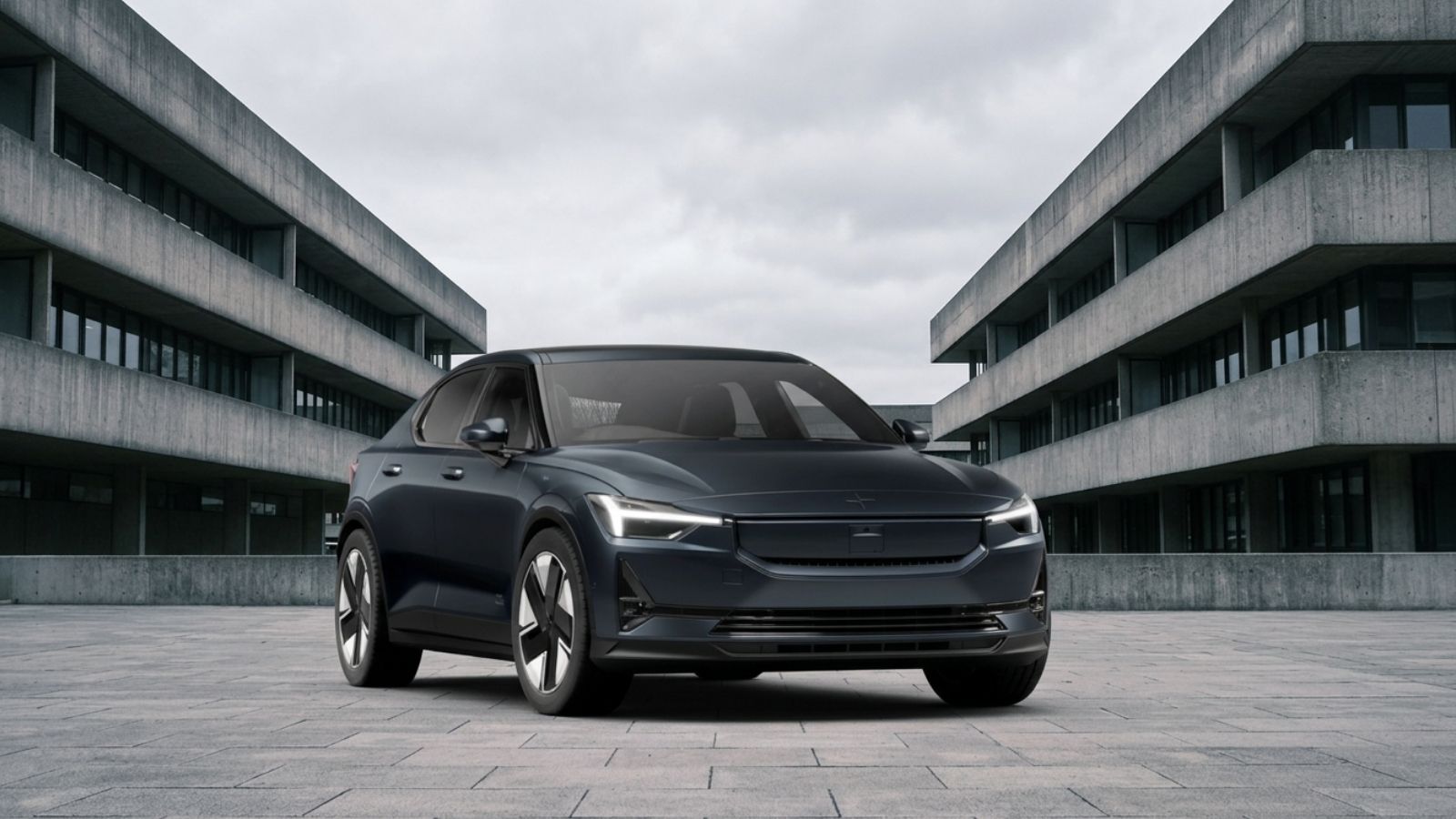
 FIG. 01 / HERO The Polestar 2: the design-and-tech pick of the premium electric fastback class
 The verdict
The Polestar 2 is the quietly excellent electric fastback that most people never quite get round to considering, and that is a shame, because in the right specification it is one of the best cars of its kind. It is a handsome, Swedish-designed, Chinese-built saloon with a cabin that feels genuinely more premium than a Tesla Model 3’s, the best built-in tech in the class thanks to its native Google system, an engaging rear-drive chassis since the 2023 overhaul, and, in Long Range Single Motor form, more than 400 miles of official range at a price that undercuts the Tesla. On the car alone, that version knocks on the door of four and a half stars.
It lands at a considered four once you weigh what an honest ownership review has to weigh. The rear seats are tight, with six-footers crouching for headroom. The ride is firmer than it should be, especially on the bigger wheels. Efficiency is good rather than class-leading, and the cheaper Standard Range car’s real-world range disappoints. And, uniquely in this part of the market, there is a genuine ownership-context overhang that the badge-led reviews tend to skip: this is a run-out model, discontinued in the US with an all-new Polestar 2 due in 2027, sold by a brand that is posting heavy losses and leaning on repeated funding from Geely and Volvo. None of that makes it a bad car. It makes it a car to buy with your eyes open, and ideally on a lease rather than with cash. Honest framing: a lovely thing, late in its life, from a brand worth understanding before you sign.
- Lineup
- Standard Range Single Motor (RWD) · Long Range Single Motor (RWD) · Long Range Dual Motor (AWD) · Dual Motor Performance Pack (AWD)
- Battery (usable)
- SR 67kWh (~69–70kWh gross) · LR (SM & DM) 79kWh (82kWh gross)
- Power
- SR SM ~268bhp · LR SM 295bhp · LR DM 421bhp · DM Performance 469bhp
- 0–62mph
- SR/LR SM 6.2s · LR DM 4.3s · DM Performance 4.0s
- Top speed
- ~127mph
- Range (WLTP)
- SR SM up to 344 mi · LR SM up to 406 mi · LR DM up to 368 mi · DM Performance ~350 mi
- Real-world efficiency
- ~3.3 mi/kWh (LR SM, Auto Express company-car test; ~271 mi indicated); gentler driving betters 4 mi/kWh
- Max DC charge
- SR SM ~135kW (10–80% ~34 min) · LR versions ~205kW (10–80% ~28 min); Autocar measured ~124kW weighted real-world on LR. 400V CMA platform
- Body
- Five-door fastback (hatchback tailgate); small frunk; 60/40 rear split + ski-hatch; no rear wiper; tight rear headroom
- Warranty
- Battery 8yr/100,000 mi; 12yr corrosion; 3yr roadside assistance
- Euro NCAP
- 5 stars (2021)
- Trims/packs
- Plus / Pilot / Performance packs; gloss-black exterior detailing option
- Tech
- Google Android Automotive built-in (Maps/Assistant/OTA); Apple CarPlay (wired); faster processor Sept 2025; B&W audio option
- Platform
- Volvo CMA (shared with Volvo EX40/EC40)
- Price
- from ~£44,950 (SR SM) to ~£57,950 (DM Performance), ex-promo list
Range, and which Polestar 2 to buy
There are effectively four versions, and the choice between them is unusually clear because the reviews converge so completely. The entry Standard Range Single Motor uses a roughly 69kWh battery (67 usable) for an official figure of up to 344 miles. The Long Range Single Motor steps up to an 82kWh battery (79 usable) and the headline number: more than 400 miles, officially up to around 406. The Long Range Dual Motor adds a second motor and four-wheel drive but, with the extra weight and performance, drops to up to 368 miles, and the Dual Motor with the Performance Pack falls again to around 350.
The Long Range Single Motor is the one to buy, and every reviewer says so. Autocar is unequivocal that for performance, ride, handling and range it is the version to go for, and it is also cheaper than the Dual Motor. The Standard Range car is the one to approach with care: Autocar found its real-world range dips below 250 miles, which undermines one of the 2’s most appealing traits and puts your next charge on the radar sooner than you would expect. As a real-world reference for the version that matters, Auto Express’s electric company-car group test recorded a 271-mile indicated range from the refreshed Long Range Single Motor at 3.3 miles per kWh, the fourth-most efficient car in that test, while Carwow managed a solid 330 miles in chilly conditions. Both are some way short of the 406-mile official figure, as EV range figures always are, but they are strong numbers for the money, and an Auto Express long-term driver reported regularly bettering 4.5 miles per kWh on a gentle run. The takeaway: the Long Range Single Motor genuinely delivers a long-distance car; the Standard Range one is a town-and-commute car wearing a long-range badge.
Charging: competitive for the price, not Ioniq-fast
This is a 400-volt car on Volvo’s CMA platform, so it charges respectably rather than spectacularly, and the figure depends on which one you buy. The Standard Range Single Motor peaks at around 135kW, which Auto Express puts at a 10 to 80 per cent top-up in about 34 minutes. The Long Range versions charge faster, peaking at around 205kW for the same top-up in roughly 28 minutes. Polestar has improved this over the car’s life, lifting the Long Range peak from 150kW to 205kW, and in Autocar’s independent rapid-charging test the Long Range car recorded a weighted average of 124kW, which it called very respectable for the price and faster than plenty of similarly priced alternatives.
The honest context is that this is competitive for the money but not a match for the fastest rivals. A Hyundai 800-volt car or a Tesla will add miles more quickly, so on back-to-back motorway legs the Polestar will have you plugged in for a little longer. For the overwhelming majority of buyers, who charge at home overnight and rapid-charge only on longer trips, it is perfectly adequate. A 7kW home wallbox takes roughly ten hours to fill the Standard Range battery and around twelve for the Long Range cars, though almost nobody charges from empty.
How it drives
We have not driven the Polestar 2, so this draws on named road tests, and the consensus has shifted markedly in the car’s favour since 2023. The switch of the single-motor cars from front-wheel to rear-wheel drive in that overhaul, Carwow reckons, unlocked another level of driving enjoyment: the 2 is now agile, engaging and fun, even if it is not as sharp as a petrol BMW 3 Series. What Car? is more measured, finding it handles tidily with well-weighted steering and decent grip but is not especially fun or engaging, and Top Gear’s summary is the neatest of all: well finished, practical and adept, but stopping just short of being outright fun. The Dual Motor cars are seriously quick, with the Performance Pack version hitting 0 to 62mph in four seconds flat, though even then the Model 3 Performance is quicker still.
The consistent criticism is the ride. Carwow finds it very firm over bumps, thumping into potholes with less grace than it should, and advises choosing the smallest 19-inch wheels where possible. Auto Express goes further, reporting that the car fidgets on broken surfaces and is worse in the back, and that it generated the most wind and road noise of any car in its comparison against the Model 3. It is worth noting the picture is not unanimous: an Auto Express long-term driver found the ride well controlled and the cabin refined, belying the reports that it is too hard. The fair read is that the 2 rides firmly, that the big wheels make it worse, and that you should test one on roads you actually drive before committing, ideally on the 19s.
Inside: a genuinely premium cabin and the best tech in the class
The cabin is one of the Polestar 2’s strongest cards. Build quality, Top Gear says, would give Audi drivers pause, and the Scandinavian design, black ash veneer and sustainable trim materials give it a calm, expensive feel that most reviewers rate above a Tesla Model 3’s more minimalist interior. It is understated rather than flashy, which is the point.
The technology is the real differentiator. The Polestar 2 runs Google’s Android Automotive built in, with native Google Maps, Google Assistant and over-the-air updates, and Auto Express rates the integration among the best it has experienced, with the home screen split cleanly into maps, search, phone and media. A faster processor arrived in September 2025, and a Bowers and Wilkins speaker upgrade is available. Crucially for anyone put off by the Google focus, Apple CarPlay is now supported over a wired connection, so the old complaint that iPhone users were locked out no longer applies. The one ergonomic mark against it is the screen size: the central display is smaller than a Tesla’s or a BMW i4’s, which makes some of the on-screen controls fiddlier to hit on the move.
On the “Polestar 2 black” question that buyers often search, the car suits a dark palette particularly well: the restrained, slab-sided design looks its best in the solid and metallic blacks, and Polestar offers gloss-black exterior detailing as part of its option packs, which swaps the bright trim around the windows and badging for a stealthier look. It is a styling choice rather than a performance one, but on a car this clean it works.
Practicality: a usable fastback with two real caveats
The Polestar 2 is a fastback, so although it looks like a saloon it has a hatchback tailgate and a usefully square boot that bears comparison with a BMW i4’s for everyday carrying, plus a small front boot for cables. The rear seats split and there is a ski-hatch for longer items. For a couple or a small family it is practical enough.
Two caveats matter. The first is rear space: the sloping roofline and raised battery floor mean rear headroom and knee room are tight, and taller passengers will feel it on a longer journey, which is the single biggest practicality gap to a more upright SUV like a Skoda Enyaq. The second is a small but real irritation that the long-term testers keep returning to: there is no rear wiper, which on a fastback with a near-horizontal rear screen is a genuine miss in British weather. Neither is a dealbreaker, but both are the kind of thing you only discover after a week with the car, which is exactly why they belong in the review.
The part other reviews skip: Polestar’s finances and the run-out 2
This is the section the badge-led reviews leave out, and it is the one that matters most to anyone buying with their own money rather than leasing through work. We will deal in stated facts, attributed and dated, and we will not speculate about what happens next. But you should have the picture before you sign.
Polestar is losing money, and not in a small way. For the 2025 full year the company reported retail sales of more than 60,000 cars and revenue above three billion US dollars, but a net loss of around 2.36 billion dollars, which works out at roughly 39,000 dollars lost per car sold. In the first quarter of 2026, the most recent results published in May, the picture was mixed: record first-quarter volume of 13,126 cars, up seven per cent, but a net loss of 383 million dollars, more than double the same quarter a year earlier, and a gross margin that swung negative to minus 3.2 per cent. That last figure is the important one, because a negative gross margin means the company is losing money on the cars themselves, before overheads, not just on running the business. Its cash position fell from about 1.16 billion dollars at the end of 2025 to 676 million by the end of March 2026.
Now the other side of the ledger, because it is just as real. Volume is growing, not shrinking. The UK and European retail network is expanding, from around 154 sales points a year earlier to 230 by the end of the first quarter of 2026, with Polestar targeting 250 globally by the end of the year. And the brand is being repeatedly and recently backed by its owners: in the first quarter of 2026 alone it raised about 0.7 billion dollars of fresh equity from financial institutions and agreed to convert roughly 639 million dollars of Geely and Volvo loans into equity, with more conversions due in the second quarter. Polestar is majority-owned by Geely and its founder Li Shufu, with Volvo Cars also a shareholder, and those owners have stepped in each time it has needed capital. These figures are as reported for the 2025 full year and the first quarter of 2026; the position moves every quarter, the next results are imminent, so check the latest before you act.
The specific point about the car in front of you is that the current Polestar 2 is late in its life. It has been discontinued in the US, an all-new Polestar 2 is due in 2027, and Polestar UK is running a £3,500 seasonal discount across all variants for orders placed before 30 June 2026, which is a run-out incentive rather than a durable price, so treat it as a dated, time-limited offer and check whether it has been extended or replaced.
What does all this mean for a buyer? In practical terms: servicing and parts should be fine and improving, because the UK network is growing rather than contracting; software and over-the-air support continue; and the battery carries an eight-year, 100,000-mile warranty, currently backed by a Geely-owned group. The one concrete financial risk to you is residual value: a run-out model from a brand in an uncertain financial position can see its resale soften, and that is a genuine cost-of-ownership and lease-pricing factor. The honest read is that this is a risk to weigh, not a reason to run. And it points to a clear, useful conclusion that ties straight to how most people should buy this car anyway: a cautious buyer might favour leasing or salary sacrifice over an outright cash purchase here, precisely because the residual-value risk then sits with the funder rather than with you, and should factor the 2027 next-generation car into the timing. We are not telling you Polestar will fail or leave the UK, and we have no basis to. We are telling you to know the facts and choose the ownership structure that fits them.
Polestar 2 vs Tesla Model 3
The Model 3 is the eternal benchmark, and the comparison has genuinely tightened. After its updates, the Polestar now out-ranges the Model 3 in Long Range Single Motor form, has a markedly nicer interior by near-universal agreement, and undercuts it by around a thousand pounds in that key trim, per Top Gear. The Tesla answers with faster charging via the Supercharger network, stronger efficiency, and, What Car? argues, a more comfortable and more practical car that is cheaper to buy across the range. The split is character: the Polestar is the more desirable, better-built, nicer-to-sit-in car, and the Tesla is the more rational, better-supported, faster-charging one. For once, the badge-led choice and the spreadsheet choice point at different cars, and which wins comes down to whether cabin quality and design or charging and efficiency lead your thinking.
Polestar 2 vs BMW i4
The BMW i4 is the premium-saloon rival, and a closer match than it first looks because both are five-door liftbacks rather than true saloons. The i4 is the better car to drive, with a more polished ride and BMW’s badge and dealer reassurance, and it charges at a broadly similar rate. The Polestar counters on price, on range in Long Range Single Motor form, on its Google tech, and on a cabin many testers rate as its equal. The i4 also has the steadier ownership story: an established maker with a financially secure parent, against the Polestar’s run-out status and brand-finance overhang. If outright polish and peace of mind lead, the i4; if design, tech and value lead and you intend to lease, the Polestar makes a strong case.
Polestar 2 vs Hyundai Ioniq 6
The Hyundai Ioniq 6 attacks on exactly the Polestar’s softer points. It is more efficient still, with one of the most aerodynamic bodies in the class, it charges dramatically faster on its 800-volt platform, and Hyundai’s five-year warranty and secure finances make for a far more reassuring ownership story than a run-out Polestar can offer. The Polestar replies with a more premium-feeling cabin, the better built-in tech, sharper design appeal and a more engaging drive. This is the clearest case in the group of head against heart: the Ioniq 6 is the more sensible long-term ownership proposition, and the Polestar 2 is the more desirable object. If you are leasing and want the nicer car, the Polestar; if you are buying to keep and want the surer thing, the Hyundai.
The wider field
A few others belong on the list. The Tesla Model 3, covered above, remains the volume benchmark. The BYD Seal undercuts the Polestar on price and is well equipped, though it cannot match the 2’s steering or cabin polish. The MG IM5 is the newest value-led threat, with fast charging and a long range for the money. And Polestar’s own platform cousins, the Volvo EX40 and EC40, offer much of the same engineering in a more conventional Volvo wrapper with the reassurance of the Volvo dealer network, which, given the brand-finance discussion above, some buyers will find a meaningful alternative. None unseats the Polestar 2 as the design-and-tech choice, but several beat it on running costs, charging or ownership security.
Ownership: warranty, residuals and the lease hedge
The ownership picture is where the car’s strengths and its overhang meet. On the plus side, the battery is covered for eight years or 100,000 miles, there is long corrosion cover and three years of roadside assistance, and the growing UK network means servicing access is improving rather than shrinking. The reliability of the underlying Volvo-derived engineering is well regarded, though the early cars had their share of infotainment gremlins, which the over-the-air updates have steadily addressed.
The weak point is residual value, for the reasons set out above: a run-out model from a financially stressed brand carries more resale uncertainty than, say, a BMW or a Hyundai. That is not a reason to avoid the car, but it is the reason the lease maths matters so much here, and it leads to the same conclusion the finances do. If you lease or take the car through salary sacrifice, the residual-value risk sits with the funder, not with you, which turns the single biggest financial worry about a Polestar 2 into someone else’s problem. For this car, more than most, the route in matters as much as the car itself.
Running costs and the salary-sacrifice case
This is where the Polestar 2 makes its most persuasive argument, and where most of them reach the road. As a pure EV it sits in the lowest benefit-in-kind band, 4 per cent for 2026/27 rising to 5 per cent the year after, so the monthly company-car tax is tiny: Carwow puts it as low as around £23 a month for a 20 per cent taxpayer. Combine that with leasing rates that reviewers consistently call competitive, and the car that looks slightly punchy on cash list price becomes very keenly priced as a monthly cost. Our company-car tax calculator gives the figure for your salary and trim. And as set out above, leasing or salary sacrifice is also the sensible hedge against the run-out residual risk, which makes the commercial case and the cautious case point the same way for once.
On VED, every Polestar 2 pays £10 in the first year and then the £200 standard rate. The Expensive Car Supplement is trim-dependent here, which is a point worth getting right because some sources still quote the old threshold: only cars over £50,000 attract it, so the two Single Motor versions (around £45,000 and £49,000) escape the surcharge entirely, while the Dual Motor (around £53,000) and the Performance (around £58,000) cross the line and pay it for five years from the second year. Our EV road tax guide has the detail. One thing the Polestar cannot offer, unlike a Skoda Enyaq, is the government Electric Car Grant: even the entry car is above the roughly £37,000 cap, so it qualifies for nothing, and the £3,500 seasonal discount is a manufacturer run-out offer, not a grant, and does not reduce the P11D value your company-car tax is based on. For energy costs, the Polestar’s reasonable efficiency keeps home charging cheap, and our EV charging cost calculator and EV versus petrol calculator will run the numbers on your own mileage and tariff.
Which Polestar 2 to buy, and is the Performance Pack worth it
The advice is clean. The Long Range Single Motor is the car to have for almost everyone: the longest range, the best balance of performance and efficiency, the most engaging version to drive, and cheaper than the Dual Motor. The Standard Range Single Motor saves money and is the only route under the lower price bands, but its sub-250-mile real-world range makes it a commuter’s choice rather than a long-distance one. The Dual Motor adds pace and all-weather traction at a cost in range and money. And the Performance Pack, a £5,000 upgrade that brings 469bhp, Öhlins dampers, Brembo brakes and a four-second 0 to 62mph time, is the one to skip for most buyers: What Car? and Electrifying both advise against it, because it firms an already-firm ride and cuts range, and the standard Dual Motor is already plenty fast. Buy it only if you specifically want the quickest, most focused Polestar 2 and accept the comfort and range trade.
Who should buy it
Buy the Polestar 2, in Long Range Single Motor form, if you want the most desirable, best-built and best-connected car in the premium electric saloon class, you value design and cabin quality over outright charging speed, and, ideally, you are leasing or running it through salary sacrifice so the run-out residual risk sits with the funder rather than you. On those terms it is a genuinely lovely thing and one of our favourite cars of its kind.
Think harder if you are buying outright to keep for many years, where the brand-finance overhang and residual uncertainty are real considerations and a Hyundai Ioniq 6 or BMW i4 offers a steadier ownership story; if you need genuine rear-seat space, where a Skoda Enyaq is far roomier; or if you want the fastest charging in the class, which this 400-volt car does not provide. The Polestar 2 is not a car to avoid. It is a car to buy deliberately, in the right specification and through the right structure, with the facts about its brand in front of you. Do that, and it rewards you.
How we assessed the Polestar 2
This is a research-synthesis review. We have not driven the Polestar 2, so every judgement about how it rides, handles, charges or performs in the real world is drawn from named professional road tests and owner reports, attributed in the text, not presented as our own testing. Specifications, prices, trims, charging speeds and tax figures are stated per variant from Polestar UK and primary sources, verified June 2026. Financial facts about Polestar are taken from the company’s own reported results for the 2025 full year and the first quarter of 2026 and are dated accordingly; this position changes each quarter, so check the latest before acting, and nothing here is a prediction about the company’s future. Prices, trims and the seasonal discount move, so confirm the current position before ordering. Where sources disagreed we reconciled against Polestar UK’s own figures rather than averaging. If we have got something wrong, tell us and we will fix it in public, dated and signed.
Pros and cons.
Pros
- ✓Genuinely premium cabin and build quality, widely rated above a Tesla Model 3's
- ✓Best built-in tech in the class: native Google Android Automotive, OTA updates, and now Apple CarPlay too
- ✓Long Range Single Motor offers 400-plus official miles and undercuts a Tesla Model 3 on price
- ✓Engaging rear-drive chassis since the 2023 overhaul; handsome, understated design
- ✓Excellent salary-sacrifice and lease case: 4% BIK, competitive lease rates, low monthly cost
Cons
- ✗Tight rear headroom and knee room; no rear wiper on the fastback screen
- ✗Firm ride, especially on the larger wheels; among the noisiest in its class in one test
- ✗Run-out model (US-discontinued, all-new 2 due 2027) from a brand posting heavy losses
- ✗Residual-value uncertainty given the brand's finances, a real cost-of-ownership factor
- ✗400V charging is only OK for the class; no Electric Car Grant (over the £37k cap)
Frequently asked.
How far does the Polestar 2 really go, and which version should I buy?
Officially up to 344 miles for the Standard Range Single Motor and up to around 406 for the Long Range Single Motor, which is the one to buy: it has the most range, the best balance of performance and efficiency, and is cheaper than the Dual Motor. In the real world the Long Range Single Motor returns nearer 270 to 330 miles depending on conditions, which is strong for the money. Be wary of the Standard Range car, whose real-world range dips below 250 miles, making it a commuter rather than a long-distance choice.
How fast does the Polestar 2 charge?
It depends on the version. The Standard Range Single Motor peaks at around 135kW for a 10 to 80 per cent rapid charge in about 34 minutes; the Long Range versions peak at around 205kW for the same top-up in roughly 28 minutes. It is a 400-volt car, so it charges competitively for the price but not as fast as an 800-volt Hyundai or a Tesla. For home-charging owners that rarely matters; for high-mileage rapid-charging it is worth weighing.
Is the Polestar 2 a good lease or salary-sacrifice car?
Yes, and arguably it is the best way to have one. As a pure EV it sits in the lowest benefit-in-kind band, 4 per cent for 2026/27, so monthly company-car tax can be as low as around £23 for a 20 per cent taxpayer, and lease rates are competitive. There is a second reason too: leasing or salary sacrifice puts the residual-value risk on the funder rather than you, which matters more than usual for a run-out model from a financially uncertain brand.
Should I worry about Polestar's finances before buying one?
You should know the facts and let them inform how you buy, rather than worry. Polestar has reported heavy losses, including a negative gross margin in early 2026, and falling cash, but it is also growing volume, expanding its UK retail network, and being repeatedly funded by its owners Geely and Volvo. The practical risks to a buyer are mainly around residual value rather than servicing or warranty, since the network is growing and the battery cover is eight years. The sensible hedge is to lease rather than buy outright, so the resale risk sits with the funder. We are not predicting Polestar's future; the position changes each quarter, so check the latest.
Is the Polestar 2 being discontinued?
This generation is a run-out model: it has been discontinued in the US, and an all-new Polestar 2 is due in 2027. The current car is still on sale in the UK and is being offered with a seasonal run-out discount. If you are buying to keep for a long time, factor the 2027 replacement into your timing; if you are leasing, it matters far less.
Polestar 2 vs Tesla Model 3 vs BMW i4: which should I choose?
The Polestar 2 has the nicest cabin and the best built-in tech of the three, and the Long Range Single Motor out-ranges and slightly undercuts a Model 3. The Model 3 charges faster, is more efficient and has the Supercharger network. The BMW i4 is the most polished to drive and has the steadiest ownership story. Choose the Polestar for design, tech and value on a lease; the Tesla for charging and efficiency; the i4 for driving polish and peace of mind.
Sources
- Polestar UK: Polestar 2 range, specification, pricing and seasonal offer — accessed 23 Jun 2026
- Polestar: Q1 2026 financial and operational results — accessed 23 Jun 2026
- Autocar: Polestar 2 review (2026 road test) — accessed 23 Jun 2026
- What Car?: Polestar 2 review — accessed 23 Jun 2026
- Auto Express: Polestar 2 review and long-term test — accessed 23 Jun 2026
- Top Gear: Polestar 2 review — accessed 23 Jun 2026
- Carwow: Polestar 2 review — accessed 23 Jun 2026
Sources: Manufacturer documentation, verified owner reports, and industry sources. Not hands-on tested.
Corrections: if we got something wrong, tell us and we'll fix it in public, dated and signed. Last updated 23 June 2026.