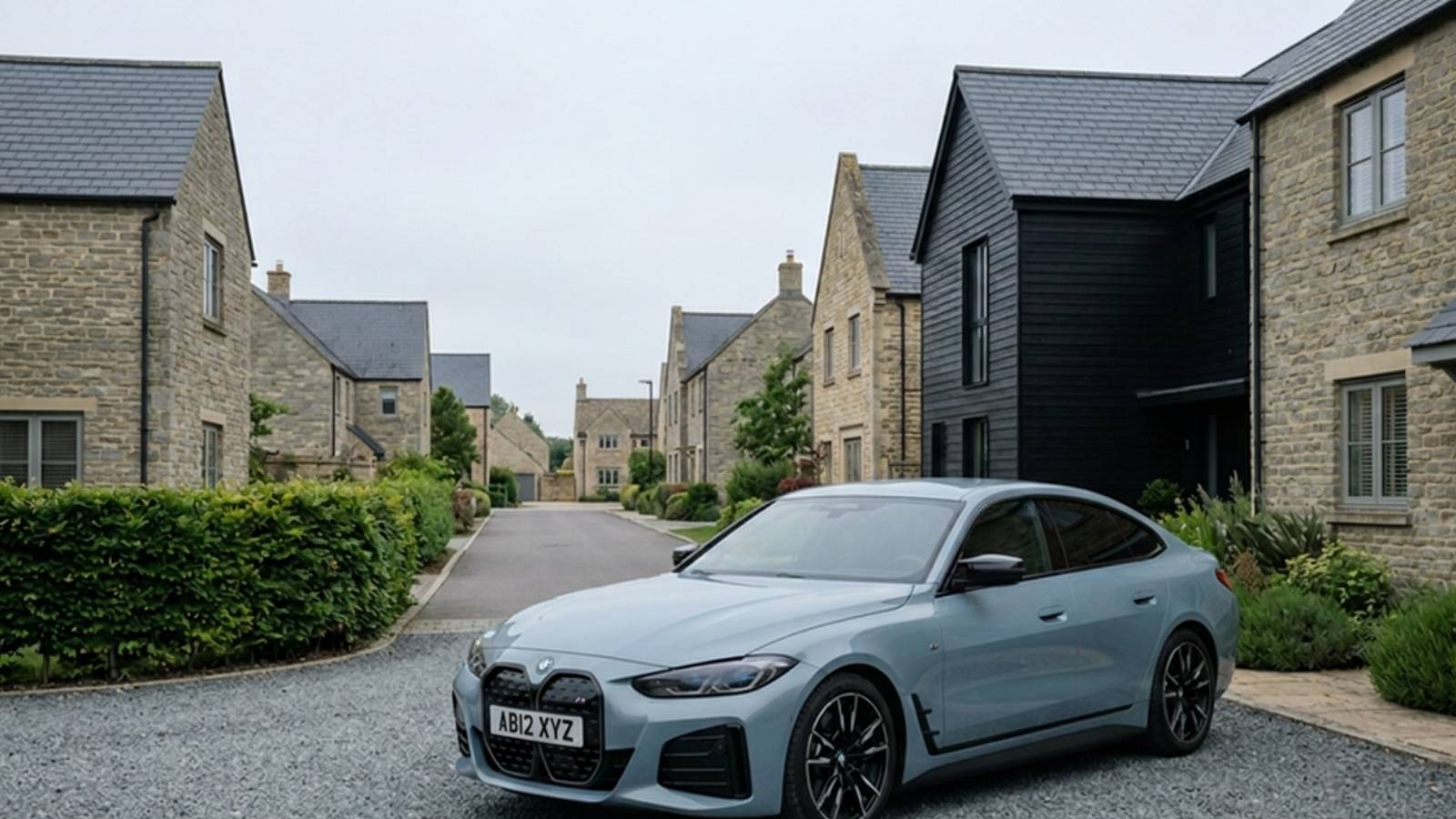
 FIG. 01 / HERO The BMW i4: the best-driving car in the premium electric saloon class
 The verdict
The BMW i4 is the default premium electric saloon, and most of the reasons are easy to see. It drives and feels a clear cut above a Tesla Model 3 or a Hyundai Ioniq 6 inside, it is efficient for its size and pace, and the five-door liftback body is far more practical than the low roofline suggests. If you want the nicest electric four-door to sit in and to drive, this is it.
Through our ownership and running-cost lens, though, it is a considered four rather than an automatic four and a half: we rate it 4.0 out of 5, and it is worth showing the working. Every i4 is a £50,000-plus car, so the Expensive Car Supplement bites on every single trim, not just the top ones. The range trails a Tesla Model 3 Long Range by a wide margin for the money. BMW’s standard warranty is three years, shorter than Hyundai’s five and Kia’s seven. It scored four stars at Euro NCAP, losing a star on its driver-assistance software. And BMW still makes you pay extra for adaptive cruise control on the cars that need it most. None of that stops the i4 being excellent. It just means the honest summary is narrower than the badge implies: this is the nicest one to drive and to sit in, not the one that wins on the spreadsheet.
- Lineup
- eDrive35 (RWD) · eDrive40 (RWD) · M60 xDrive (AWD)
- Battery (usable)
- eDrive35 67kWh · eDrive40 & M60 ~81kWh (83.9kWh gross)
- Power
- eDrive35 282bhp · eDrive40 335bhp · M60 593bhp
- 0–62mph
- eDrive35 6.0s · eDrive40 5.6s · M60 3.7s
- Top speed
- 118mph (eDrive35/40) · 130mph (M60)
- Range (WLTP, wheel/trim-dependent)
- eDrive35 up to 319 mi · eDrive40 up to 380 mi · M60 up to 338 mi
- Real-world efficiency
- ~3.6 mi/kWh (eDrive35, Auto Express company-car test); real-world eDrive40 ~320 mi
- Max DC charge
- eDrive40 & M60 ~205kW · eDrive35 180kW; all 10–80% in ~30 min
- Heat pump
- Standard across range
- Body
- Gran Coupé, five-door liftback; tyre repair kit, no spare
- Warranty
- 3yr/unlimited mileage; battery 8yr/100,000 mi
- Euro NCAP
- 4 stars (2022; star lost on safety assist)
- Trims
- Sport · M Sport (eDrive35/40); M60 own spec
- Price
- from ~£51,500 (eDrive35 Sport) to ~£72,000 (M60), every trim £50k+
Range and efficiency: good, not class-leading
Start with the number most people care about, because it is where the i4’s premium positioning meets a hard limit. The entry eDrive35 claims up to 319 miles WLTP from its 67kWh usable battery, which Carwow reckons translates to around 280 in the real world. The bigger-battery eDrive40 claims up to 380 miles, the four-wheel-drive M60 around 338, both wheel and trim dependent. Those are genuinely usable figures, and every version clears the 300-mile mark on paper.
The catch is the competition. A Tesla Model 3 Long Range covers materially more range for materially less money, and that gap is the single biggest dent in the i4’s value case. Where the BMW answers is efficiency for its class and weight: in Auto Express’s company-car group test a pre-update eDrive35 returned 3.6 miles per kWh, behind the 3.8 of a Model 3 Long Range but ahead of the 3.3 of a Polestar 2 Single Motor. A standard heat pump across the whole range helps protect that efficiency in the cold, and Top Gear notes the i4 holds its range better than many rivals in winter or when driven hard. The 2025 efficiency update lifted the official figures by around 15 miles, so the current cars are the best the i4 has been on range. They are still not the range champions of the class.
Charging: it depends which i4 you buy
There is no single charging figure for the i4, and anyone quoting one is rounding off something important. The eDrive40 and M60 use the larger 81kWh battery and peak at around 205kW on a capable ultra-rapid charger. The entry eDrive35 peaks lower, at 180kW, but it also carries a smaller battery, so the practical outcome lands in the same place: Carwow and Auto Express both put a 10 to 80 per cent rapid charge at a little over half an hour for all three versions. As ever, you have to find a charger fast enough to deliver those peaks, and at most motorway services you will be on a 150kW unit rather than something quicker.
At home the split is simpler. On a 7.4kW wallbox the eDrive35 takes around eleven hours from flat, the larger-battery cars around thirteen, though almost nobody charges from empty. The takeaway is that the i4 charges fast enough to be an easy long-distance car, and the smaller eDrive35 is no real penalty here despite its lower peak.
What the 2025 update changed, and what it did not
It is worth being clear about what is and is not new, because the i4 has been quietly improved rather than reinvented. The meaningful changes landed in mid-2025, not this year: a round of efficiency work lifted the official range of the eDrive35 and eDrive40 by around 15 miles, and the old M50 was replaced by the more powerful 593bhp M60. New laser rear lights followed in the autumn. Before that, a 2024 update brought minor lighting tweaks, fresh steering-wheel designs and BMW’s latest iDrive software. What none of it amounts to is a facelift or a new car. The i4 you buy in 2026 is the same fundamentally sound design launched in 2021, now in its most efficient and best-equipped form. That maturity is part of why it feels so resolved, but it also means the basic package, including the four-star safety result, carries over unchanged.
i4 vs Tesla Model 3: the benchmark it cannot out-spreadsheet
This is the comparison that decides most i4 purchases, so take it head on. The Model 3 is the rational-value benchmark in this class: it out-ranges the i4, undercuts it on price, matches or beats it for efficiency, and brings the Supercharger network. On the numbers that fill a finance spreadsheet, the Tesla wins, and it is not especially close.
The i4 answers on everything the numbers do not capture. Most testers, Top Gear and Auto Express among them, rate it the better car to sit in and the better car to drive: a more comfortable, more refined, better-built cabin, frameless doors, and a chassis that handles more deftly than the Tesla while riding far better. The i4 is also a five-door liftback, so its boot opening is a proper hatchback aperture rather than the Model 3’s narrower saloon slot, which makes it the more practical of the two for bikes, flat-pack and dog crates. The honest split: buy the Model 3 if the spreadsheet rules and you want maximum range and value; buy the i4 if you want the more desirable, better-made, nicer-driving car and will pay for it.
i4 vs Hyundai Ioniq 6: the value cross-shop
The Hyundai Ioniq 6 is the i4’s most pointed value rival, because it attacks on exactly the ground the BMW is weakest. The Ioniq 6 is cheaper to buy, it is more efficient still (its slippery 0.21 drag body is among the most aerodynamic in the class), and Hyundai’s five-year warranty comfortably outlasts BMW’s three. On pure cost of ownership over a few years, the Hyundai makes a stronger case.
Where the i4 pulls back is breadth and feel. It is the better car to drive, with sharper steering and a more polished chassis by most accounts, the cabin feels a class above, and the liftback body is more versatile than the Ioniq 6’s saloon, which is criticised for a small 401-litre boot and tight rear headroom under its low roof. The i4 also charges slightly faster on its larger-battery versions. If running cost and warranty lead your decision, the Ioniq 6 is the smarter buy; if you want the more premium, more practical, better-driving car and can absorb the higher price and shorter cover, the i4 earns it. They are close enough that the badge and the test drive will, honestly, decide it for most people.
i4 vs Polestar 2: the design-led alternative
The Polestar 2 is the other premium-feeling electric four-door, and it undercuts the i4 on price. It looks distinctive and feels well made, but on the verified figures it trails: that same Auto Express test had it at 3.3 miles per kWh, behind the i4’s 3.6, and What Car? notes its 150kW charging peak is slower than the i4’s 205kW. The Polestar’s steering also draws more criticism than the BMW’s. The i4 is the more rounded car here; the Polestar is the pick if its styling and lower price are what move you.
The other rivals worth knowing
Beyond the three obvious cross-shops, a few more belong on the list. The Audi A6 Sportback e-tron is the closest in spirit, a similarly premium and similarly handsome electric four-door, though it is on a model-year pause as this is written. The VW ID.7 undercuts the i4 and out-ranges it, trading badge cachet for space and value. The BYD Seal is the value-led wildcard, well-equipped and cheap, but as What Car? notes it is no match for the i4’s steering or polish. Mercedes offers the EQE and the newer electric CLA for buyers set on a three-pointed star. And BMW’s own i5 is the larger, pricier executive option if you want more space and do not mind spending more. None of these unseats the i4 as the driver’s choice, but several beat it on range, price or warranty, which is the recurring theme of the i4’s value story.
How it drives
We have not driven the i4, so this is drawn from named road tests. The consistent verdict is that the i4 is the most satisfying car in this class to drive while also being one of the most comfortable, a balance few EVs strike. Top Gear rates the cheaper eDrive35 and eDrive40 as handling more deftly than any comparable EV, with quick, well-weighted steering and a compliant ride, while Auto Express praises the same composure on the motorway. The trade-off is mass: like all these cars the i4 is heavy, and testers note it needs more persuasion to change direction on a tight road than a petrol 3 Series, and feels slightly numb compared with one.
Refinement is a particular strength. Carwow rates the i4 noticeably more settled on the motorway than a Tesla Model Y, which it finds fidgety by comparison, so long journeys are genuinely relaxing rather than merely tolerable. Top Gear adds that the i4 holds its range better than many EVs in winter or when driven briskly, running Tesla’s battery technology close for year-round usability, which matters more in daily life than a headline WLTP figure that evaporates in the cold. The frameless doors and a battery set low in the floor, which BMW says gives a centre of gravity 53mm lower than a petrol 3 Series saloon, both contribute to a car that feels planted and quiet at speed.
The M60 is the outlier. At 593bhp and 0 to 62mph in around 3.7 seconds it is savagely quick, and Auto Express’s deputy editor describes it as transforming into a rocketship on demand. But the same testers, Top Gear included, reckon the cheaper rear-drive cars are more fun on a real road, with nicer steering and a lighter-hearted balance, and the M60’s extra weight and power erode the range. It is the one to buy for outright pace, not for the purest driving experience.
Inside: a proper BMW cabin, and a practical body
The i4’s cabin is its strongest single argument over the value rivals. It is snug, well made and clearly screwed together to a higher standard than a Model 3’s, with frameless doors and BMW’s curved twin-screen display sitting proud of the dash. Several testers reckon material quality is a step above the Korean and Tesla rivals, even if it lacks the airy, new-materials feel of BMW’s i3 and iX. The screen system works well and is highly configurable.
The body matters more than the silhouette suggests. The i4 is a Gran Coupé, which means a five-door liftback rather than a three-box saloon, and Top Gear singles out the big, useful boot with its proper hatchback opening as a real practicality card the Model 3 and Ioniq 6 cannot play. It is not as versatile as an estate, and BMW never built a Touring version, but among its direct rivals the i4 is one of the more usable. Every car comes with a tyre repair kit rather than a spare wheel, which is normal for the class but worth knowing.
On equipment the i4 is generous in places and oddly mean in others. Heated front seats, three-zone climate and sports seats are standard even on the base Sport trim, but adaptive cruise control is a cost option, which Carwow calls slightly outrageous on a car at this price, since it is exactly the feature that makes the i4’s relaxed motorway manners pay off. The Driving Assistant Professional pack bundles it with a raft of other aids if you want the full suite. Rear space is adequate rather than generous, in line with the class, and the liftback roofline costs a little headroom against a boxier EV, though less than the steeply-raked Ioniq 6 saloon does.
Safety: the four-star question
The i4 carries a four-star Euro NCAP rating rather than the full five, and it is worth being precise about why. It scored strongly for occupant protection, in the high eighties for both adults and children, but lost its fifth star in the safety-assist category, where the automatic emergency braking failed to detect a pedestrian crossing into a junction the car was turning across. Every i4 gets BMW’s Driving Assistant package as standard, and a Driving Assistant Professional pack adds eleven further aids as an option. The four-star result does not make the i4 unsafe, but in a class where the Korean rivals score five stars, it is a fair mark against it, and one the badge-led reviews tend to skip past.
The honest ownership case: warranty, tax and no grant
This is where JustWatt’s lens earns its keep, because the i4’s ownership story is more contested than its image.
Start with the warranty. BMW UK covers the i4 for three years with unlimited mileage, plus the usual eight-year, 100,000-mile battery warranty. Three years is the mainstream norm, but in this company it looks short: Hyundai gives the Ioniq 6 five years and Kia gives its EVs seven. On a car you intend to keep, that gap is a real cost difference, not a detail.
Then the tax. The i4 is a £50,000-plus car in every trim, from the entry eDrive35 at around £51,500 up to the M60 at roughly £72,000. That means every i4 attracts the Expensive Car Supplement, the surcharge added to road tax for five years from the second year. On the Hyundai Ioniq pages we flagged that only the upper trims crossed that threshold; on the i4, there is no trim that escapes it. Budget for the first-year £10 VED and then the standard £200 plus the supplement from year two.
Finally, the grants, which is quickly settled: there are none. The government Electric Car Grant only reaches cars priced at or below about £37,000, and the cheapest i4 is well over that, so it does not qualify. BMW does not run a manufacturer discount scheme of the kind Hyundai uses, so there is no second route in either. The i4 is bought at list, and the list is high.
Running costs and the salary-sacrifice case
Where the i4’s cost story turns firmly positive is company-car tax, and for many buyers this is the whole point of the car. As a pure EV it sits in the lowest benefit-in-kind band, 4 per cent for 2026/27 rising to 5 per cent the year after. Carwow puts a 20 per cent taxpayer’s monthly BIK as low as around £26, which is why the i4 is such a salary-sacrifice and company-car staple: it is the obvious premium-badge EV to run through a scheme, and the high list price that hurts a private buyer barely registers when the tax is calculated on a sliver of it. Our company-car tax calculator turns the band into a monthly figure for your salary and trim.
On energy, the i4’s class-competitive efficiency keeps home charging cheap. On a good overnight EV tariff, Carwow’s figures put a 10 to 80 per cent home charge at a little over £5 for the eDrive35 and around £6.30 for the larger-battery cars. Public rapid charging is far dearer, as it is for any EV, so the home-charging case matters. Our EV charging cost calculator and EV versus petrol calculator will run the numbers on your own mileage and tariff, and our EV road tax guide has the Expensive Car Supplement detail in full.
The lease and salary-sacrifice maths is where the i4’s high list price stops being a problem and turns almost irrelevant, and it is the reason so many i4s reach the road through a scheme rather than an outright purchase. Two things work in its favour. First, resale: What Car? notes the i4 holds its value reasonably well by electric-car standards, and because a lease or PCP is built on the gap between list price and forecast resale rather than the list price itself, solid residuals keep the monthly rate competitive even against cheaper cars. Second, the badge: a salary-sacrifice scheme lets you take the full BIK saving on a premium BMW that would be a stretch to buy outright, which is exactly why the i4 is a fixture on company-car choice lists. The figure to compare when you shop deals is the all-in monthly cost after tax, not the list price or the headline lease rate in isolation, because the BIK saving and any bundled maintenance change the real number substantially. The box below sets up a quote through a salary-sacrifice provider.
eDrive35, eDrive40 or M60: which to buy
The advice splits cleanly. The eDrive40 is the sweet spot for most buyers: it has the longest range of the three, the larger battery and faster charging, the 335bhp is more than enough, and What Car? and others consistently pick it over both the cheaper 35 and the pricier M60. The eDrive35 is the value entry and is far from slow, quicker to 62mph than a Model 3 RWD by What Car?’s stopwatch, but its smaller battery and shorter range make it the one to choose only if budget leads. The M60 is the indulgence: blisteringly fast and beautifully built, but it costs around £72,000, sacrifices range to weight and power, and by most accounts is less satisfying to drive quickly on a real road than the lighter rear-drive cars. Buy it for the performance, not as the definitive i4.
Who should buy it
Buy the i4 if you want the most desirable, best-built and nicest-driving car in the premium electric four-door class, and especially if you are running it as a company car or through salary sacrifice, where its high list price stops mattering and its low BIK shines. It is the obvious answer to “which is the BMW of electric saloons,” because it is one.
Look elsewhere if the spreadsheet leads. A Tesla Model 3 gives you more range for less money, and a Hyundai Ioniq 6 gives you lower running costs and a longer warranty. The i4 does not win those arguments, and we would not pretend it does. What it offers instead is the thing badges are supposed to stand for and often do not: a car that is genuinely better to live with at the wheel, provided you go in clear-eyed about the four-star safety score, the shorter cover, and the Expensive Car Supplement on every trim.
How we assessed the i4
This is a research-synthesis review. We have not driven the BMW i4, so every judgement about how it rides, handles, charges or performs in the real world is drawn from named professional road tests and owner reports, attributed in the text, not presented as our own testing. Specifications, prices, trims, charging speeds and tax figures are stated per variant from BMW UK and primary sources, verified June 2026; prices and trim ladders move, so check the current position before ordering. Where sources disagreed we reconciled against BMW UK’s own figures rather than averaging. If we have got something wrong, tell us and we will fix it in public, dated and signed.
Pros and cons.
Pros
- ✓The best-built and nicest-driving car in the premium electric saloon class
- ✓Practical five-door liftback body with a proper hatchback boot opening, unlike its saloon rivals
- ✓Efficient for its size and pace, with a standard heat pump across the range
- ✓Outstanding company-car and salary-sacrifice case: 4% BIK 2026/27, premium badge
- ✓Fast charging on the larger-battery eDrive40 and M60 (~205kW); strong refinement and ride
Cons
- ✗Range trails the Tesla Model 3 Long Range by a wide margin for the money
- ✗Three-year warranty is shorter than Hyundai's five and Kia's seven
- ✗Every trim is £50k+, so the Expensive Car Supplement applies to all of them
- ✗Four-star Euro NCAP, a star lost on driver-assistance software
- ✗Adaptive cruise control is a paid extra; no Electric Car Grant and no BMW manufacturer discount
Frequently asked.
How far does the BMW i4 really go, and how does it compare to a Tesla Model 3?
Officially up to 319 miles for the eDrive35, up to 380 for the eDrive40 and around 338 for the M60, all wheel and trim dependent, with the eDrive35 nearer 280 in the real world. The honest comparison is that a Tesla Model 3 Long Range covers more range for less money, which is the i4's biggest value weakness. The i4 answers on cabin quality, build, ride and how it drives, not on range or price.
How fast does the i4 charge, and does it depend on the version?
Yes, it depends. The eDrive40 and M60 use the larger battery and peak at around 205kW on a capable ultra-rapid charger; the entry eDrive35 peaks at 180kW. Because the eDrive35 has a smaller battery, all three take a little over half an hour for a 10 to 80 per cent rapid charge in practice. At most motorway services you will be on a slower 150kW unit, so real-world times are longer.
Is the BMW i4 a good salary-sacrifice or company car?
Very. As a pure EV it sits in the lowest benefit-in-kind band, 4 per cent for 2026/27 rising to 5 per cent the year after, so a 20 per cent taxpayer can pay only around £26 a month in BIK on the entry car. The premium badge and low company-car tax make it one of the obvious salary-sacrifice choices, and the high list price that hurts a private buyer barely matters when tax is calculated on a fraction of it. Our company-car tax calculator gives the monthly figure for your salary and trim.
BMW i4 vs Hyundai Ioniq 6: which is better value?
The Ioniq 6 wins on value: it is cheaper to buy, more efficient, and carries a five-year warranty against BMW's three. The i4 wins on the things value does not measure: it is the better car to drive, the cabin feels a class above, and its five-door liftback body is more practical than the Ioniq 6's saloon. Lead with running cost and warranty and the Hyundai is the smarter buy; lead with quality and how it drives and the i4 earns its premium.
Does the BMW i4 qualify for the Electric Car Grant?
No. The government Electric Car Grant only applies to cars priced at or below about £37,000, and the cheapest i4 is well over £50,000, so it does not qualify. BMW also does not run a manufacturer discount scheme of the kind some rivals use, so there is no second route. The i4 is bought at list price.
eDrive35, eDrive40 or M60: which should I buy?
The eDrive40 for most people: it has the longest range, the larger battery, faster charging and ample performance, and it is the version most reviewers recommend. The eDrive35 is the value entry and is far from slow, but its range is shorter. The M60 is the 593bhp performance flagship at around £72,000, hugely fast but heavier, thirstier and, by most accounts, less satisfying to drive quickly than the lighter rear-drive cars.
Sources
- BMW UK: i4 Gran Coupe range, specification and pricing — accessed 22 Jun 2026
- BMW UK: new car and electric vehicle warranty terms — accessed 22 Jun 2026
- Carwow: BMW i4 review — accessed 22 Jun 2026
- Auto Express: BMW i4 review — accessed 22 Jun 2026
- What Car?: BMW i4 review — accessed 22 Jun 2026
- Top Gear: BMW i4 review — accessed 22 Jun 2026
Sources: Manufacturer documentation, verified owner reports, and industry sources. Not hands-on tested.
Corrections: if we got something wrong, tell us and we'll fix it in public, dated and signed. Last updated 22 June 2026.