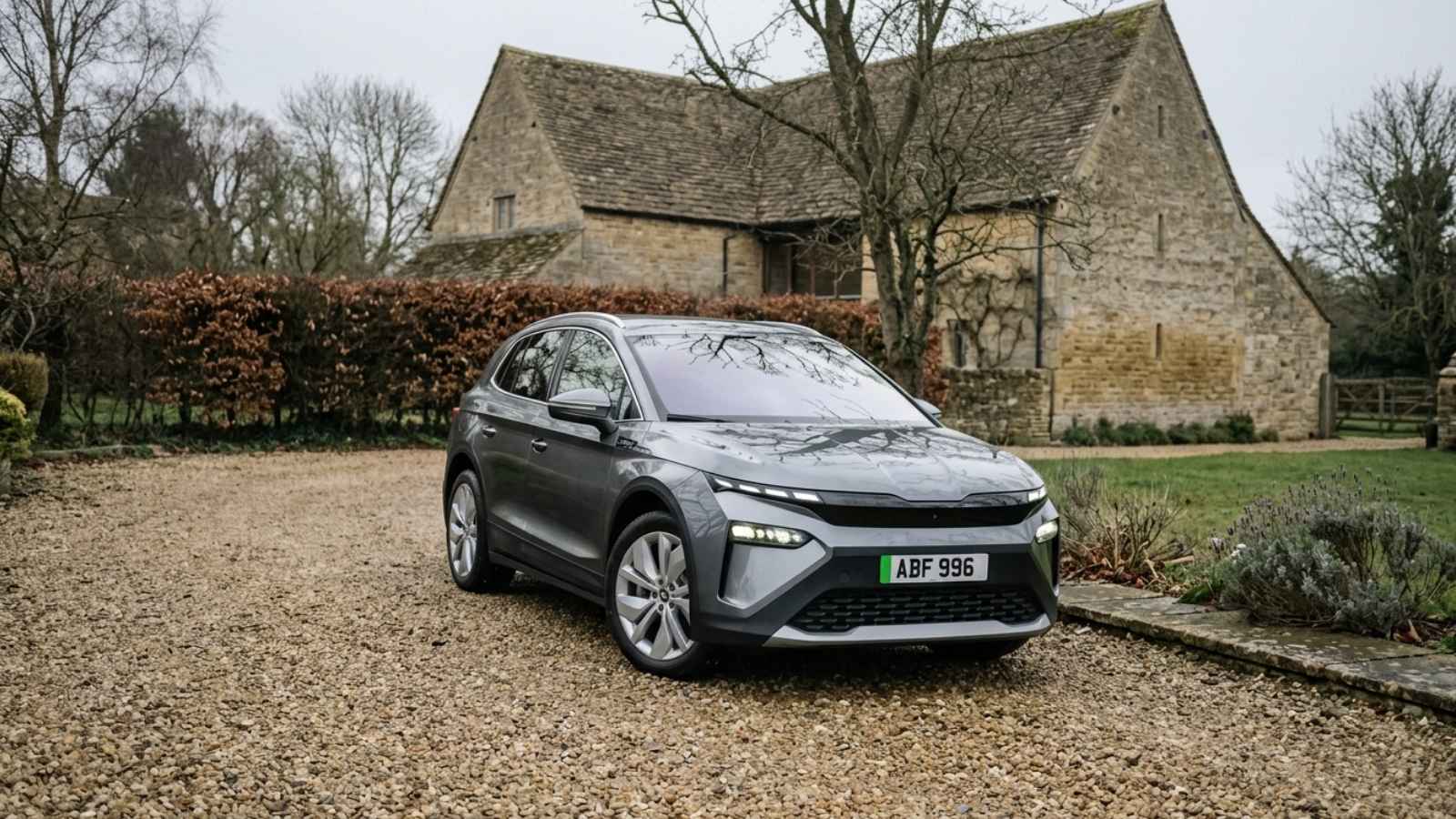
 FIG. 01 / HERO The Skoda Enyaq: the practicality-and-value benchmark of the family EV class
 The verdict
The Skoda Enyaq is the sensible family EV that quietly wins where families actually live. It has one of the biggest, squarest, most usable boots in its class at 585 litres, a marshmallow-soft ride, a motorway hush that shames cars costing far more, a long real-world range and the Simply Clever touches Skoda does better than anyone. And, almost alone in this part of the market, its entry trims are priced low enough to qualify for the government’s Electric Car Grant, so the cheapest Enyaqs are £1,500 cheaper before you have done anything. (You may still see it searched as the “Enyaq iV”; Skoda has dropped the iV suffix, and the car is now simply the Enyaq.)
Through our ownership and running-cost lens, that combination earns a four and a half rather than a four: we rate it 4.5 out of 5, and it is worth being honest that this was a close call. The case against is real: the charging speed is only adequate for the class rather than quick, it is competent rather than lovable to drive and even the hot vRS does not change that, Skoda charges extra for the heat pump, the warranty is shorter than the Korean rivals’, and a field the Enyaq once led has tightened, with the Renault Scenic and Kia EV5 now genuine threats. We have weighed those marks carefully. But JustWatt rates cars on what they cost and what they are like to own, and on that axis the Enyaq is the strongest all-rounder in this cluster: the most practical, the most comfortable, the best value, and the only one where the grant takes real money off the price. Honest framing: this is the spacious, sensible, well-priced one. Buy it for the boot and the calm, not for the thrill.
- Lineup
- 60 (RWD) · 85 (RWD) · 85x (AWD) · vRS (AWD); SUV or Coupé body
- Battery (usable)
- 60 59kWh · 85/85x 77kWh (82kWh gross) · vRS 79kWh (84kWh gross)
- Power
- 60 ~201bhp · 85/85x ~282bhp · vRS 335bhp (85x makes same total power as RWD 85)
- 0–62mph
- 60 8.1s · 85/85x 6.7s · vRS 5.4s
- Top speed
- 60 99mph · 85/85x/vRS 111mph
- Range (WLTP)
- 60 up to 268 mi · 85 up to 359 mi (365 Coupé) · 85x 333 mi · vRS 344 mi (347 Coupé)
- Real-world efficiency
- ~3.2 mi/kWh (Auto Express long-term test, no heat pump fitted)
- Max DC charge
- vRS ~185kW · 85/85x ~175kW · 60 ~165kW; 10–80% just under 30 min on faster variants (per-variant, Carwow)
- Heat pump
- Cost option, not standard
- Boot
- 585L (SUV; Coupé smaller); 5 seats only, no 7-seat option
- Warranty
- 3yr/60,000 mi; battery 8yr/100,000 mi
- Euro NCAP
- 5 stars
- Trims
- SE L · Edition · SportLine · vRS (Laurin & Klement dropped)
- Grant
- Band 2 £1,500 ECG on SE L 60, SE L 85, Edition 60 (entry trims only; verify current list)
- Platform
- MEB (shared with VW ID.4 / Audi Q4 e-tron)
- Price
- from ~£39,000 (SE L 60) to ~£52,400 (vRS), ex-grant list
The boot, and why it is the whole point
Start where the Enyaq starts, because everything else follows from it. The boot holds 585 litres, and more to the point it is a proper square box rather than a styled-down slot. The RAC and Honest John both rate it among the largest in the mid-size electric class, bigger than a Renault Scenic, a Kia EV5, a Vauxhall Grandland, a Ford Explorer or the platform-sharing VW ID.4, and the regular shape means you can actually use all of it, which matters more than the headline figure when you are loading a buggy and a week’s worth of suitcases. A powered tailgate is standard on most trims, an adjustable boot floor comes on the sportier ones, and the cabin is dotted with the felt-lined door bins, cubbies and trays Skoda is known for.
The second row is genuinely roomy, with a flat floor and enough width for three adults or two child seats side by side. There is no seven-seat option, so if you need a third row this is not your car and the larger Kodiaq is, but for a five-seat family the Enyaq is about as space-efficient as the class gets. Two practical caveats are worth noting. The rear bench splits 60/40, which the RAC points out is less flexible than the 40/20/40 arrangement in a Renault Scenic when you want to carry long items and rear passengers at once. And the Coupé looks sleeker and adds a few miles of range but trades away boot space to get there, so buy the standard SUV body unless the styling genuinely matters more to you than the load bay.
On the practicality the spec sheet does not shout about, the Enyaq is also a capable tow car by EV standards, rated up to 1,000kg braked on the rear-drive versions and 1,200kg on the all-wheel-drive 85x and vRS, which covers a small trailer, a bike carrier or a light caravan. It is the kind of unglamorous competence that defines the car.
Range and which battery to choose
The Enyaq comes in two battery sizes, badged 60 and 85 in a way that, as Electrifying drily notes, reflects neither the usable nor the gross capacity. The entry 60 uses a 59kWh usable battery good for up to 268 to 269 miles. The 85 steps up to a 77kWh usable battery (82kWh gross) and up to 359 miles in rear-drive form, or 365 in the Coupé. The all-wheel-drive 85x shares that battery but drops to around 333 miles, and the vRS uses a slightly larger 79kWh usable pack (84kWh gross) for 344 miles.
For most buyers the 85 is the one to have, and the reviews are near-unanimous on it: it is the longest-range version, the 282bhp rear motor is more than brisk enough, and the real-world range comfortably covers longer trips without constant planning. The 60 is far from a poor relation, with a usable 268 miles and the lowest price, but its range is the obvious compromise. As a real-world reference, Auto Express averaged 3.2 miles per kWh over more than 5,600 miles in a long-term Enyaq, and noted that figure would have been better still with the optional heat pump fitted, which is a fair indication of what to expect day to day.
Charging: only OK for the class, and it depends which one
This is the Enyaq’s clearest technical weakness, and it is worth being precise rather than quoting one number. Charging peak is per variant. On Carwow’s current figures the vRS tops out at around 185kW, while the other versions sit between roughly 160 and 175kW, with the entry 60 around 165kW. A 10 to 80 per cent rapid charge takes a little under half an hour on the faster variants. None of that is bad, and in daily use, where most charging happens overnight at home, it barely registers. But it is well short of what the competition manages: a Tesla does around 250kW and Hyundai’s 800-volt cars are built around a much higher ceiling, so on a long motorway run the Enyaq will have you stopping for longer. If you do high mileage and live on rapid chargers, this is the spec that should give you pause; if you mostly charge at home, it is a footnote.
The grant: the one in this class that actually qualifies
Here is the Enyaq’s genuine differentiator, and it is a running-cost story the Hyundai Ioniq and BMW i4 simply cannot tell. Both of those sit wholly above the government Electric Car Grant’s roughly £37,000 cap, so neither qualifies for a penny. The Enyaq’s entry trims are deliberately priced under that line. On the current eligibility list, the SE L 60, SE L 85 and Edition 60 each attract the Band 2 grant of £1,500, applied automatically at purchase with no paperwork. That is real money off the cars most families will actually buy, and it is unique in this cluster.
Two honest caveats. First, it is entry-trims-only: the pricier SportLine, 85x and vRS are over the cap and get nothing, so this is not a blanket “the Enyaq gets the grant.” Second, the scheme moves, and Skoda has adjusted which variants sit under the threshold over time, so check the current eligible list before you order rather than assuming. But as it stands, the Enyaq is the rare premium-feeling family EV where the headline price already has £1,500 of government money in it.
What the updates changed, described correctly
The current Enyaq is the product of two rounds of change, and it is worth separating them. In 2024 Skoda reworked the powertrains, batteries and charging, lifting range and tweaking the cars under the skin. Then in 2025 came the visual facelift: the “Modern Solid” design language and the “Tech-Deck Face” front end shared with the smaller Elroq, which replaced the old closed-off grille (and, on the vRS, the divisive illuminated “Crystal Face”) and houses the driver-assistance sensors behind a smooth panel. Standard equipment went up at the same time, and the interior was lightly refreshed with a new wheel and new themes rather than redesigned.
So the car you buy in 2026 has both the mechanical updates and the new face, but it is neither all-new nor a from-scratch redesign. One side effect of the new nose is that, as Carwow notes, the Enyaq is now easy to mistake for the smaller Elroq from the front, though it is visibly chunkier and longer alongside.
How it drives
We have not driven the Enyaq, so this draws on named road tests. The consistent verdict is comfort first. Auto Express describes a marshmallow-soft ride that soaks up potholes and an extraordinarily quiet motorway cruise, with only a whisper of wind noise from the mirrors, and Electrifying calls the standard car plush and regal to the point of feeling chauffeur-driven. The flip side is that it is competent rather than engaging: the steering is light and accurate and the body is well controlled for something this size, but no reviewer pretends the Enyaq is fun, and most agree that in a family SUV of this kind fun was never really on the menu anyway. Carwow gave it an 8 out of 10 and named it the Smart Spender in its 2026 Car of the Year awards, which captures the car neatly.
Around town the Enyaq is easier to place than its size suggests. Auto Express praises a remarkably tight 10.8-metre turning circle on the rear-drive cars, smaller than a Mini’s, along with light steering and good all-round visibility, which makes it relaxing in car parks and on the school run. One ergonomic note for EV converts: the standard regenerative braking has a stronger “B” mode on the gear selector, but it is not strong enough for true one-pedal driving, and if you want adjustable regen with steering-wheel paddles you have to step up to a higher trim or option pack. It is a minor thing, but worth knowing if you are used to lifting off and letting the car stop itself.
The vRS deserves its own honest note. It adds 335bhp, four-wheel drive, lowered adaptive suspension and a 0 to 62mph time of 5.4 seconds, but What Car?’s testers found it a competent all-rounder that lacks the driver appeal to justify its premium over a regular Enyaq, and Auto Express reckons you would struggle to notice the extra power because it is delivered in the same smooth, unflustered way as the cheaper cars. If you want a fast EV, this is not the one to stretch for; if you want the best Enyaq, a well-specced 85 is it. A related warning from the reviews: do not pay extra for the adaptive suspension on the cheaper trims, because the comfort gain over the standard set-up is negligible, and the vRS’s 20-inch wheels firm the ride up rather than improve it.
Inside: screens, real buttons, and Simply Clever
The cabin is a strong showing for the money. A 13-inch central touchscreen runs Skoda’s updated software, which testers find crisp and easy to navigate, paired with a small 5.3-inch driver display and, on higher trims, a head-up display. Crucially, Skoda kept physical shortcut controls rather than burying everything in the screen, which makes the Enyaq less distracting to use on the move than some rivals. Material quality is good, with textured fabric, contrast stitching and recycled materials lifting the ambience, and the driving position is low and snug for an SUV.
Then there are the Simply Clever touches that are pure Skoda: an ice scraper in the tailgate, an umbrella in the driver’s door, a parking-ticket holder, felt-lined bins so nothing rattles. None of it is essential and all of it is the kind of thoughtful detail that makes a car nicer to live with, which is exactly the Enyaq’s whole pitch.
Enyaq vs Tesla Model Y: comfort and space against speed and charging
The Tesla Model Y is the volume benchmark in this class, and the comparison is a clean trade. The Tesla charges much faster, accelerates harder, and brings the Supercharger network and Tesla’s software. If those lead your decision, the Model Y wins. The Enyaq answers on the things a family actually notices day to day: a bigger, squarer, more usable boot, a far more comfortable and quieter ride, a more conventional and less divisive cabin with real buttons, and, on the entry trims, a lower price helped by the grant the Tesla does not get. The honest split is that the Model Y is the more capable machine on paper and the Enyaq is the more relaxing thing to own and travel in. For a lot of families, the second matters more.
Enyaq vs Hyundai Ioniq 5: the direct cross-shop
The Hyundai Ioniq 5 is the most direct rival, a similarly sized, similarly sensible family crossover, and the two split along familiar lines. The Ioniq 5’s 800-volt platform charges dramatically faster, adding miles in a fraction of the time the Enyaq takes, and Hyundai’s five-year warranty comfortably outlasts Skoda’s three. Those are real ownership advantages. The Enyaq counters with a bigger and more practical boot, a comfier and quieter ride by most accounts, the Simply Clever detailing, and the entry-trim grant eligibility the over-cap Ioniq 5 cannot match. If charging speed and warranty top your list, the Hyundai is the smarter buy; if outright space, comfort and a lower entry price lead, the Skoda earns it. They are close enough that a test drive of both, with your own boot and your own driveway in mind, will settle it.
The closing field: Scenic, EV5 and the platform cousins
The Enyaq no longer has this part of the market to itself, and an honest review has to say so. The Renault Scenic is the most pointed newcomer, with a clever 40/20/40 rear bench that the RAC notes is more versatile than the Enyaq’s 60/40 split for carrying long items and people at once. The Kia EV5 is the other rising threat, undercutting on price in places. The VW ID.4 is the Enyaq’s platform twin, mechanically near-identical but generally judged the less polished and less practical of the pair. And the Ford Explorer, Peugeot e-3008, Vauxhall Grandland, Toyota bZ4X and Volvo EX40 all circle the same buyers. The Enyaq still wins the boot-and-comfort-and-value triad more often than not, but the gap to the field has narrowed, and on raw versatility the Scenic in particular gives it a real fight.
Ownership: warranty, reliability and the heat pump
This is where the honest ownership picture has both a strength and a clear weakness. The weakness first: Skoda’s warranty is three years and 60,000 miles, which heycar bluntly calls the absolute minimum it would expect, and which is shorter than Hyundai’s five years and Kia’s seven, and even mileage-capped where BMW’s three years are unlimited. On a car you plan to keep, that is a genuine cost-of-ownership mark against it. The battery is covered separately for eight years or 100,000 miles, which is the industry norm rather than a standout.
Against that, the reliability picture is reassuring. Skoda placed fifth out of 33 manufacturers in the most recent Honest John Satisfaction Index, the MEB platform underneath the Enyaq is well proven across VW Group, and the early software gremlins that dogged the first MEB cars should be long resolved, though some owners still report occasional infotainment glitches. The one ownership quirk worth budgeting for: the heat pump, which improves efficiency and cold-weather range, is a cost option rather than standard equipment, so factor it in if you do a lot of winter miles.
Running costs and the salary-sacrifice case
The Enyaq is a prime salary-sacrifice and company-car choice, and the maths is straightforward. As a pure EV it sits in the lowest benefit-in-kind band, 4 per cent for 2026/27 rising to 5 per cent the year after, so the monthly tax is tiny against a fossil-fuel SUV. Our company-car tax calculator turns that into a figure for your salary and trim. The entry-trim grant strengthens the case further: the £1,500 lowers the real purchase or lease cost in a way the Ioniq and i4 cannot claim, which is exactly the kind of ownership advantage that should weigh on a sensible buyer’s decision.
On VED, every Enyaq pays £10 in the first year and then the £200 standard rate. The Expensive Car Supplement is trim-dependent rather than blanket here, which is a point in the Enyaq’s favour: the volume 85 Edition at around £44,000 stays under the £50,000 threshold and escapes the surcharge entirely, while only the vRS and the dearest SportLine and Coupé configurations cross it. Our EV road tax guide has the detail. For energy costs, the Enyaq’s reasonable efficiency keeps home charging cheap, and our EV charging cost calculator and EV versus petrol calculator will run the numbers on your own mileage and tariff.
Which Enyaq to buy, and is the vRS worth it
The advice is clean. For most families the 85 in Edition trim is the sweet spot: the long-range battery, a generous standard kit list, and a price (around £44,000) that stays under the Expensive Car Supplement threshold. The SE L is the value entry and, in 60 or 85 form, the way into grant eligibility if budget leads. SportLine adds a sharper look, sports suspension and a head-up display but firms the ride on its 20-inch wheels, and the all-wheel-drive 85x lives here too. The vRS is the range-topper, and the honest answer to whether it is worth it is: probably not. It is quick and well-equipped, but it does not drive with enough verve to justify the premium over a well-specced 85, it costs range and money, and it pushes you over the £50,000 surcharge line. Buy it only if you specifically want the fastest, best-equipped Enyaq and accept that it is not a driver’s car.
Who should buy it
Buy the Enyaq if you want the most practical, most comfortable, best-value family EV in the class, and especially if you are running it through salary sacrifice or buying an entry trim where the grant takes real money off. It is the sensible choice that does the family-car job better than almost anything at the price, and the lack of driving thrill is beside the point for the buyer it is built for.
Look elsewhere if charging speed or warranty length top your list, where the Hyundai Ioniq 5 answers better, or if you want a Tesla’s pace and network. And cross-shop the Renault Scenic before you sign, because on outright rear-seat versatility it now runs the Enyaq close. But for the family that wants space, calm and value with the smallest possible fuss, the Enyaq remains the one to beat, and that is why it scores as highly as it does here.
How we assessed the Enyaq
This is a research-synthesis review. We have not driven the Skoda Enyaq, so every judgement about how it rides, handles, charges or performs in the real world is drawn from named professional road tests and owner reports, attributed in the text, not presented as our own testing. Specifications, prices, trims, charging speeds, grant eligibility and tax figures are stated per variant from Skoda UK and primary sources, verified June 2026; prices, trim ladders and grant eligibility move, so check the current position before ordering. Where sources disagreed we reconciled against Skoda UK’s own figures rather than averaging. If we have got something wrong, tell us and we will fix it in public, dated and signed.
Pros and cons.
Pros
- ✓Class-leading 585-litre square boot, bigger than the ID.4, Scenic, EV5, Explorer or Grandland
- ✓Marshmallow-soft ride and an exceptionally quiet motorway cruise
- ✓Long real-world range, especially the 85, plus the Simply Clever practicality touches
- ✓Entry trims (SE L 60, SE L 85, Edition 60) qualify for the £1,500 government grant, unique in this cluster
- ✓Low company-car tax (4% BIK), trim-dependent rather than blanket Expensive Car Supplement, strong reliability record
Cons
- ✗Charging speed only OK for the class (~160–185kW), well short of a Tesla or Hyundai
- ✗Competent rather than engaging to drive; even the vRS lacks the appeal to justify its price
- ✗Three-year/60,000-mile warranty, shorter than Hyundai's and Kia's and mileage-capped
- ✗Heat pump is a cost option, not standard
- ✗A once-clear field has tightened: the Renault Scenic and Kia EV5 are now genuine rivals
Frequently asked.
How big is the Skoda Enyaq's boot, really?
585 litres in the SUV, and unusually square and usable rather than a styled-down slot, which makes it one of the biggest and most practical boots in the mid-size electric class. It is larger than a VW ID.4, Renault Scenic, Kia EV5, Ford Explorer or Vauxhall Grandland. The Coupé body looks sleeker and adds a few miles of range but trades away boot space, so buy the standard SUV unless the styling matters more to you. There is no seven-seat option; for that you need the larger Skoda Kodiaq.
How far does the Enyaq go, and which battery should I get?
The entry 60 uses a 59kWh usable battery good for up to 268 miles; the 85 steps up to a 77kWh battery and up to 359 miles in rear-drive form. For most buyers the 85 is the one to have: it has the longest range, ample performance and covers long trips with little planning. The 60 is cheaper and the route into grant eligibility, but its range is the compromise. As a real-world guide, Auto Express averaged 3.2 miles per kWh over a long-term test, and that was without the optional heat pump.
Does the Skoda Enyaq qualify for the Electric Car Grant?
Some versions do, which is unusual in this part of the market. On the current list the SE L 60, SE L 85 and Edition 60 qualify for the Band 2 grant of £1,500, applied automatically at purchase. The pricier SportLine, 85x and vRS sit above the roughly £37,000 cap and get nothing. The scheme moves and Skoda has changed which variants sit under the threshold over time, so check the current eligible list before you order. By contrast, the Hyundai Ioniq and BMW i4 are wholly over the cap and qualify for no grant at all.
How fast does the Enyaq charge?
It depends on the version, and it is only adequate for the class rather than quick. On current figures the vRS peaks at around 185kW and the other versions at roughly 160 to 175kW, giving a 10 to 80 per cent rapid charge in a little under half an hour on the faster variants. That is well short of a Tesla's 250kW or a Hyundai 800-volt car. If you mostly charge at home it barely matters; if you do high motorway mileage on rapid chargers, it is the spec to weigh carefully.
Enyaq vs Tesla Model Y vs Hyundai Ioniq 5: which family EV?
The Tesla Model Y charges faster, accelerates harder and brings the Supercharger network; the Hyundai Ioniq 5 charges dramatically faster on its 800-volt platform and has a longer warranty. The Enyaq beats both on boot space, ride comfort and motorway quietness, and undercuts them on entry-trim price thanks to the grant. If charging speed and warranty lead your decision, choose the Hyundai; if outright space, comfort and value lead, choose the Skoda; the Tesla is the pick if you want its pace and network.
Is the Enyaq vRS worth it?
Probably not. It adds 335bhp, four-wheel drive and a 5.4-second 0-62mph time, but reviewers consistently find it a competent all-rounder that lacks the driver appeal to justify its premium over a regular Enyaq, and its extra power is delivered in the same smooth, unflustered way as the cheaper cars. It also costs range and money and pushes you over the £50,000 Expensive Car Supplement threshold. A well-specced 85 is the better buy for almost everyone.
Is the Skoda Enyaq a good salary-sacrifice car?
Very. As a pure EV it sits in the lowest benefit-in-kind band, 4 per cent for 2026/27 rising to 5 per cent the year after, so the monthly tax is small against a fossil-fuel SUV. The entry-trim grant lowers the real cost further, and the space and comfort make it an easy family car to live with. Our company-car tax calculator works out the monthly figure for your salary and trim.
Sources
- Skoda UK: Enyaq range, specification and Electric Car Grant eligibility — accessed 22 Jun 2026
- Auto Express: Skoda Enyaq review — accessed 22 Jun 2026
- Carwow: Skoda Enyaq review — accessed 22 Jun 2026
- RAC Drive: Skoda Enyaq review — accessed 22 Jun 2026
- What Car?: Skoda Enyaq vRS review — accessed 22 Jun 2026
- heycar: Skoda Enyaq vRS review (warranty and ownership) — accessed 22 Jun 2026
- Fleet News: Skoda confirms grant eligibility for Elroq and Enyaq — accessed 22 Jun 2026
Sources: Manufacturer documentation, verified owner reports, and industry sources. Not hands-on tested.
Corrections: if we got something wrong, tell us and we'll fix it in public, dated and signed. Last updated 22 June 2026.