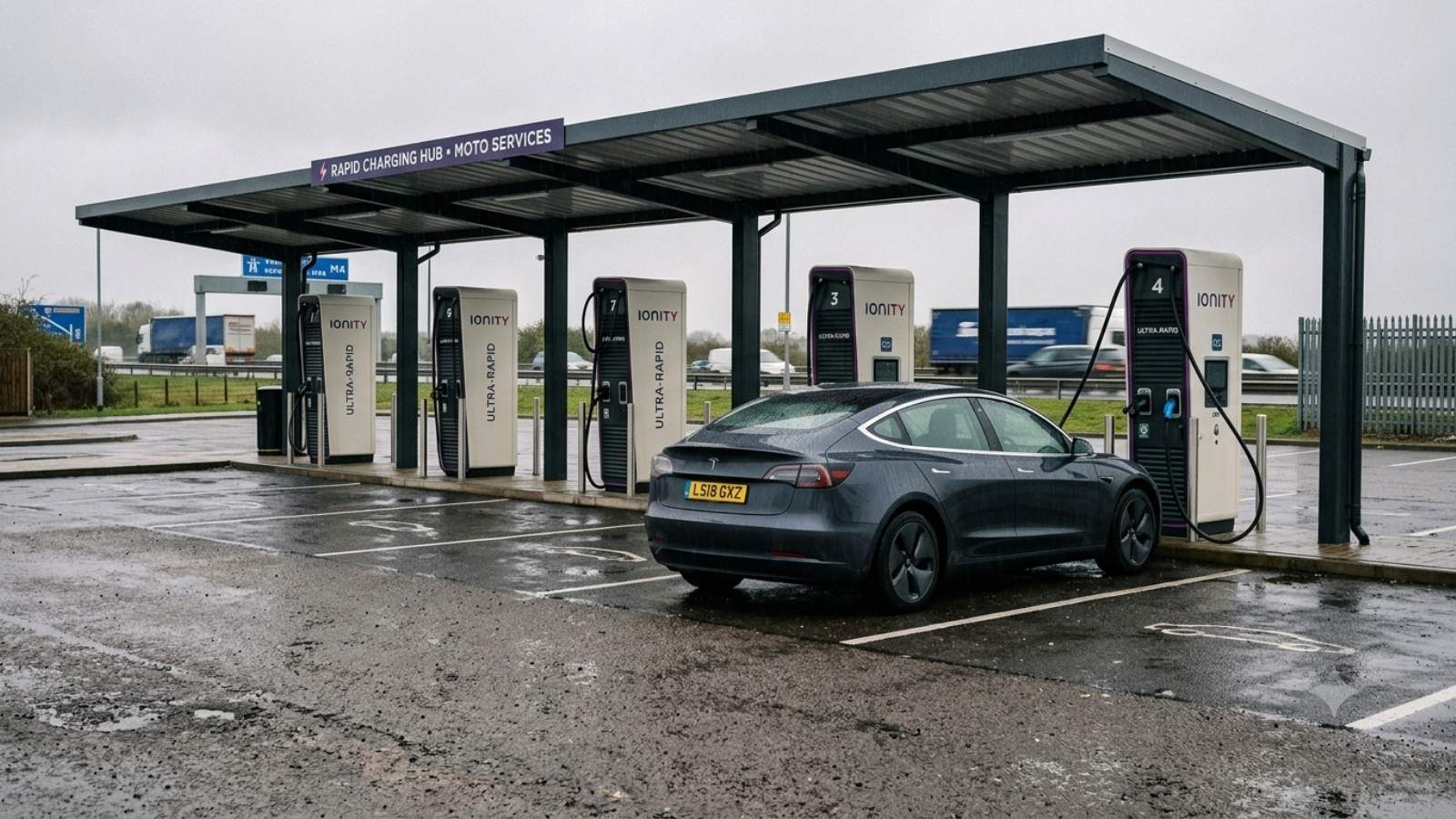
 FIG. 01 / HERO PHOTOGRAPHY — IONITY ULTRA-RAPID HUB, MOTO SERVICES
 Public charging is the convenient option, not the cheap one. Plug into a rapid unit at a motorway services and you are paying for speed, location and someone else’s commercial electricity bill, all at once. The honest headline, before anything else: a rapid public charge costs somewhere between eight and ten times what the same energy costs you on a good overnight tariff at home. That gap is the single most useful thing to understand about charging away from home, and everything below is built around it.
None of which means public charging is a rip-off. For the roughly four in ten UK households without a driveway, and for anyone on a long journey, it is simply how you keep an electric car moving. The trick is knowing what you are paying, why it costs what it does, and where the cheaper options hide. So here is what public charging actually costs in 2026, how the speed tiers and payment methods work, and how to stop the bill creeping up.
What public EV charging costs in 2026
Public charging is priced per kilowatt-hour, the same unit your home electricity bill uses, and the price climbs with the speed of the charger. The market splits cleanly into two bands. Slower units, the 3kW to 49kW chargers you find in car parks, on streets and at supermarkets, are the cheaper band. The rapid and ultra-rapid units rated 50kW and above, the ones built for topping up fast on a journey, are the expensive band.
How far apart are they? Zapmap’s Price Index, the most widely cited independent tracker of UK public charging prices, put the weighted average pay-as-you-go rate for rapid and ultra-rapid charging at around 79p per kWh in May 2026, with slower chargers sitting well below that. Pay-as-you-go means the rate you tap your card for, with no membership or app discount applied. Plenty of drivers pay less than the headline through network apps, subscriptions or roaming deals, so treat these averages as the ceiling for a casual user rather than the floor.
| Charger type | Typical PAYG rate | Rough cost per mile |
|---|---|---|
| Slow / fast (3–49kW) Car parks, on-street, supermarkets | 54p/kWh | ~16p |
| Rapid / ultra-rapid (50kW+) Motorway services, charging hubs | 79p/kWh | ~24p |
Rates: Zapmap UK EV Charging Price Index, May 2026. Weighted-average pay-as-you-go; many drivers pay less via network apps, subscriptions or roaming. Cost per mile assumes 3.3 mi/kWh (an average EV); a more efficient car costs less per mile. Updated monthly.
The pence-per-mile column in the table above is the figure that actually matters, because it is what you can hold up against a tank of petrol. On the slower band you are looking at a cost per mile not far off a small efficient petrol car. On rapid and ultra-rapid units, public charging on pay-as-you-go can edge close to, and occasionally past, the per-mile cost of petrol. That is the uncomfortable truth the industry does not lead with: charge exclusively on rapid units at full pay-as-you-go rates and the running-cost advantage of an EV narrows sharply. Mix in home charging, or even cheaper networks, and it opens back up. Our EV charging cost calculator lets you run your own numbers against a specific tariff and mileage.
These figures move. Zapmap updates the index monthly, and public prices have drifted upward over the past couple of years rather than down. We have used the most recent published month here and cite Zapmap as the source throughout. If you are reading this some months on, the shape of the picture will hold even if the exact pennies have shifted.
Are public charging stations free?
Some still are. Free public charging has not disappeared in 2026, but it has thinned out, and what remains is rarely the charging you would build your week around.
Where you still find it: a shrinking number of supermarkets offer free charging on slower units while you shop, some destination car parks at hotels, garden centres and visitor attractions throw it in, certain workplaces provide it as a staff perk, and a handful of councils still run free lamp-post or car-park charging. The common thread is that free charging is almost always slow, often busy, and offered as a sweetener for doing something else, namely shopping or staying, rather than as a service in its own right.
So the honest answer is yes, free public charging exists, and no, you cannot rely on it. It is a welcome top-up while you are parked anyway, not a substitute for a proper charging plan. The clear trend is that operators are switching previously free chargers to paid as electricity costs rise and usage grows, so the safe assumption when you plan a journey is that you will be paying.
How public charging works: the speed tiers
Public chargers are sorted by power, measured in kilowatts, and the power rating tells you both how fast you will charge and roughly what you will pay. There are four broad tiers, and knowing which is which saves you both money and time. Our guide to EV charger types goes deeper on the connectors and the AC-versus-DC distinction, but here is what you need at the kerb.
Slow chargers, up to around 7kW, are the lamp-post and on-street units, plus older car-park points. They add roughly 15 to 25 miles of range an hour, which makes them destination chargers: useful when your car is parked for hours anyway, useless when you are in a hurry.
Fast chargers, typically 7kW to 22kW, cover most supermarket, retail and workplace charging. A 22kW unit can add meaningful range over a weekly shop or a working day, though many cars cap their AC charging speed well below 22kW, so you often will not get the full rate the post advertises.
Rapid chargers, 50kW up to around 149kW, are the workhorses of en-route charging. These will take a typical EV from 10% to 80% in roughly 30 to 60 minutes, which is the realistic coffee-stop window on a long drive. This is where the price jumps, because you are paying for DC power electronics and a grid connection that cost the operator real money.
Ultra-rapid chargers, 150kW and above, are the newest and fastest, clustered at motorway services, dedicated charging hubs and forecourts. On a car that can accept the full rate, a 10% to 80% top-up can take 20 minutes or less. Not every car can pull that speed, and charging always slows down as the battery fills, which is why the sensible move on a rapid or ultra-rapid unit is to stop at around 80% and drive on rather than crawl to 100%.
The networks: who runs the UK’s public chargers
There is no single national network. The UK’s public charging is run by a fragmented field of charge point operators, each setting its own prices, building in its own locations and earning its own reputation for reliability. That fragmentation is the source of most public-charging frustration, and it is why prices for the same speed of charge vary so much depending on whose unit you happen to pull up to.
The names worth knowing in prose, because you will meet them on the road: InstaVolt, GRIDSERVE, IONITY, BP Pulse, Osprey, Be.EV, Fastned, Believ and Tesla, whose Supercharger network is increasingly open to non-Tesla drivers and tends to undercut the rest. Tesla aside, the spread between the cheapest and most expensive major rapid networks is wide enough to matter on a long trip. The same 70% top-up can cost noticeably more on one operator than another a few miles up the motorway.
We have deliberately kept this light, and we are not going to seed a per-network price table here, because those numbers go stale within weeks and the operator landscape shifts constantly. What is stable is the principle: it pays to know which networks are cheap and reliable on your regular routes, and an app that compares live prices and availability is the tool for that job rather than a list frozen into an article. Reliability also varies, though the regulatory floor is rising, as the next section covers.
How you pay at a public charger
For years, paying for public charging meant a glovebox full of network cards and a phone full of apps. That is changing, slowly, driven by regulation.
Under the Public Charge Point Regulations 2023, newer and larger public chargers must now accept ordinary contactless card payment, the same tap you use in a shop. The requirement applies to new public chargers rated 8kW and above installed after 24 November 2024, and to all existing rapid chargers of 50kW and above, which had to offer contactless by the same date. The same regulations require operators to display the price clearly in pence per kWh and to hit a 99% reliability average across their rapid networks. There is an honest catch worth knowing: most legacy 7kW chargers fall below the 8kW threshold, so the older slow units you meet on residential streets are not all required to take a contactless tap, and many still do not.
Beyond contactless, you have three other routes. Network apps, downloaded per operator, often unlock the cheapest rate that network offers, along with live availability and the ability to start a charge from your phone. RFID cards, the physical fobs some networks still issue, do a similar job without the app. And roaming aggregators let one app or card work across many networks, with Octopus Electroverse and Zapmap’s own charging card the best-known examples, sometimes with a small discount attached. The regulations now also require operators to support payment roaming through at least one third-party provider, so the single-app dream is slowly becoming real.
The practical rule: for a one-off stop, contactless is fine and frictionless. If you charge on the same network regularly, its app or a roaming card usually shaves the rate. We will cover the apps and roaming tools properly on a dedicated page rather than bury them here.
Home versus public: the cost gap, made plain
This is the section that changes how you run an electric car. If you can charge at home on an off-peak EV tariff, do it, because the saving is not marginal, it is enormous.
A dedicated overnight EV tariff brings your home charging rate comfortably under 10p per kWh during its cheap window. Set against an average rapid public rate near 79p, that is the eight-to-ten-times gap in black and white. Even measured against the standard home electricity rate that most households pay, somewhere around 26p per kWh from July 2026, public rapid charging still costs roughly three times as much. The convenience of charging in 20 minutes at a motorway hub is real, but you are paying handsomely for it every single time.
Charge at home on a cheap overnight tariff and public rapid charging is the expensive exception. Charge only in public on pay-as-you-go and the maths of owning an EV gets a lot harder.
The strategy that works for most drivers with a driveway is simple: do the bulk of your charging at home on an off-peak tariff, and treat public rapid charging as the occasional top-up it is designed to be. Our guide to the best EV tariffs walks through the cheap overnight options, and Intelligent Octopus Go is the one we point most people toward first. If you want to see the gap demonstrated rather than asserted, the public-rapid scenario in our EV-versus-petrol calculator is the live proof of this page’s whole argument, and our running costs hub sets it in the wider context of what an EV actually costs to own.
For the no-driveway driver, the calculation is harder and we are not going to pretend otherwise. You cannot dip into a 9p overnight rate, so your costs sit higher and your choices matter more: cheaper networks, slower destination charging where you can, and any workplace or on-street option in your area. It is worth checking whether a home charger is possible at all, because solutions for terraced and flat-dwelling drivers are improving. Our installation guide covers what is feasible without off-street parking, the chargepoint grants page covers the funding that can bring the cost down, and our chargers hub pulls together everything on choosing and living with a home charger.
The VAT question: could public charging get cheaper?
Here is a live one worth watching. Charge at home and you pay 5% VAT on the electricity, the reduced domestic rate. Charge in public and you pay 20%, the full standard rate. For the drivers least able to charge at home, that is the higher rate on identical electricity, a quirk campaigners have long called the pavement tax.
In February 2026, a tax tribunal sided with a community charging operator, Charge My Street, finding that public charging supplied under 1,000kWh per month at a given location could qualify for the reduced 5% rate under existing VAT law. It was, on paper, the clearest opening in years to close the home-versus-public gap. The catch is that HMRC has moved to appeal, confirmed in spring 2026, so the ruling does not change what you pay at the charger yet. As things stand in mid-2026 the decision binds only Charge My Street, the case is heading to a higher tribunal, and public charging remains taxed at 20% for everyone else. Worth knowing, not yet worth banking on. We will update this when the appeal resolves.
Using a public charger in practice
The mechanics are straightforward once you have done it once. Find a charger, ideally before you set off rather than on a warning light, using an app that shows live availability and price so you are not driving to a unit that is broken or occupied. Check it suits your car: the right connector, a speed your car can actually use, and a status that says it is working.
Pull up, plug in, and pay. On most rapid units that now means tapping a contactless card or starting the session in the network’s app. The charge begins, you go and get a coffee, and you keep half an eye on the rate of charge, because it slows as the battery fills and there is little point waiting past 80% on a rapid unit when the last 20% crawls.
Then the etiquette, which matters more than people expect. Move your car promptly once it is charged, because a finished car blocking a rapid bay is the single biggest source of charging-bay friction, and many sites now levy overstay fees for exactly this reason. Do not unplug someone else’s car. And the common pain points are worth bracing for: a unit that will not start, a contactless reader that rejects three cards in a row, a queue at a popular motorway hub on a bank holiday, or a charging bay blocked by a petrol car, the practice drivers have nicknamed ICEing. Reliability is improving under the new 99% rapid-network requirement, but a backup plan, a second nearby charger you could divert to, is still the mark of an experienced EV driver on a long trip.
How we put this together
This guide synthesises Zapmap’s Price Index and rapid-charging pricing data, charge point operators’ published rates, and UK government regulations on public charging. The cost figures are Zapmap’s, cited as such, and reflect the most recent month published at the time of writing. We have not independently tested every network’s reliability or pricing; where we describe how charging behaves in practice, we are drawing on operator data, the regulatory framework and consistent driver reports rather than our own hands-on network testing. The rate figures update monthly and we refresh them on that basis.
Frequently asked.
Are electric car charging stations free?
Some are, but fewer every year. You will still find free charging at some supermarkets, destination car parks, workplaces and a few councils, almost always on slower units offered while you shop or stay. It is a useful top-up, not something to plan a journey around. The trend is firmly toward paid charging as costs rise, so assume you will be paying when you head out.
How much are electric car charging points?
It depends on speed. Slower public chargers (3 to 49kW) are the cheaper band; rapid and ultra-rapid units (50kW and above) are the expensive one, averaging around 79p per kWh on pay-as-you-go in May 2026 according to Zapmap. That works out near 24p a mile on a typical EV. You will often pay less than the headline rate through a network app, subscription or roaming card.
Why is public charging more expensive than charging at home?
Home electricity, especially on an off-peak EV tariff, is some of the cheapest energy you can buy. Public operators pay commercial electricity rates with no domestic price cap, fund expensive rapid hardware and grid connections, maintain the units, and add 20% VAT rather than the 5% domestic rate. The result is a rapid public charge costing roughly eight to ten times a home off-peak top-up.
Is public charging cheaper than petrol?
Usually, but not always. On slower public chargers, yes, comfortably. On rapid and ultra-rapid units at full pay-as-you-go rates, the cost per mile can approach or occasionally exceed a small efficient petrol car. Most EV drivers do the bulk of their charging at home, where it is far cheaper, and use public rapid charging only as an occasional top-up, which keeps the overall cost well below petrol.
What is the difference between slow, fast, rapid and ultra-rapid charging?
Slow (up to around 7kW) suits all-day or overnight parking, adding around 15 to 25 miles an hour. Fast (7 to 22kW) covers supermarkets and workplaces. Rapid (50 to 149kW) takes a typical EV from 10% to 80% in roughly 30 to 60 minutes. Ultra-rapid (150kW and above) can do the same in 20 minutes or less on a capable car. Price rises with speed.
Can I pay by contactless at public chargers?
At most newer and larger ones, yes. UK regulations require new public chargers of 8kW and above installed since November 2024, and all existing rapid units of 50kW and above, to accept ordinary contactless card payment with no app or membership needed. The gap is older 7kW units below the threshold, many of which still need an app or RFID card.
Do I need a different app for every charging network?
Less than you used to. You can pay contactless at most rapid chargers with no app at all. Where an app helps is unlocking a network's cheaper member rate. Roaming services such as Octopus Electroverse or the Zapmap card also let one account work across many networks, and operators must now support at least one roaming provider, so the days of a dozen separate apps are fading.
How much does it cost to charge an EV without a driveway?
More than for a driveway owner, because you cannot use a sub-10p overnight home tariff. Your realistic mix is cheaper public networks, slower destination charging where time allows, and any workplace or on-street option locally. Costs sit higher across the board, which is why it is worth checking whether a home charger is feasible at all, and whether a chargepoint grant could help.
How long does a public charge take?
On a rapid or ultra-rapid unit, a 10% to 80% top-up takes roughly 20 to 60 minutes depending on the charger's power and your car's maximum charging speed. Charging deliberately slows past 80% to protect the battery, so the efficient move on a fast charger is to stop around there and drive on rather than wait for the final fifth.
Could public charging VAT drop to 5%?
Possibly, eventually. A February 2026 tax tribunal found public charging under 1,000kWh a month could qualify for the reduced 5% domestic VAT rate rather than 20%. HMRC is appealing, so as of mid-2026 it changes nothing at the charger and the standard 20% still applies. It is a live case worth watching, not a saving to count on yet.
Sources
- Zapmap: UK EV charging price index (weighted-average public charging cost per kWh) — accessed 25 Jun 2026
- Zapmap: UK rapid charging prices (top-network PAYG band) — accessed 25 Jun 2026
- GOV.UK: The Public Charge Point Regulations 2023 guidance — accessed 25 Jun 2026
- legislation.gov.uk: The Public Charge Point Regulations 2023 — accessed 25 Jun 2026
- Charge My Street Ltd v HMRC [2026] UKFTT 318 (TC) — VAT tribunal judgment, 26 February 2026 — accessed 25 Jun 2026
Sources: Editorial methodology documented at /methodology/.
No money changed hands. No brand reviewed paid us or saw this article before publication. Full methodology.
Corrections: if we got something wrong, tell us and we'll fix it in public, dated and signed. Last updated 25 June 2026.