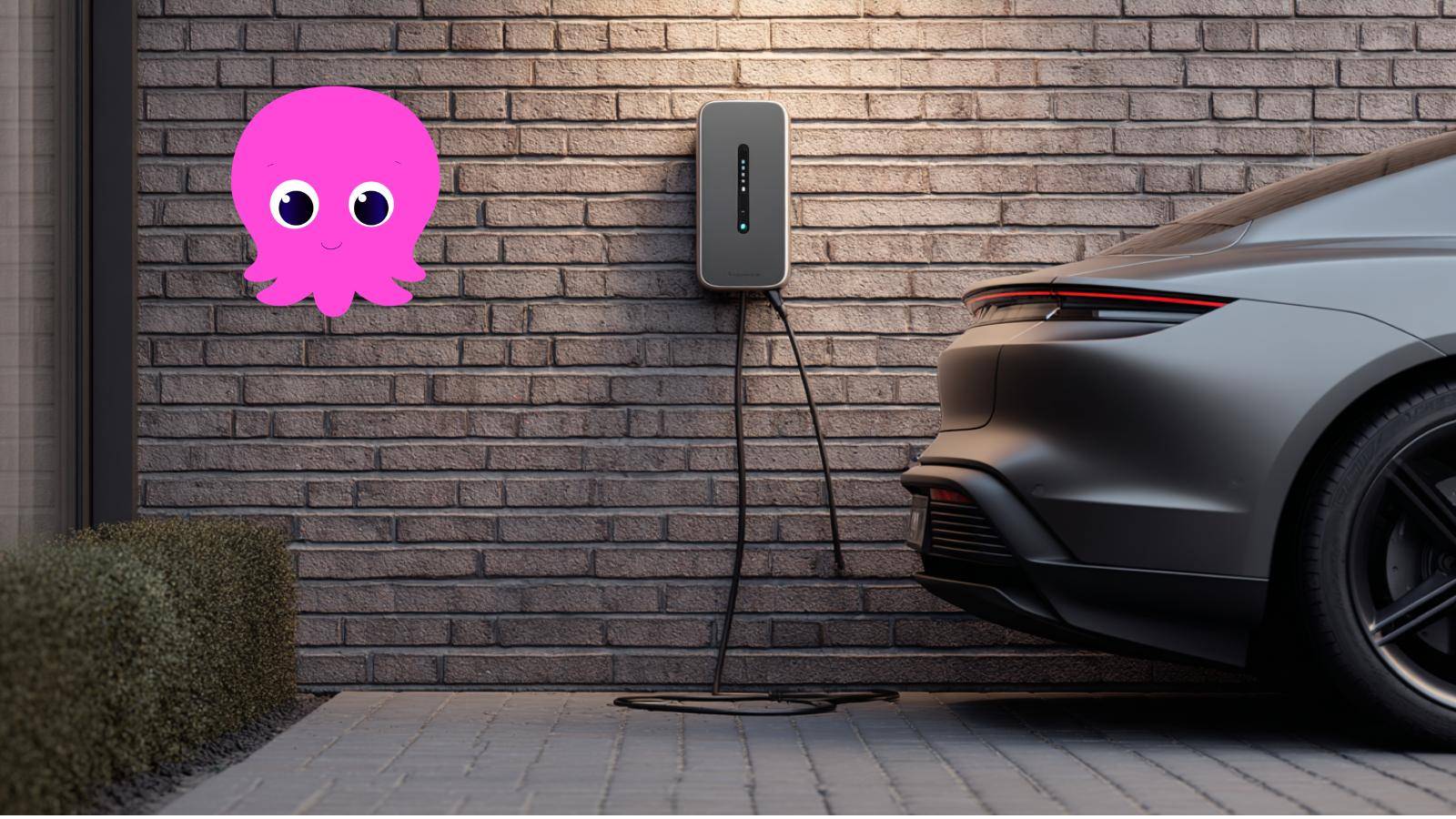
 FIG. 01 / HERO HOME OVERNIGHT CHARGING — UK DRIVEWAY
 The verdict
I have been on Intelligent Octopus Go for about six months, and the honest place to start is that a tariff is not a gadget. There is no build quality to dissect, no reliability log to keep. If the rate is good and the smart charging works, you are happy. On both counts, for me, it has delivered, which is most of why it is the UK’s most-used EV tariff.
The short version: if you can charge at home overnight, your car or charger is compatible, and you are comfortable letting an app schedule things, IOG is very hard to beat. You get a cheap whole-home overnight window and automatic charging slotted into the cheapest times, and most of the time you genuinely stop thinking about it. The one real caveat is new: Octopus is bringing in a 6-hour daily limit on the super-cheap smart-charging rate. For the roughly four in five drivers whose charging already fits inside six hours it changes nothing, but if you are very high mileage, run a big battery you routinely drain, or charge more than one EV, it is worth doing the maths before you assume IOG is the cheapest option for you.
With the July 2026 price-cap rise coming I will shop around, as anyone should at a cap change. I do not expect to move.
How Intelligent Octopus Go actually works
This is the part Octopus’s own pages bury, so here it is plainly. There are two different cheap-rate mechanisms, and people conflate them.
The first is the whole-home off-peak window: every night between 11:30pm and 5:30am, everything your house draws is billed at the off-peak rate, currently 8p per kWh for a new customer (it varies a little by region, it is a variable rate that can move, and it last rose on 1 May 2026). That is not just your car. It is your dishwasher, your washing machine, your immersion heater, anything running in those six hours.
The second is smart dispatch. Instead of you setting a timer, you tell the app how much charge you need and by when, and Octopus schedules the actual charging across the time you are plugged in, picking the cheapest, greenest half-hours. It can charge inside the overnight window, and it can add bonus cheap slots during the day when the grid has surplus renewable power. When it schedules charging outside 11:30pm to 5:30am, that charging still gets the off-peak rate, and so does your whole home during those borrowed slots.
The new bit, and the one to understand before you switch, is the 6-hour cap. Octopus is moving to automatically limit super-cheap smart charging to six hours within a 24-hour period (measured midday to midday), counting any charging done during the night window. If a single session needs more than six hours of actual charging to hit your target, the first six hours are billed at the off-peak rate and the extra half-hours are billed at the higher Bump rate, even if they fall inside the overnight window. Octopus says around 80% of charging sessions already come in under six hours, so most people will not notice. Alongside the cap comes a new Charge Cap toggle: leave it on and Octopus will keep you inside the six cheapest hours and warn you in the app if you will not hit your target; turn it off and it prioritises hitting your target, accepting some pricier charging to do it.
On timing: the cap was first slated for January 2026, pushed to around March while Octopus tested it, and has been rolling out to accounts rather than switching on for everyone at once. Check the Devices tab in your Octopus app to see whether it is live on your account yet.
Put practically, the day-to-day is unchanged by all of this: you plug in, the app schedules, and the charging that fits the cheap window gets the off-peak rate. The cap and Charge Cap are guardrails on the edges, not a new way of using the tariff. The thing worth internalising is the split: your house gets a guaranteed cheap six-hour block overnight no matter what, while your car’s super-cheap charging is the part now limited to six hours a day. For most drivers those two facts never collide. For a few they will, and knowing which group you are in is the whole decision.
- Off-peak 8p
- Bump rate (beyond 6h)
- Peak rate
The whole home gets the off-peak rate overnight; your car is charged in the cheapest slots, up to 6 hours a day. Octopus can also add a bonus cheap slot during the day when the grid has surplus renewable power. Charging beyond the 6-hour cap bills at the higher Bump rate, even inside the night window.
Am I eligible?
Octopus makes you scroll through a long list to answer this. The checker below answers it in two clicks.
Octopus can control either your car or your charger.
The rule underneath it is simple: you are eligible if either your car or your charger is compatible with Octopus’s smart control, because IOG works by talking to one or the other. A compatible charger (an Ohme, a Zappi, a Hypervolt and several more) means any car will do. A compatible car (most Teslas and a growing list of VW Group, Hyundai, Kia, Ford, Renault and others) means even a basic charger is fine, because Octopus controls the car directly. You also need a second-generation smart meter sending half-hourly readings, and an Octopus account. If neither your car nor your charger is on the common list, you are not necessarily out: check Octopus’s official eligibility tool, because the long tail changes as firmware updates land.
One honest note the marketing skips: a charger being sold as “Octopus compatible” is not always the same as full IOG smart dispatch. Some chargers only work as a fixed-window timer, which gets you a cheap overnight block but not the automatic scheduling or the bonus daytime slots. If smart dispatch matters to you, confirm the specific model, not just the brand.
Living with it
The whole-home window is the part I rate most, and it is the part that is easy to underuse. We run the washing machine and the dishwasher overnight inside the 11:30pm to 5:30am window, so they draw at the off-peak rate rather than the daytime one. It takes a few goes to get into the habit of loading them in the evening and setting a delay timer, but once it is a habit you stop thinking about it, and it quietly shaves money off every week, not just on car charging. Anything with a timer is fair game: the dishwasher, the washing machine, a tumble dryer, an immersion heater. This is the bit people miss when they compare tariffs purely on the headline EV rate, and it is a real reason IOG has felt worth it beyond the car.
The daytime smart slots are a smaller, more conditional win. When the grid has surplus renewable power, Octopus will sometimes schedule cheap charging in the middle of the day, and that is useful if you keep half an eye on the app and plug in when you are home. It is not set-and-forget in the way the overnight window is; it rewards a bit of attention, and if you are out of the house all day with the car gone, it does not really apply to you. Treat it as an occasional bonus, not a core feature.
Plugging in and getting a smart schedule that just handles it is the bit that is genuinely useful. For most of the week it removes having to think about charging at all.
That is the real pitch. For most people, most of the time, you plug in, the app does the rest, and the car is ready when you need it. Between the overnight off-peak rate and some daytime charging, my blended rate has been low enough that I have not felt the need to micromanage it. I am not going to put a number on it, because your blend depends entirely on how much of your charging lands in the cheap slots, which depends on your mileage, your plug-in habits and your patience with the app. But the direction is clear, and it is the reason I have stayed.
There are things I cannot tell you from my own use, and it is worth being straight about them. I run one car at typical family mileage, so I have not stress-tested IOG with two EVs charging overnight, with a very large battery I routinely run flat, or with the kind of daily mileage that needs a big top-up every single night. Those are exactly the cases where the new 6-hour cap starts to matter, and where I would want you to run your own numbers rather than lean on my experience.
As for the 6-hour cap on our usage, it does not look like it will change much, which squares with Octopus’s own line that most sessions already fit. That is exactly why I would still tell a heavy-mileage driver to check their own numbers rather than take my “it is fine” at face value.
What it costs, and whether it is worth it
Here is a worked example, sourced and rounded, not a marketing average. Take a typical EV doing 8,000 miles a year at around 3.5 miles per kWh. That is roughly 2,290 kWh of charging across the year. At the 8p off-peak rate, that is about £183 a year. On a standard variable rate at the Ofgem cap of 26.11p from 1 July 2026, the identical charging costs about £597. The gap is around £400 a year, on the car alone, for the same miles in the same car. The only thing that changed is the tariff.
Then add the whole-home effect, which is the bit most tariff comparisons miss because they only look at the EV rate. The 8p covers everything your home uses in the overnight window. Shift, say, a dishwasher and a washing-machine cycle into that window most nights, roughly another 1,000 kWh a year, and you are buying it at 8p instead of 26p, which is about £180 saved. Whether you capture that depends entirely on how much load you can move, so treat it as illustrative, not a promise.
Those figures assume your charging fits inside the cheap window, which for a typical 8,000-mile year it comfortably does: you are well under the 6-hour daily limit most nights. The cap only bites if you routinely need a very large single overnight top-up.
It is also worth being clear about what this rate is not. The 8p is home overnight charging. Lean on public rapid chargers and your blended cost climbs fast, because those run at several times the home rate, so the IOG advantage is really a home-charging advantage. If a chunk of your charging happens away from home, model a realistic mix rather than assuming everything lands at 8p.
For numbers tied to your own car, mileage and tariff, use our running-cost calculator, and to see how IOG stacks up against every other UK EV tariff, our best EV tariffs comparison does the side-by-side. I am not going to rebuild either of those here.
How to set it up
The practical sequence, assuming you are starting from scratch:
First, the prerequisites. You need a second-generation smart meter taking half-hourly readings, an eligible car or charger, and an Octopus account. If you are not with Octopus, switching is the first step, and it usually takes a couple of weeks to complete. If you do not have a smart meter, or have an older one that does not send half-hourly data, you request one through your account and wait for it to be installed and go live before you can apply; that can add a few weeks, so start it early if IOG is the goal.
Then apply for Intelligent Octopus Go in the Octopus app or your online account. It is not automatic with a switch; it is a separate tariff you opt into once the meter is sending the right data. Once you are on it, connect your car or your charger in the app’s Devices tab. This is the step that does the actual work: it is what lets Octopus see and schedule your charging. Connecting a charger usually means linking its manufacturer account (Ohme, myenergi and so on); connecting a car means linking the carmaker’s connected-services account. Either route is fine, you do not need both.
Finally, set your “ready by” time and your charge target, the percentage you want the battery to reach, and decide whether to switch Charge Cap on. Leave it on if you would rather never pay the Bump rate and are happy to occasionally fall short of target; turn it off if hitting the target always matters more than the last few pence. From then on the routine is just: plug in, and let it schedule. You can still trigger an immediate bump charge if you need power right now, but that charging is billed at the higher rate.
A few things that trip people up. Do not run the car’s own charge timer, the charger’s schedule and Octopus all at once; they fight each other, and the result is missed or doubled-up charging. Set the car to charge whenever offered, sometimes labelled “always available” or “charge immediately,” so it does not refuse power when Octopus sends it. Make sure the charger has a stable connection, because weak wifi or a poor signal at the unit is the usual reason scheduling commands get missed. And if you are on a Zappi, older firmware is a known cause of pairing failures, so update it to the latest version before you try to connect.
Intelligent Octopus Go versus the alternatives
The closest comparison is plain Octopus Go, the simpler sibling. Go gives you a fixed overnight window at a slightly higher rate, with no smart dispatch and no app to keep an eye on. It works with any car and any charger because it is just a cheap block of time, not a system controlling your hardware. If your setup is not IOG-compatible, or you simply do not want anything to manage, Go is the no-fuss choice. You give up the lower rate, the bonus daytime slots and the automatic scheduling to get it.
Among the other smart tariffs, the picture from our tariffs comparison is that IOG is the default for most, but not the cheapest headline rate: E.ON Next Drive matches it on off-peak price, EDF GoElectric undercuts it with a longer window, and British Gas EV Power+ is competitive if you are in the Hive ecosystem. Where IOG wins is the combination: a low rate, the whole-home window, the bonus slots, the genuinely hands-off scheduling, and the fact that more cars and chargers work with it than with anything else. Where it loses is for anyone who cannot charge at home overnight, in which case none of these overnight tariffs is really your answer, and the comparison page covers the subscription-style options that suit you better.
The honest summary: Intelligent suits app-comfortable drivers with a compatible car or charger who want to set it and forget it. Go suits no-fuss drivers or incompatible setups. Pick on temperament and hardware, not just on the rate.
Methodology
I have used Intelligent Octopus Go as a paying customer for around six months, and the first-person observations here are my own. The tariff mechanics, rates, the 6-hour cap and Charge Cap, and the eligibility rules are drawn from Octopus Energy’s published terms and pages, verified at the time of writing. Two things were moving as this published and should be re-checked against your own account: the live rollout status of the 6-hour cap and Charge Cap, which Octopus has been enabling account by account, and the off-peak rate a new customer is quoted, which is variable, varies by region, and last rose on 1 May 2026 (some longer-standing customers sit on older held rates). The cost examples are illustrative, built from published rates, and are not guaranteed savings.
If you want to switch, you can apply through Octopus directly.
Check Intelligent Octopus Go on Octopus EnergyFrequently asked.
How does Intelligent Octopus Go work?
You tell the Octopus app how much charge you need and by when; it schedules your car's charging into the cheapest, greenest half-hours, mostly overnight, and bills that charging at the off-peak rate. Separately, your whole home gets the off-peak rate every night between 11:30pm and 5:30am.
What is the Intelligent Octopus Go rate?
The off-peak rate is 8p/kWh for a new customer (it varies slightly by region, is variable, and last rose on 1 May 2026). That compares with a standard variable rate of 26.11p/kWh under the Ofgem cap from 1 July 2026. Some longer-standing customers are on older held rates.
Am I eligible for Intelligent Octopus Go?
If either your car or your charger is on Octopus's compatible list, yes, plus a second-generation smart meter and an Octopus account. A compatible charger means any car works; a compatible car means any charger works. Use the checker above, and Octopus's official tool for the long tail.
Do I need a compatible charger?
Not if your car is compatible, because Octopus can control the car directly. A compatible charger (Ohme, Zappi, Hypervolt and others) is the alternative route and works with any car.
What is the new 6-hour cap?
Octopus is limiting super-cheap smart charging to six hours in a 24-hour period. If a session needs more, the first six hours are off-peak and the rest are billed at the higher Bump rate, even inside the night window. Around 80% of sessions already fit, so most people are unaffected.
What is Charge Cap?
A toggle that arrives with the 6-hour cap. On, it keeps your charging inside the six cheapest hours and warns you if you'll miss your target. Off, it prioritises hitting your target, accepting some pricier charging to do it.
Octopus Go vs Intelligent Octopus Go, what's the difference?
Go is a simpler fixed overnight window at a slightly higher rate, with no smart scheduling and no app to manage, and it works with any setup. Intelligent has a lower rate, automatic scheduling, bonus daytime slots and the whole-home window, but needs a compatible car or charger.
What is the Bump rate?
The higher rate you pay for charging outside your cheap allowance, for an immediate bump charge you trigger manually, or for charging beyond the 6-hour daily cap. It is roughly your peak unit rate.
Does the cheap rate cover my whole house?
Yes, between 11:30pm and 5:30am everything your home uses is billed at the off-peak rate, not just the car. Shifting appliances into that window is an underrated saving.
Is Intelligent Octopus Go worth it?
For most drivers who can charge at home overnight on a compatible car or charger, yes: it is cheap, hands-off, and the most widely compatible smart tariff. Heavy-mileage, big-battery or multi-EV households should check the 6-hour cap maths first, and anyone who can't charge overnight at home should look at other tariff types.
Sources
- Octopus Energy: Intelligent Octopus Go tariff page — accessed 29 May 2026
- Octopus Energy: Upcoming changes to Intelligent Octopus Go (6-hour limit + Charge Cap) — accessed 29 May 2026
- Octopus Energy: Smarter charging for a greener grid (~80% of sessions under 6h) — accessed 29 May 2026
- Ofgem: energy price cap, 1 July to 30 September 2026 (standard variable electricity 26.11p/kWh) — accessed 29 May 2026
- MoneySavingExpert: energy price cap explained — accessed 29 May 2026
Corrections: if we got something wrong, tell us and we'll fix it in public, dated and signed. Last updated 2 June 2026.